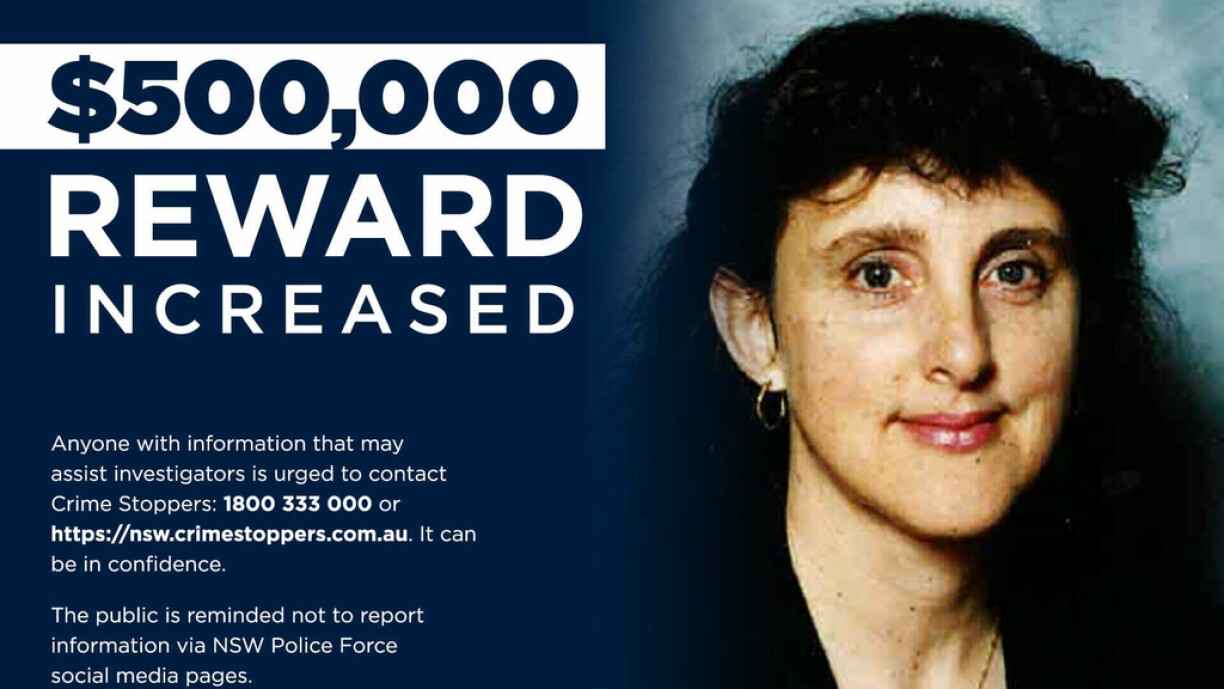
The case is remarkably intricate, evolving from a missing person inquiry into a homicide investigation, with a notable link to Luxembourg. But let's start at the beginning: Who was Marion Barter, how did she disappear, and what is the connection to the Grand Duchy?
In 1997, Marion Barter, aged 51, resided in Southport, Australia, where she worked as a teacher. On 25 April of that year, she sold her home for approximately $165,000, and by 20 June, she had resigned from her teaching position. Her stated intention was to travel through Europe, followed by employment as a teacher in England. On 22 June, she boarded a flight from Brisbane to England, informing her two adult children that her travels would span a year. That day marked the last confirmed sighting of her at a bus stop in Australia. Her final contact with her daughter Sally Ledon occurred on 1 August 1997, during a phone conversation.
By October 1997, concerns arose among Marion Barter's children when their mother failed to contact her son to wish him a happy birthday. Her son contacted her bank to inquire about recent account activity. It was revealed that over $80,000 had been withdrawn from her account between August and October 1997 at various locations in Australia, despite the fact that she was supposed to be in Europe. However, through a friend employed at Australian customs, Sally Ledon discovered that her mother had re-entered Australia on 2 August 1997.
Upon this revelation, her daughter visited a police station in Byron Bay, one of the locations where Marion was believed to have made withdrawals, to report her as missing. However, authorities told her that her mother was alive but no longer wished to be contacted by her family. The police categorised the matter as an "incident," declining to launch a formal missing persons investigation.
After a hiatus of approximately 12 years with no leads on the whereabouts of the missing teacher, a police investigator in Byron Bay, specialising in cold cases, reignites interest in Marion Barter's disappearance in 2009. Cold cases refer to investigations with no recent developments for an extended period.
During the reinvestigation, it emerges that Marion Barter had legally changed her name to Florabella Natalia Marion Remakel on 15 May 1997, prior to her planned journey. She had not disclosed this name change to her family.
It was under this new identity that she departed Australia on 22 June 1997, indicating her intention to relocate to Luxembourg in official exit documents. She returned to Australia on 2 August 1997, listing herself as a married housewife residing in Luxembourg in her entry documents.
But how did Marion Barter, also known as Florabella Remakel, come to identify herself as a housewife from Luxembourg upon re-entry into Australia? While this question remains unanswered, a new investigation launched in 2020 by the New South Wales Coroner's Office offers insights into the Luxembourg connection.
During this inquiry, attention turned to a man known at that time as Ric Blum. Born in 1939 as Willy Coppenolle in Tournai, Belgium, he predominantly used the name Willy Wouters until the late 1960s. Under this alias, he had already faced legal repercussions in Belgium, with convictions for forgery and other offences dating back to 1965.
In 1976, he assumed the name Frederick David De Hedervary upon marrying in Australia and acquiring Australian citizenship that same year. Since then, he travelled between Australia and Belgium under various aliases. However, he has also spent long periods of time in Luxembourg. According to findings by the newspaper Luxemburger Wort, he was arrested in Wiltz between October 1976 and January 1977, although it is not known why.
Australian investigators speculate that in 1980, he began a relationship with a woman named Monique Cornelius in Luxembourg and assumed the name of her ex-husband, Fernand Remakel, by 1988.
Further investigation by the Luxemburger Wort revealed that Ric Blum had operated a furniture store in Noertzange since 1980 and had plans to expand to Schifflange with business partners. However, he abruptly severed ties with his associates, closed both establishments, and vanished.
Blum and Barter purportedly started a relationship in 1997, with Australian investigators suggesting they may have met through a personal advertisement placed by Blum in a newspaper. Blum was subjected to multiple interrogations during the investigation and confessed to having been involved romantically with Barter.
On 28 February 2024, Chief Coroner of New South Wales, Teresa O'Sullivan, unveiled the preliminary findings of the investigation, emphasising that the working assumption was that Marion Barter was dead.
Central to the inquiry is Ric Blum. Investigators speculate that Blum persuaded Barter to adopt a new identity and embark on a fresh life with him in Luxembourg. Blum departed Australia shortly after Barter and returned shortly thereafter, suggesting a connection.
Blum further heightened suspicion by renting a safe deposit box at an Australian bank on 14 October 1997 — coinciding with Barter's significant withdrawals from her account. Additional testimony from other women alleging financial deception by Blum solidifies his status as a "person of central interest" in Marion Barter's disappearance, according to O'Sullivan.
Yet, numerous unanswered questions persist. The circumstances surrounding Marion Barter's demise remain elusive, and it is still unclear whether she was ever in Luxembourg or if Blum merely feigned intentions to start a new life there with her. The precise extent of Blum's involvement in her disappearance also remains obscure. What is clear, however, is that Blum certainly had connections to Luxembourg.
Coverage of Marion Barter's case was meticulously followed by Luxemburger Wort, collaborating with the Belgian Nieuwsblad and Australian broadcaster 7News.





