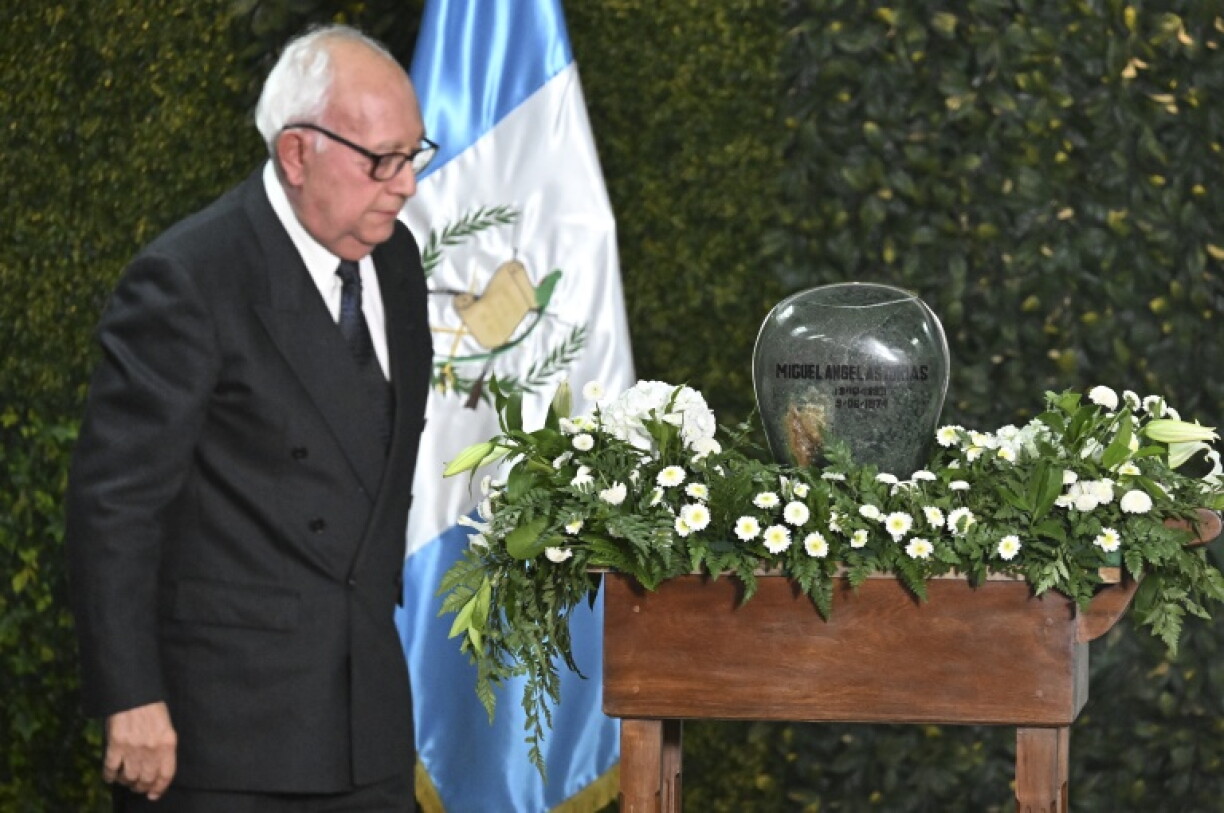
The ashes of Nobel laureate Miguel Angel Asturias returned to his homeland Guatemala from France on Thursday, half a century after his death.
The lawyer, writer and diplomat known for denouncing dictators and defending the Indigenous received the Nobel Prize in Literature in 1967.
He lived in Paris before he died in Spain aged 74 in 1974, during the last years of the Franco dictatorship.
The urn with the novelist's remains arrived in the hands of his son, Miguel Angel Asturias Amado, at the capital's international airport, where President Bernardo Arevalo led a tribute.
A guard of honor made up of people dressed in dark suits and holding white roses greeted the procession in an airport terminal hall while musicians played ceremonial Indigenous Mayan instruments: the tum (drum) and chirimia (flute).
"Guatemala proudly welcomes one of its most illustrious sons," Arevalo wrote on X.
The ashes were later transferred to another urn made of dark green stone in the shape of a corn kernel, a nod to his 1949 work "Men of Maize".
They will be interred on Sunday in a cultural center that bears his name.
His son Asturias Amado, 85, told AFP the family had decided that his father should come home after Arevalo, a social democrat, became president in 2024.
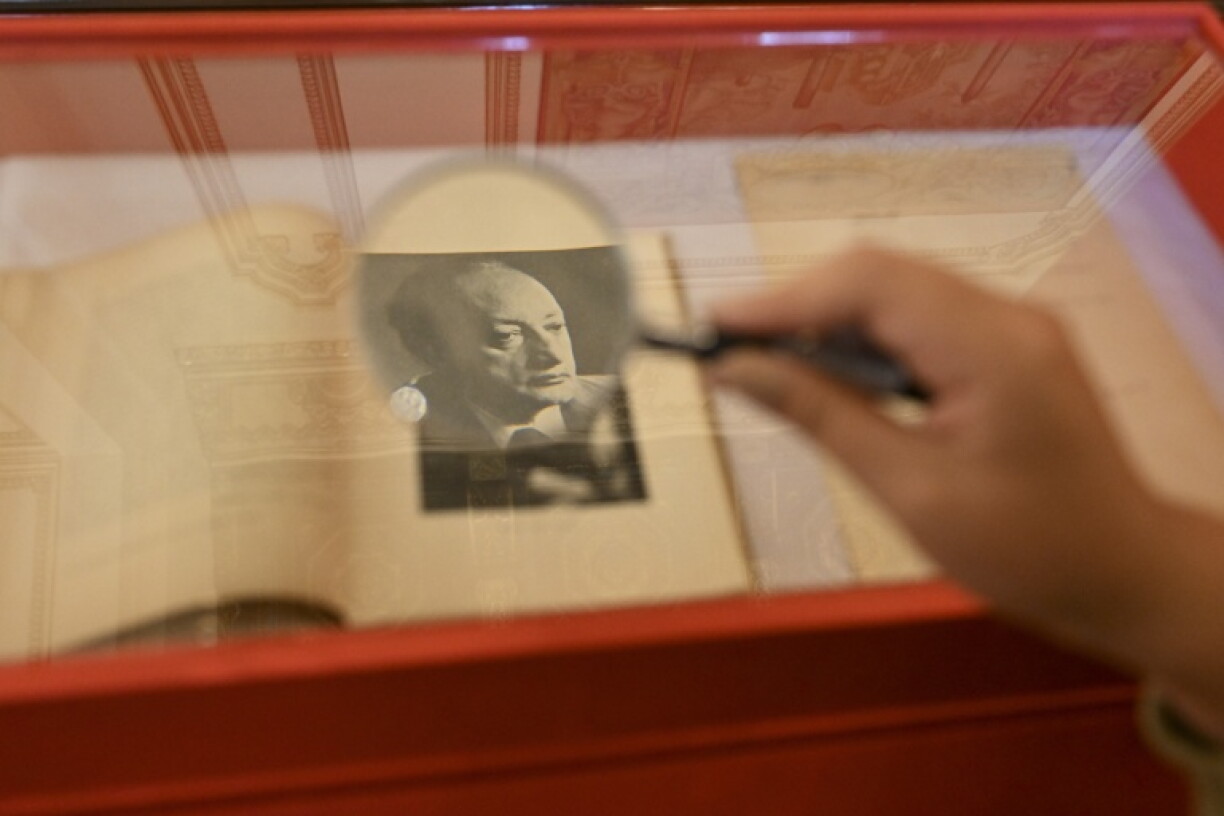
"It was very difficult for me, as a son, to take the decision for my father to return to his homeland," he said, as it meant leaving France, "a country he loved so much."
"He might be a unifying factor for Guatemala," he added.
In 1954, a US-backed coup cut short a decade of democratic reforms in the Central American country.
Asturias went into exile after the authoritarian government stripped him of his nationality and banned his books, and apart from a brief trip in 1959, he never went back.
His best-known works include the 1946 novel "The President," inspired by the dictatorship of Manuel Estrada Cabrera from 1898 to 1920.
Fascinated by his country's Indigenous mythology, he retold some of its stories in his 1930 book "Legends of Guatemala."
Asturias was a "social scientist," said Guatemalan historian Artemis Torres.
"The political denunciation through his novels (...) above all (against) the coffee-plantation and oligarchic dictatorships in that period in which he lived is one of his greatest contributions, not only to the social sciences, but to literature itself," Torres said.
Asturias' son explained in a podcast that the family preferred not to bury him in Spain because it was under Francisco Franco's dictatorship.
Nor did the family want to bury him in Guatemala at the time, mired in war and ruled by military officers accused of abuses.
"My father was against dictatorships," Asturias Amado said.
The small nation has produced one other Nobel laureate: human rights activist Rigoberta Menchu, who received the Peace Prize in 1992.
hma/axm/cc/msp/mjf/cms


