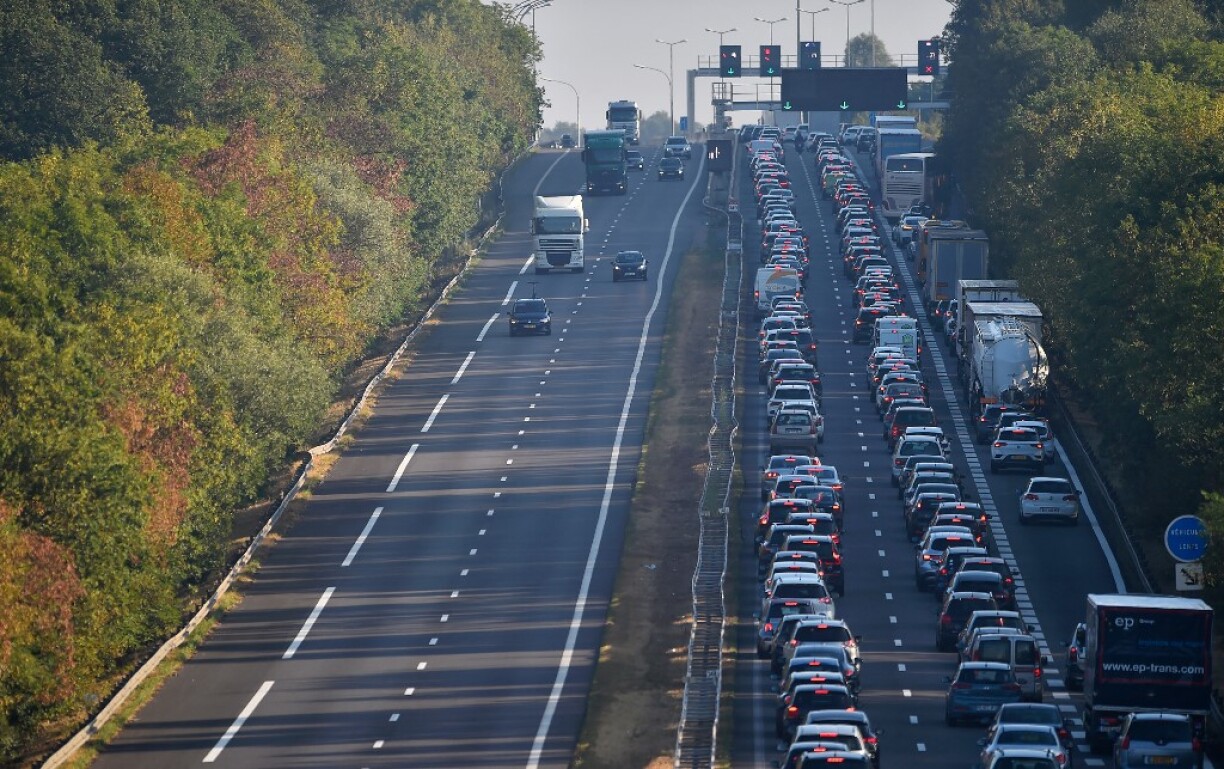
In France, around 483,000 people regularly commute to a neighbouring country to work. France easily takes the top spot with this figure, followed by Germany with 270,000 cross-border workers, and Poland with 230,000.
According to Aurélien Biscaut from the Mission Opérationnelle Transfrontalière (MOT), an association created by the French government to look after the interests of cross-border territories at the European level, this ranking is due to "multiple factors".
French cross-border workers are spread throughout the country. Three countries stand out as their destinations: Switzerland, Luxembourg, and Monaco. The Swiss cantons attract around 200,000 border workers, the Grand Duchy 105,000. For the Principality 41,700, about as many as Belgium and Germany, but for a much smaller area. Towards Italy and Spain, the flow is reduced to a few thousand.
The data allows us to establish common points between the main destinations. Biscaut explains that these are countries "with a functioning system that attracts cross-border workers". In addition to offering higher salaries than in France, they offer interesting jobs. "The conditions, particularly tax conditions, are attractive. This makes it possible for large international companies to establish themselves there", Biscaut states.
Further reading: More Luxembourgers live in Rheinland-Pfalz than French
The level of training also explains "the competitiveness of France". The country "exports" employees to meet the needs of neighbouring countries, such as the nurses hired in Luxembourg. In addition, there are "territorial specifications, including certain industries that are still operational abroad but have disappeared in France", Biscaut assesses and cites the example of the watchmaking industry in Switzerland, which hires many people from the Francs-Comté region, or, for a long time, the steel industry in Luxembourg.
To a lesser extent, the expert also observes a trend at the border of the Grand Duchy: "For Luxembourgers, France is an attractive place to settle as residents. Some people settle and cross the border every day to work."
For the MOT, all the reasons for the mobility of French workers illustrate the importance of "cooperation" and "co-development" for the different countries in a cross-border area. "A border is not a line, but a space", concludes Biscaut.





