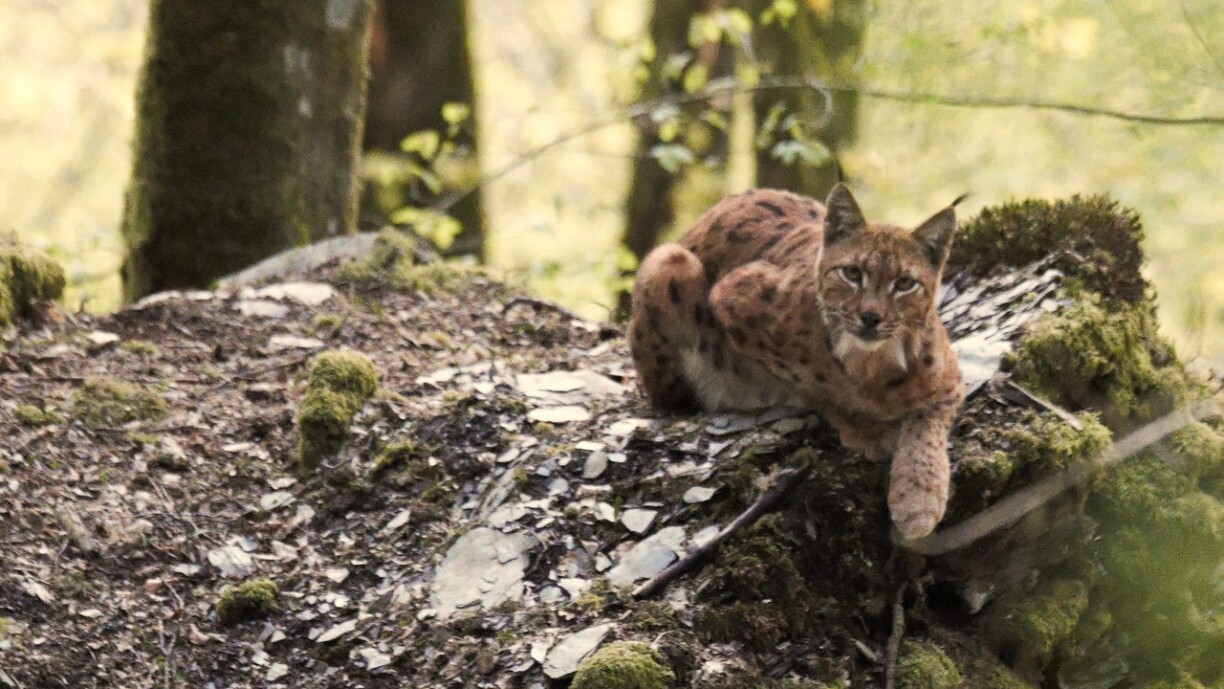
A Wallonia Public Service agent recently had the opportunity to photograph a lynx in the wild, according to their Facebook page, where they shared a series of images of the big cat. However, the post did not specify the location where the animal was sighted.
It is a most unusual occurrence for a person to capture images of a lynx in the wild in the region. In most cases, lynx sightings are observed by automatic cameras. Most recently, the nature protection association Landschap announced on 9 August that cameras had confirmed one of the animals had settled in the Ardennes region. Jan Loos, a representative of the association, said it was not a case of a nomadic animal, but rather a lynx which was well-established on the territory. These images were taken in the Semois valley.
A solitary animal
Landschap had already confirmed the presence of the rare European lynx on Belgian territory last year during its "Welcome Wolf / Welcome Lynx" campaign, thanks to monitoring carried out by its volunteers. Loos said there had been few sighting after November 2021, but the lynx was spotted on cameras again on 24 May. Several volunteers had posted a video depicting a badger making its way through the forest, but once the badger exited the frame, the lynx appeared in the far corner of the video. The association has hypothesised that this lynx is not the only one of its kind in southern Belgium.
The European lynx is described as a solitary animal, fond of rodents, hares and larger animals such as deer. Its home range extends over several hundred square kilometres, but it is a discreet hunter, which makes it difficult to observe accurately. In September 2020, the SPW released a statement saying the lynx does not represent any danger for humans as it tends to avoid people, hence why sightings tend to be rare.





