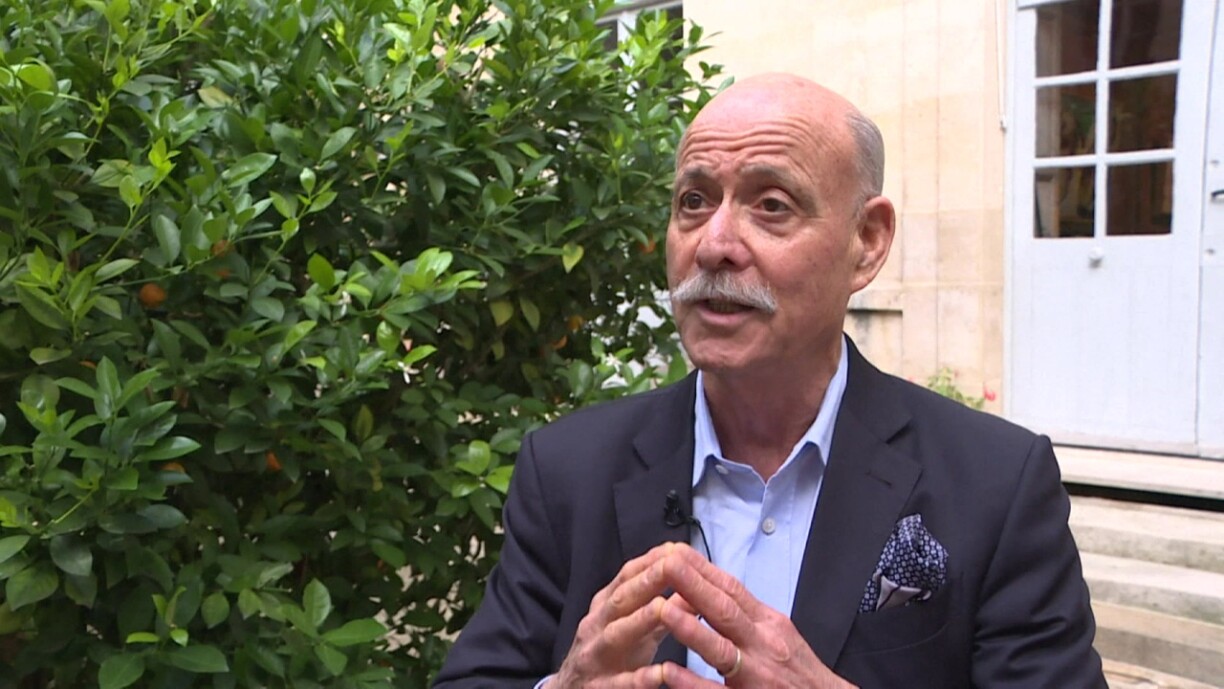
Jeremy Rifkin, who has consulted numerous authorities, amongst them the Luxembourgish government, states that solar and wind energies will become so affordable that their average cost will be less than the that of nuclear energy, petrol, coal or even natural gas.
He adds that this is a major turn of events, in which we start to see people lose billions of active dollars invested in fossil energies. What is lost are the exploration rights which will remain unused, hydrocarbons that will never be extracted, abandoned pipelines and power plants, which will remain unused because they will never be amortised.
He underlines that the American Bank Citigroup estimates that we could possibly lose 100,000 billion of active dollars. That would bee the biggest sum in the history of economics.
The essayist imagines a future built on three big types of infrastructure, which will unite populations on a local and global level, in what he calls 'glocalisation'. Communication networks with smartphones, renewable energies, produced in a decentralised way and distributed by intelligent networks, and finally electric transport or fuel cells integrated in intelligent logistic chains.
Pilot projects already exist today, in Luxembourg, the Netherlands and in the north of France. Jeremy Rifkin campaigns for a change of scale, where people who make political decisions will play an important part.
Video in French - English subtitles
Video in French - no subtitles





