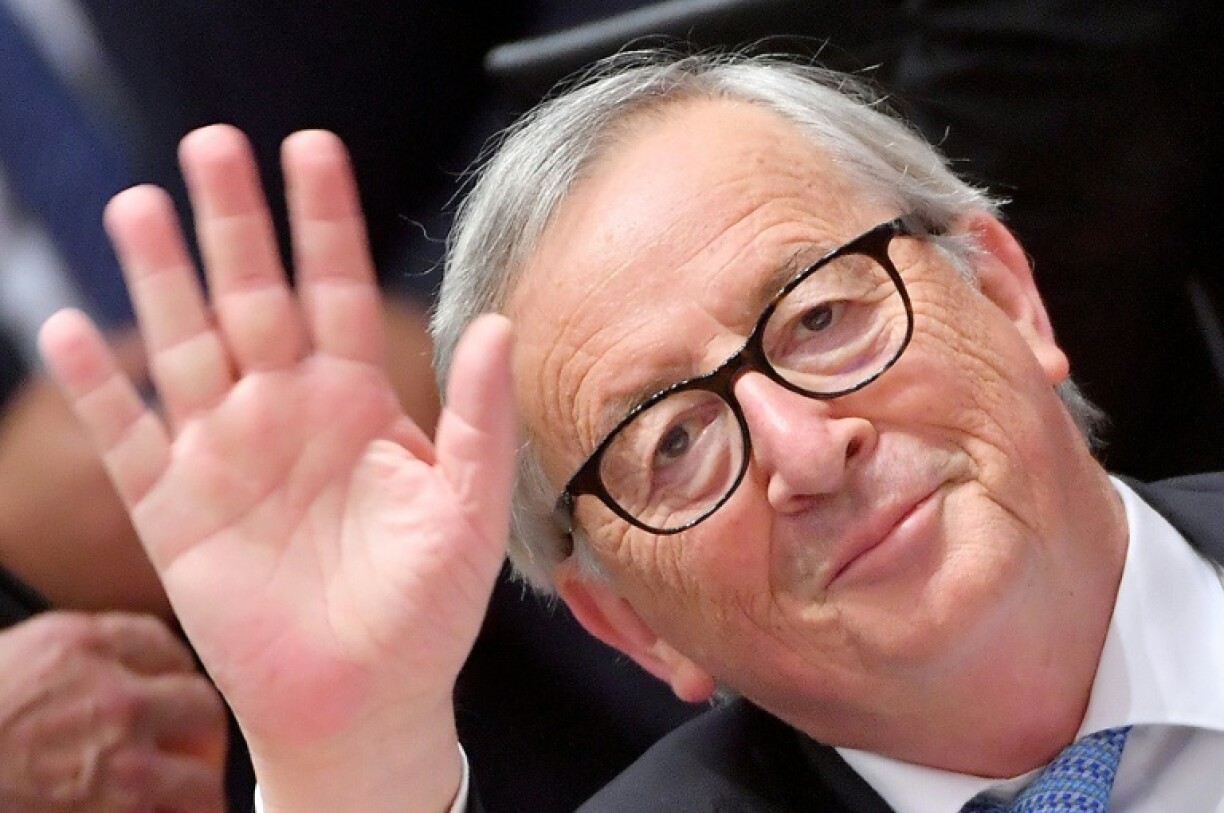
In a few weeks, Jean-Claude Juncker will be giving up his position as President of the EU Commission and, as Austrian newspaper "Kurier" reports, the process of emptying his office on the 13th floor of the Berlaymont building has already begun.
Despite efficient coworkers and colleagues, Juncker found himself frequently charged with making important decisions on his own, as well as asserting himself against government leaders, commissioners and parliament members.
By means of example, he stood his ground when it came to keeping Greece within the Eurozone, against the desires of a number of heads of government.
When it came to the topic of Brexit, Jean-Claude Juncker expressed that one of his biggest regrets was paying too much heed to then British PM David Cameron when it came to not interfering with Brexit referendum campaigns. This course of action, in his view, had left many lies circulating throughout Great Britain uncontested.
The outgoing EU President of the Commission also stressed that, even though he did not expect this to be the case, a further delay to the Brexit process should be granted, if requested. This did not mean, however, that he would the UK them to do so. To this point, Jean-Claude Juncker did not consider himself able to gauge Prime Minister Johnson's plans for the European Council.
In terms of the future of the EU, Juncker warned nations from retreating back to isolationism and instead to come together for future endeavours. It was only through these kinds of initiatives that the Euro was now the second strongest currency in the world. Indeed, he had lead the Intergovernmental Conference - to which there had been much opposition - through which the Euro was finally introduced. This development demonstrated that, once united, they didn't act like a "hopeless bunch of chickens".
Juncker had, according to his own statements, recently started reading David Cameron's memoirs - that is, until he got to the part where Cameron portrayed him as an EU-fanatic. Unsurprisingly, Juncker did not agree with this descriptom. Instead, the former Luxembourgish Prime Minister claimed he knew what the continent needed: not a larger Europe, but a unified Europe that was able to concentrate on the essential needs at hand.
When asked whether he thought the EU would still exist by 2050, Juncker made it clear he was convinced it would. Many had predicted the end of the EU, yet still it stood. He also saw a large amount of admiration for the fact that it had been possible to build a peaceful continent where once there had raged war.
He was very aware of the fact that a never-ending flux of people tasking him with bringing the final accords to a conclusion, but he had also observed that support had grown since the UK's decision to leave. People understood that it was no longer possible to just watch countries fall apart and pit against each other, as they did before the creation of the EU.
Finally, Jean-Claude Juncker did not express any worries concerning Europe, unless of course, one made the mistake of paying too much attention to populists.





