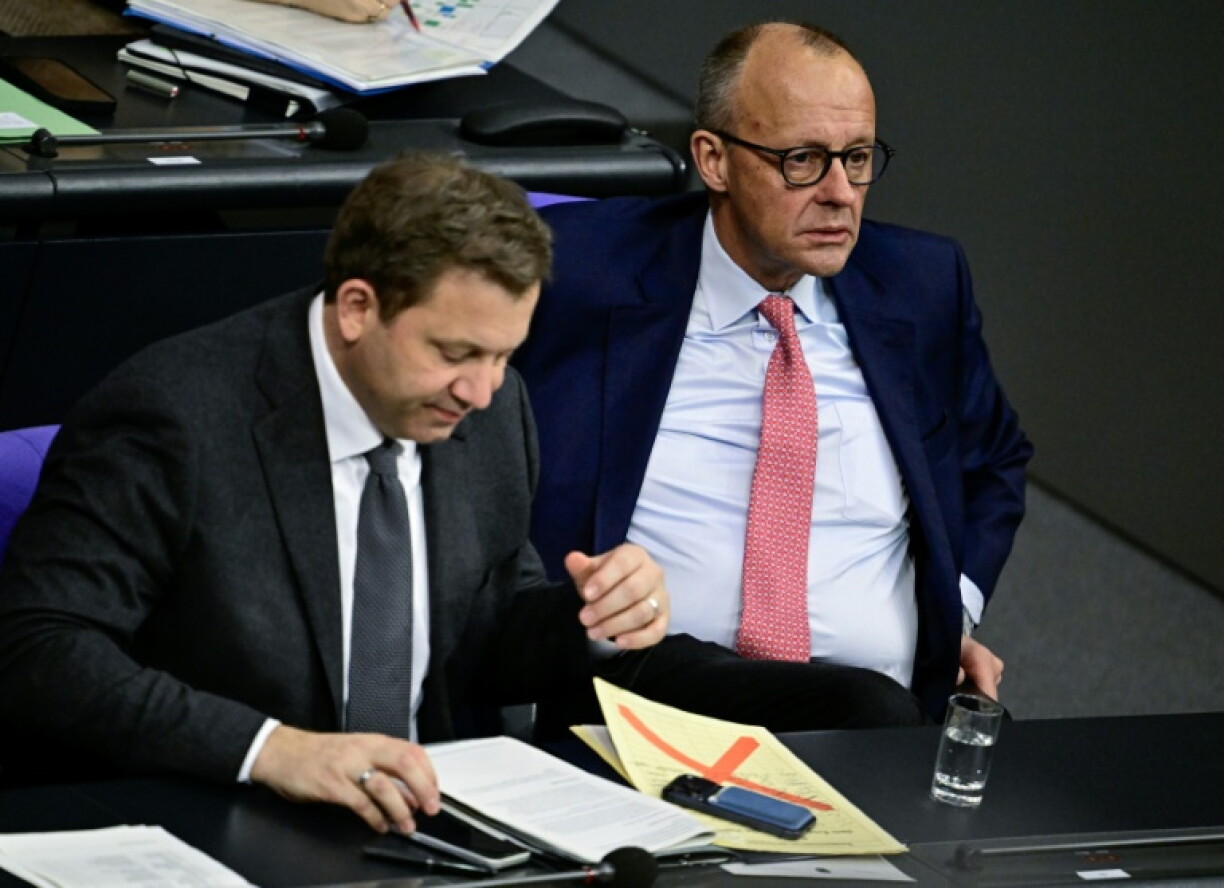
Germany's parliament passed a hefty budget increase for 2027, backing a sharp rise in government borrowing for new outlays on the military and infrastructure.
The vote came after a lengthy debate, with some opposition lawmakers attacking the projected new borrowing, which including special funds is expected to hit 210 billion euros.
It is the second-highest borrowing level since World War II, just shy of the Covid-era budget in 2021.
But Chancellor Friedrich Merz, whose coalition pushed through the spending plan, argued this week that Germany must bolster its military, which he said had been neglected for too long.
"Germany is more capable of defending itself now than it has been at any time in recent decades," Merz said, though he contended more needs to be done to deter a hostile Russia and defend NATO allies.
The law on the 556 billion euro ($610 billion) budget is expected to be taken up immediately by the upper house, which will conduct a final review of fiscal planning on December 19.
Increased infrastructure and military spending under Merz's government has been credited with helping lift Europe's largest economy out of stagnation, though growth remains modest.
Germany's economy grew by just 0.1 percent from July to September, though government forecasts still predict 1.3 percent growth for the year, the highest level since 2022.
Merz's conservative Christian Democrats and their junior coalition partners, the centre-left Social Democrats (SPD), managed to reach a deal on the budget despite bitter clashes on other key proposals.
Vice Chancellor Lars Klingbeil, an SPD leader who also serves as finance minister, called the budget "challenging" during debate on Friday and suggested that austerity measures would be required in 2028.
Opposition lawmakers criticised some of the cuts contained in the 2027 budget, and also a chaotic drafting process that involved a number of last-minute changes.
The far-right Alternative for Germany (AfD) also attacked substantial continued aid for Ukraine in its battle against the Russian invasion.
The budget will reduce electricity taxes but includes a new tax on sugary drinks that will take effect in 2028.
But other areas of disagreement within Merz's coalition remain unresolved, such as a long-anticipated pensions overhaul.
The SPD, as well as some conservatives in eastern Germany, have opposed Merz's push to eliminate early retirement options for workers who have paid into the system for 45 years.
Until recently, the coalition had hoped to put forward draft pension legislation before Christmas, based on recommendations from an expert commission issued in June.
A government spokesman on Friday declined to give a new timeline for a pensions deal, but said "failure is not an option".
bur-bst/fz/js