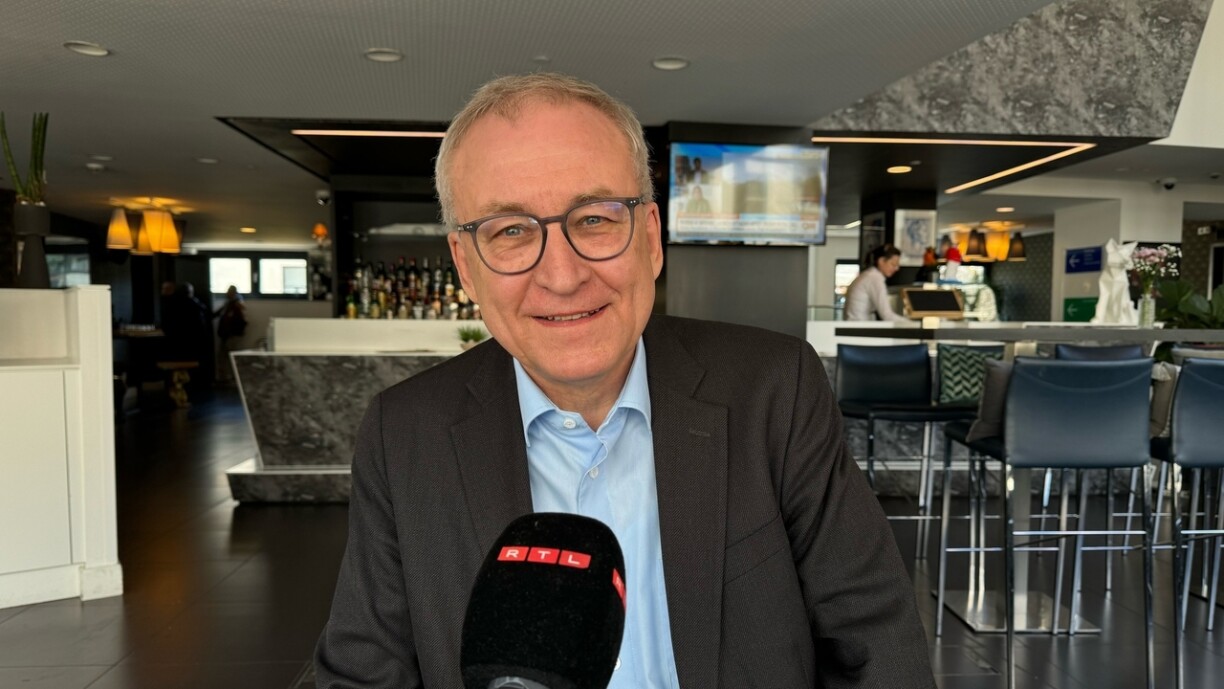
Under the title "Now tell me, how do you feel about religion" (a quote from Goethe's Faust), the professor explored how Europe's Christian traditions might help Europeans rediscover common ground and identify with a shared sense of identity.
According to Professor Sander, giving Europe a common soul is key to ensuring cohesion within the EU. He argues that a shared identity is necessary, given we cannot rely solely on the economic benefits and personal freedoms provided by the EU.
"Giving Europe a soul is essentially what I mean by European identity. As in a shared understanding of what truly connects Europeans. A deeper reason for unification, beyond just economic advantages, freedom of movement, and similar benefits."
This is particularly important in times of geopolitical tension and uncertainty, when social cohesion is vital for security, he adds.
"Ultimately, nations can only remain stable if people identify with them to a certain degree."
To strengthen this shared identity, the professor believes we must be aware of the EU's origins and roots of European unity. He sees these in the Christian tradition, which laid the foundations for a new and united Europe after the Second World War and created a spiritual and cultural bond that still resonates today.
"Christian tradition still has an influence, though many people no longer recognise that. Concepts such as moral equality of all, human dignity, and freedom of conscience, these are all values we now understand to be European, but actually trace back to early Christianity."
A collective identity can only be built from a historical perspective, he argues. This means being aware of shared history and the origins of core values. Especially in Western Europe, Sander calls for a more open culture of dialogue around religion. Also education should address the Christian roots of our contemporary values.
When asked whether it's difficult to reconcile Christian traditions with today's multicultural society, Sander responds:
"I don't see any problem with that. For religious minorities, Muslims for example, the key issue is religious freedom. And that, by the way, is also a European invention."
Christianity is diverse and we should focus particularly on its fundamental principles, such as moral equality and freedom of conscience.
Sander observes that over the past 40 years, Europeans’ understanding of freedom has become increasingly self-focused: people now tend to view freedom as freedom from obligation, a space to express the self, rather than, as in the Christian tradition, as a responsibility towards others. He argues that Europe must more explicitly affirm these values if it is to develop an identity that truly unites it.





