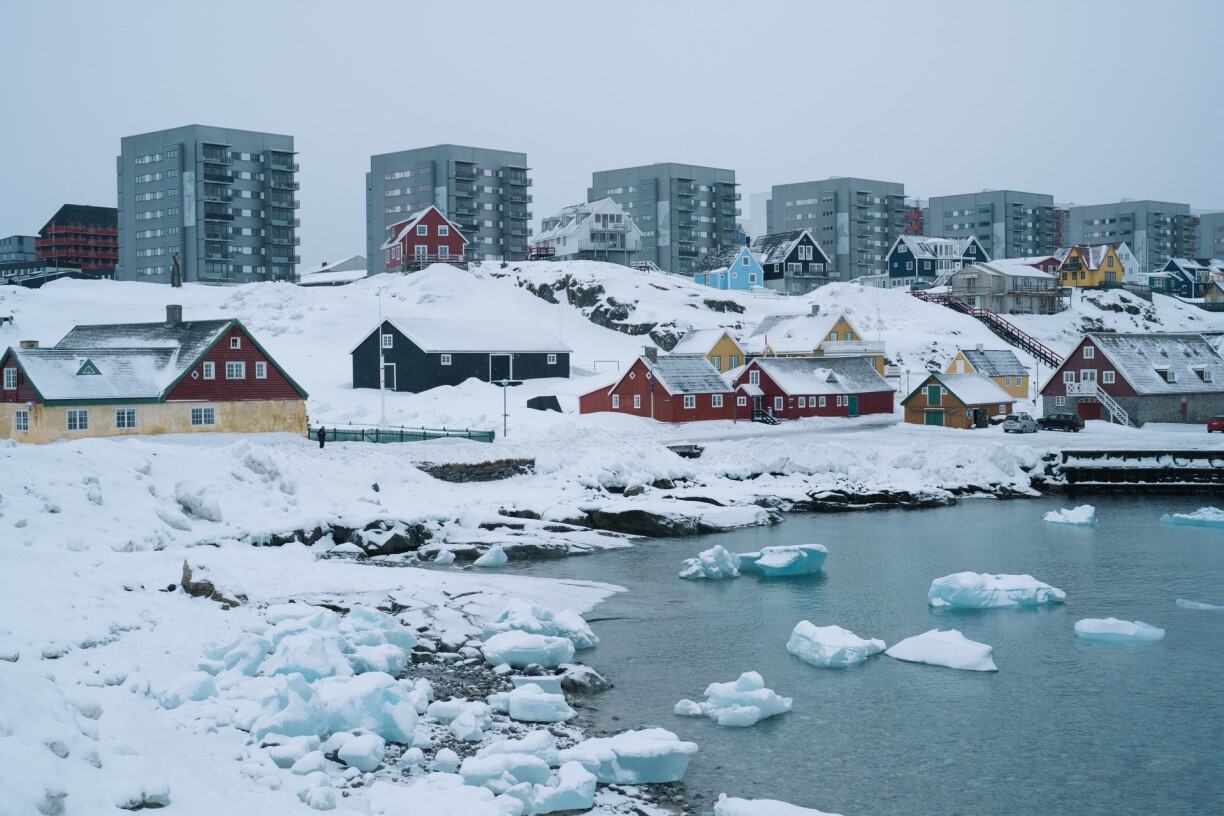
While the United States cites security concerns to justify its potential annexation of Greenland, critics argue the underlying motive is to secure the island's vast mineral wealth. Luxembourgish geologist Romain Meyer, based in Greenland, outlines what these critical resources entail.
Greenland's capital, Nuuk, is a modest coastal city of roughly 20,000. Yet the quiet tundra surrounding it belies the island's significant subsurface wealth. Romain Meyer, officially the only Luxembourg national living in Greenland, serves as the Director of the Department of Geology in Nuuk, overseeing the mapping and management of the island's natural resources.
Meyer explains that Greenland holds abundant deposits of many so-called Critical Raw Materials – minerals essential for modern technologies for which Western nations are heavily dependent on suppliers like China.
"Practically all the elements needed today are available in Greenland", Meyer stated. This includes nickel, copper, and chromium. The largest proven rare earth deposits outside China are located in Greenland's south, where they are highly concentrated and relatively accessible.
Resources in the north, while plentiful, are currently harder to reach. However, Meyer notes that climate change may alter this. Rising temperatures are causing glaciers to retreat, exposing new land for geological survey and potentially extending shipping seasons.
As the ice recedes, geologists will for the first time be able to examine what rocks and resources there are, he explained. If seas are not completely frozen – or not frozen at all – accessibility becomes much greater, allowing ships to operate for longer periods, Meyer noted.


Access to Greenland's resources is tightly controlled by local authorities. The Greenlandic government enforces strict environmental regulations designed to protect the fragile Arctic ecosystem and the rights of the indigenous Inuit population. For example, the exploitation of oil – of which Greenland also holds significant reserves – is entirely prohibited. Mining for most other materials is only permitted within defined limits and requires a licensing process that can take up to five years.
Meyer further clarified a key restriction: the country's uranium law. "Nothing with more than 100 parts per million (PPM) of uranium may be mined", he explained, noting that this threshold is very low. Rocks containing uranium in the percentage range – actual uranium ores – are therefore off-limits. "So, no uranium may be mined here, and no oil or hydrocarbons in that sense", he summarised.
The seriousness of US intentions regarding Greenland is now viewed by few in Europe and Denmark as a simple bad joke. While the true motives behind the potential takeover remain subject to speculation, the means the Trump administration might employ are still unclear. For now, diplomacy appears to be the initial course: US Secretary of State Marco Rubio has announced a meeting with Danish representatives scheduled for next week.
When asked to comment on the escalating geopolitical situation between Greenland and the US, Meyer declined, citing his official role within the Greenlandic government administration.





