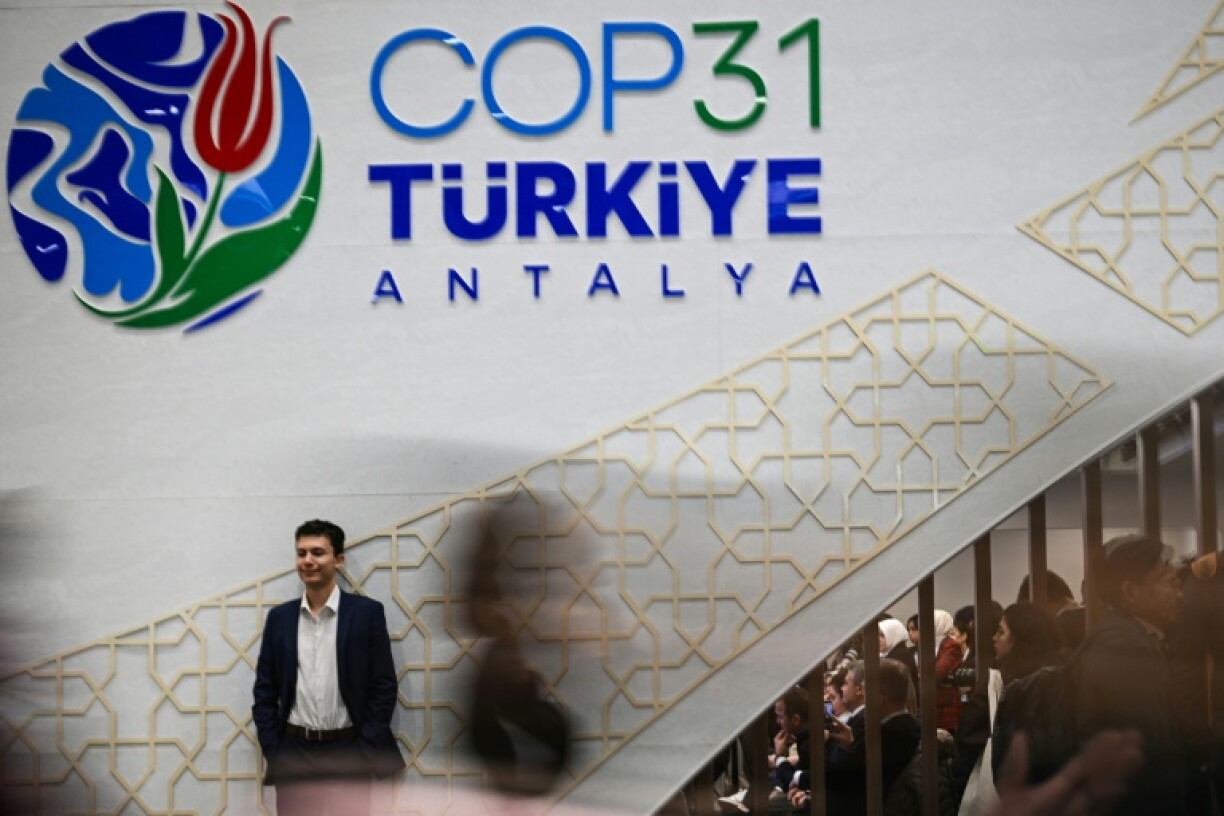
Nations bargained over a sprawling climate deal on Wednesday but deepening divisions left compromise elusive even as the COP31 summit in Turkey enters its final days.
On the conference room floor and in bustling corridors, government ministers have been drawing red lines as they negotiate the terms of a contentious draft accord.
The nearly 200 nations involved in the UN climate conference are under pressure to find common ground before the summit wraps on Friday.
As the clock ticks down, ministers have been invited to a "divan" -- a "council" in Turkish -- to air their views on a proposed deal that has faced widespread criticism.
That first draft -- published Monday -- ran to 18 pages and laid bare opposing priorities on flashpoint issues from fossil fuels to finance, science and trade.
"The text will be pared down until we arrive at something that will never be the ideal solution for anyone, but where everyone gets three things they want," France's Ecological Transition Minister Monique Barbut told AFP.
Belgian Climate Minister Jean-Luc Crucke described the talks as "difficult" and said he was focussed on "not the red lines but the green lines".
A fight over the timing of the next Intergovernmental Panel on Climate Change (IPCC) reports has flared at COP31, deepening divisions over the very place of science in the negotiations.
Danish climate minister Samira Nawa said a political deal at COP31 must reflect the crucial role of the IPCC: "There is no compromise when it comes to science," she told AFP.
Dozens of countries want the IPCC's next major assessments available before a global review of carbon-cutting efforts in 2028. A smaller number of nations, including Saudi Arabia and India, want the findings postponed to 2029.
"We hope to reach some sort of compromise on this issue. I said a compromise, I didn't say we would necessarily get everything we want," Barbut said.
On Tuesday, Saudi Arabia said it "advocates publication timelines that allow sufficient scientific review, transparency and meaningful participation, particularly from developing countries".
The Least Developed Countries group and the Alliance of Small Island States -- together representing nearly 80 climate-vulnerable nations -- support publishing the reports before the 2028 stocktake.
The summit has reignited long-running tensions between wealthy nations most responsible for planet-heating emissions and poorer countries most at the mercy of climate impacts.
Developing countries have long argued that wealthy nations must lead the fight against global warming and that climate action must not come at expense of their economic development.
"To now expect the Global South to bear the burden of addressing the consequences of their past actions, in the name of higher ambition, is unjustified," India's Environment Minister Bhupender Yadav told ministers.
Countries on the climate change frontlines are pressing rich nations for more money to help them adapt, and easier access to funds to build sea walls and other defences as the planet warms.
"A resilient future needs finance that arrives before the next drought, not after it," said Kenya's Environment Minister Deborah Mlongo Barasa.
Fiji's Climate Minister Lynda Tabuya said there had been "pushback" as developed nations tightened their belts, forcing Pacific nations to fight harder for what they need.
"Our countries are sinking and it's a matter of survival for our people. We are on the front lines of this existential threat. And we need to be able to adapt," she told AFP.
As proceedings entered day 10, frustrations boiled over in Antalya.
Panama's Climate Minister Juan Carlos Navarro, a vocal critic of the climate talks, accused some countries of delivering speeches full of "BS and hot air" while blocking efforts to make progress.
"We will always fight to the death to be able to save our planet and save nature. But by golly, it is absolutely disheartening to see the levels of hypocrisy and inaction and anarchy that this COP has become," he told reporters.
bur-np/tw


