The European Union on Tuesday unveiled a push to boost Arctic surveillance and expand icebreaker fleets as it jostles with Russia, the United States and China in the key region.
As Moscow has built up its military presence and Washington menaced Greenland, the 27-nation bloc has been forced to re-angle its Arctic priorities away from climate concerns to security considerations.
"The Arctic is one place where the tectonic plates of geopolitics are colliding," said EU chief Ursula von der Leyen.
"When we see that sovereignty, territorial integrity, and the rules that have underpinned stability in the region can no longer be taken for granted, we have to act and change our strategic posture."
Under the new plan Brussels wants to bolster surveillance in the region by enhancing satellite monitoring and setting up a "maritime security" hub.
The initiative would look to better pool central EU data and that of member states to help protect infrastructure like undersea cables and track threats such as Russia's shadow fleet of sanctions-busting oil tankers.
"Russia is expanding its military footprint in the high north. Moscow has reopened Soviet area bases and is testing new weapons in the region," EU foreign policy chief Kaja Kallas said.
"Drone incursions, GPS jamming, and the sabotage of undersea cables undermine Arctic security."
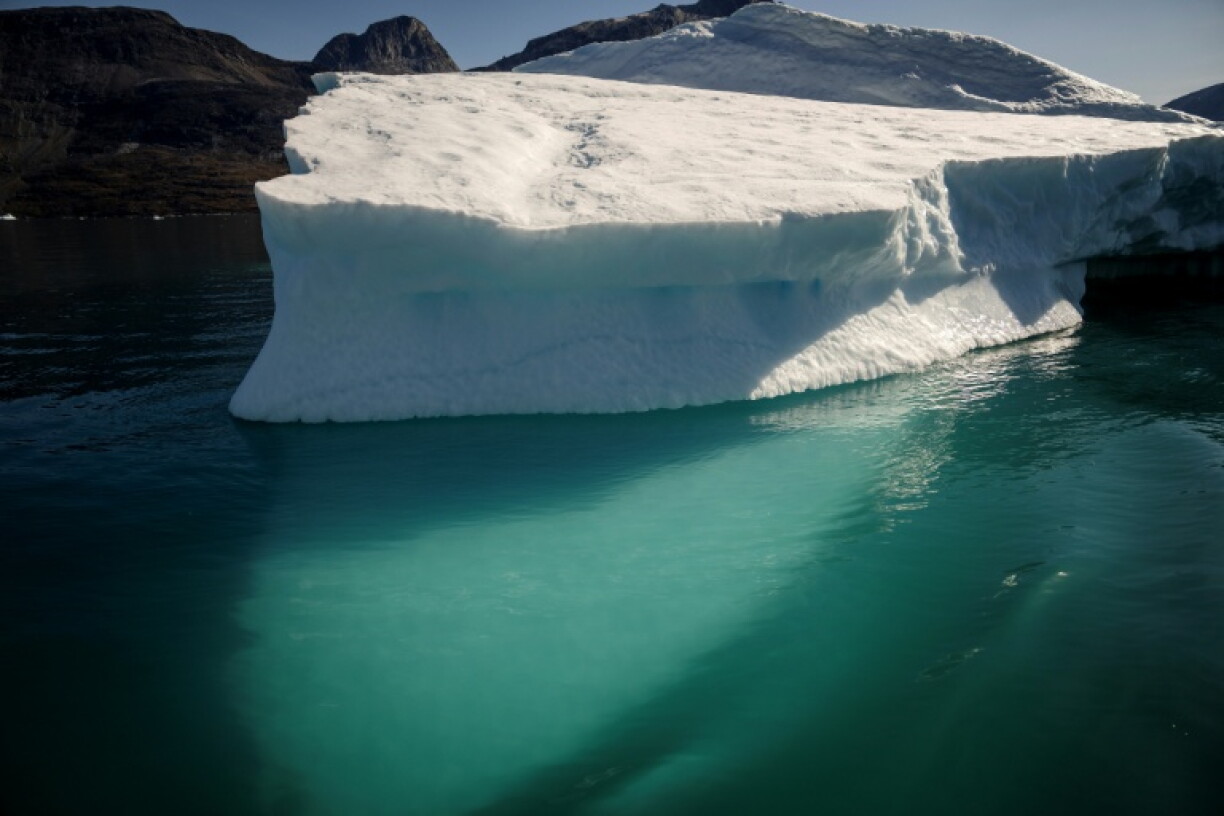
Meanwhile, as it lags behind Russia, the bloc wants to ramp up the number of icebreakers Europe has at its disposal and "will develop options for joint procurement, pooling and sharing" the key capabilities.
With three Arctic nations among its 27 members -- Denmark, Finland and Sweden -- the European Union has skin in the game.
Competition in the Arctic has long been on the rise as global warming causes sea ice to melt. Moscow, Beijing and Washington have been ramping up activity, racing to claim natural resources and new maritime routes.
But the EU's need for a new approach was laid bare when US President Donald Trump began making demands on Denmark's autonomous territory Greenland.
While Trump's tone has cooled since the beginning of the year, eventually leading to the signing of a security deal with Greenland and Denmark, many in Europe remain wary.
Von der Leyen in September announced a 200-million-euro ($232-million) package for Greenland during a visit where she said the EU had resolved to "be more present and to be more engaged in Greenland and in the Arctic".
Some of the initiatives listed in the strategy seemingly aim to cut dependencies on Washington.
Brussels is planning a "sovereign and secure" submarine cable to connect Greenland with the EU's mainland as part of a broader "Pan-Arctic" cable project also linking Canada, Japan and South Korea.
The bloc is also working to provide satellite connectivity in the Arctic through satellite constellation project IRIS², which aims to rival Elon Musk's Starlink.
The strategy stresses the need to cooperation with "like-minded" non-EU nations, such as Canada, Britain and Norway, and envisages a regular summit of "Northern Neighbourhood" partners.
Investments in renewable energy and critical raw material projects are also foreseen, among a series of other plans.
Meanwhile, the EU's energy commissioner Dan Jorgensen said the bloc's position "on drilling in the Arctic remains the same and it's very clear: oil, coal and gas must stay in the ground".
That came after a push from non-EU country Norway, which is eyeing further drilling in the Arctic, for Brussels to soften its stance.
The new strategy nonetheless dropped a pledge to press for an international ban on oil and gas development in the region, a move welcomed by Oslo.
del/ec/ach