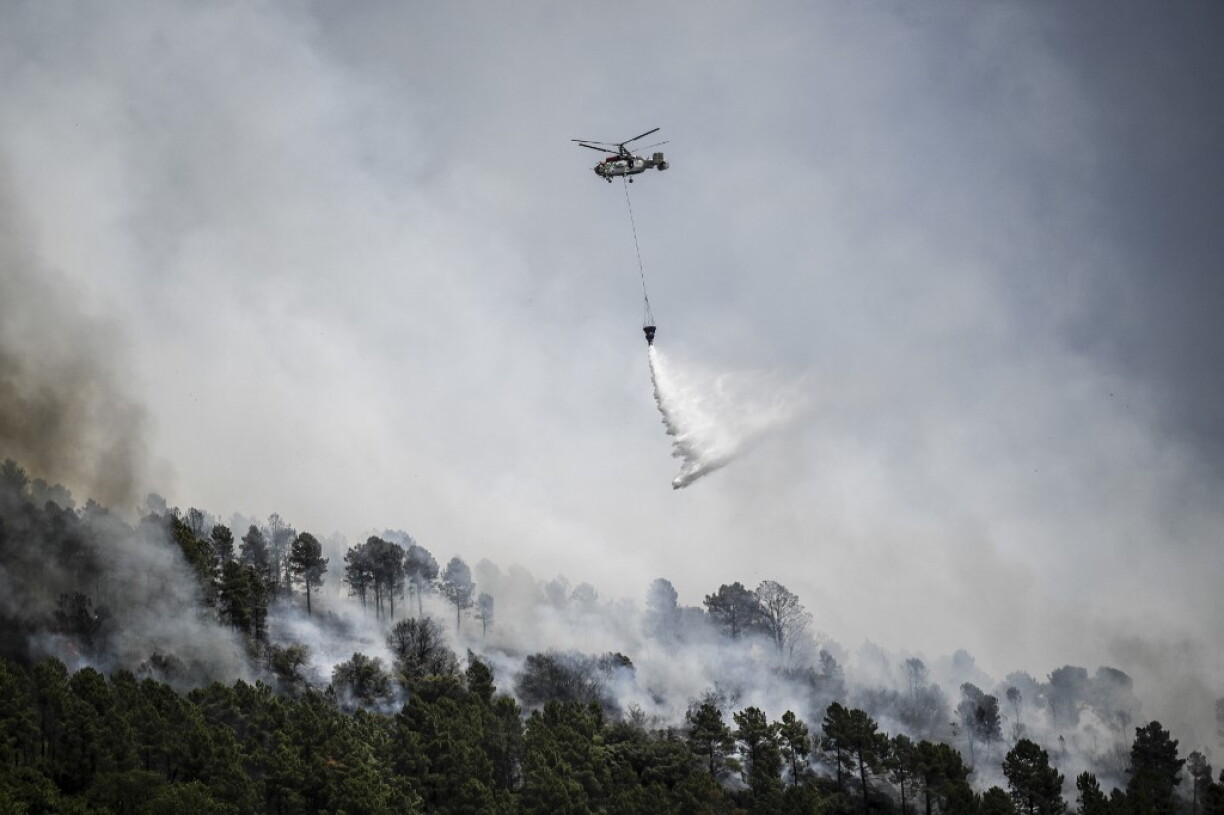
Extreme weather events – including wildfires, ongoing droughts, and intense heatwaves – are placing increasing pressure on the EU. Nearly 700,000 hectares of land have burned across Europe so far this year, and in 16 EU member states, the area affected is far above the usual annual average.
Losses in agriculture related to climate change are now estimated at around €28.3 billion per year across the EU. On Tuesday morning, Members of the European Parliament (MEPs) debated which lessons should be drawn and what action is needed to mitigate future risks.
European Commissioner for Humanitarian Aid and Crisis Management, Hadja Lahbib, acknowledged that the EU has responded to recent disasters, but stressed that stronger prevention efforts are now essential.
"My objective is to have an anticipatory response – to prevent, and therefore to avoid wildfires rather than simply responding to them", Lahbib explained. "We now truly need to adapt, with long-term policies. That is why we are currently working on a strategy with other commissioners, because this also involves agriculture, the resilience of nature, and a holistic approach, which we will present to you in the autumn."
This summer, the EU Civil Protection Mechanism mobilised 40 aircraft and 18 ground teams. In total, 777 firefighters from 14 EU member states were deployed to the most at-risk regions. This cross-border cooperation was highlighted in Parliament as a success story for European solidarity. Pascal Arimont, a member of the European People’s Party (EPP), recalled the wildfires in his home region, the High Fens in Belgium, where joint efforts proved decisive.
"Worse was averted because European solidarity really worked. Fire services from Germany, the Netherlands, and Luxembourg were on the scene immediately, and the EU Civil Protection Mechanism functioned as intended", Arimont said.
He also stressed the vital role played by local volunteers: "This fire would have been much worse without so many volunteers – farmers and contractors – who brought water to the blaze. We must include these people in our crisis plans. They respond immediately and help prevent the worst. Not only should we include them, we should also compensate them."
MEPs further called for voluntary firefighters to be granted EU-wide recognition for their cross-border work.
The European Commission is also investing in additional firefighting resources. At present, the EU has 18 firefighting planes and five helicopters available, with four more planes scheduled for delivery and 12 more Canadair aircraft planned. Commissioner Lahbib underlined the importance of developing manufacturing capacity within Europe:
"Producing Canadair planes in Europe is a topic I raise regularly. Our companies and economic sector must take up this challenge. But it is important to recognise that this is only one part of the answer – it comes after the fact. As Commissioner for preparedness, my focus is on being ready before disaster strikes."
With between 90 and 96% of wildfires attributed to human activity, the EU plans to ramp up prevention efforts aimed at citizens, with further details expected in the autumn.
Commissioner Lahbib added that a more comprehensive prevention strategy would be presented later this year. Meanwhile, European Commission President Ursula von der Leyen is due to deliver her State of the Union address on Wednesday.





