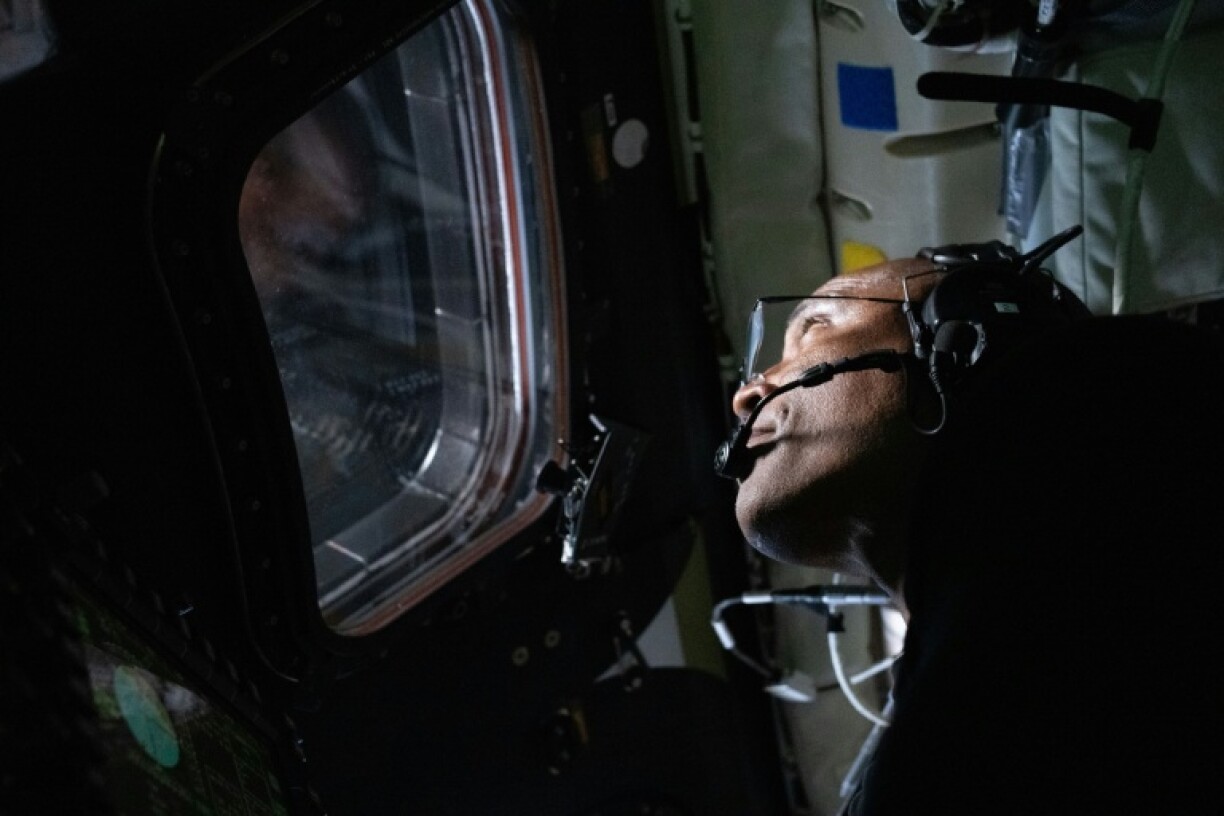
For the crew of Artemis II, coming back from their moon trip will not just be a technical challenge, but also an emotional one. “We can only celebrate once the crew is safely on the ship”, said NASA’s deputy administrator Amit Kshatriya on Friday. If everything goes to plan, the astronauts are expected to land at 2.07am (5.07pm local time) in the Pacific Ocean, off the coast of San Diego. From there, they will be taken aboard the ship USS John P. Murtha. On board, the crew will undergo medical examinations before being flown to the NASA Johnson Space Center in Houston.
The return journey will put extreme strain on both the astronauts and their temporary home: the space capsule is expected to reach a top speed of 10 kilometres per second, roughly 30 times the speed of sound. The descent back to Earth is expected to last around 13 minutes.
When the Orion spacecraft re-enters Earth’s atmosphere, it will be exposed to temperatures of around 2,800 degrees Celsius. Communication with the capsule will be interrupted for several minutes at that point. Astronaut Victor Glover, who is part of the mission, said that re-entry feels “like riding a fireball through the atmosphere.” A series of parachutes will then help slow the capsule down to around 30 kilometres per hour so it can safely land in the ocean.
During a test flight, there had been issues with the heat shield. NASA subsequently modified the structure of the shield and selected a new re-entry trajectory for the capsule.
US astronauts Reid Wiseman, Victor Glover, and Christina Koch, along with Canadian Jeremy Hansen, began their mission on 1 April. At one point during the mission, they travelled further from Earth than any human before them. They also collected important scientific data to help prepare for future crewed missions to the Moon.





