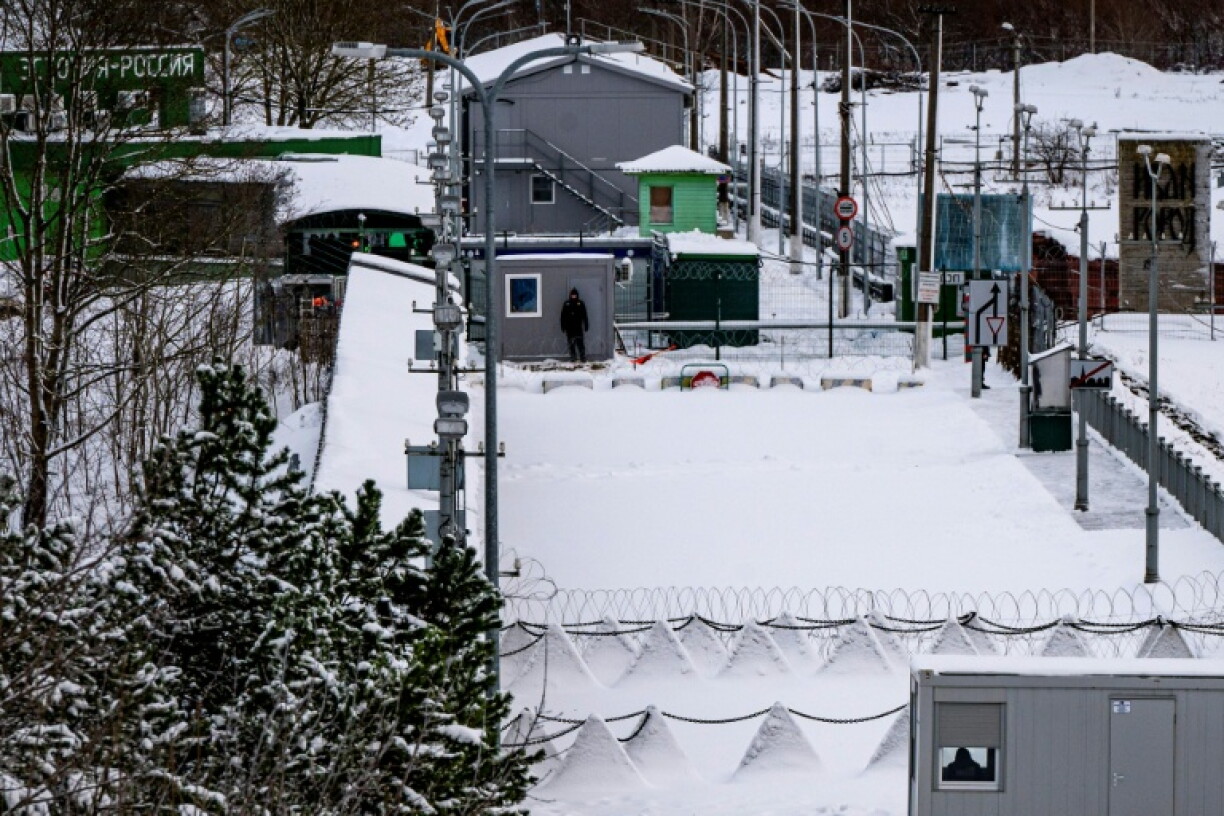
Scores of people with suitcases, backpacks and plastic bags huddled together in the Russian town of Ivangorod as they queued to cross into Estonia before the Baltic country seals its border shut.
A NATO member on the alliance's eastern flank, Estonia said this month it had foiled an attempted arson attack on a drone factory on its soil -- amid general anxiety over Russia's offensive in Ukraine.
It alleged that Russia's GRU military intelligence was behind the alleged plot -- accusations rebuked by the Kremlin as "unfounded" -- and ordered its three border crossings shut as of December 1.
That included the border bridge between Narva -- a predominantly Russian-speaking Estonian town of over 50,000 people -- and Ivangorod on the other bank.
"It's such a blow to people, to relatives who live in Russia... My brother's over there. Now we won't be able to see each other," Angela, who was crossing back to Estonia, said at the checkpoint where the Russian flag fluttered.
She spoke to AFP on Friday and, like other people interviewed in the area, did not want to disclose her full name.
Russia suspended vehicle traffic through Narva in February 2024, although pedestrians were still allowed to pass.
Many residents of Narva -- a mixture of Estonians, Russians and people left stateless after the fall of the Soviet Union -- used the crossing to visit relatives or go shopping.
"That's just how life turned out," said Ekaterina, also crossing to Estonia, who called Tallinn's move "very sad".
"Back when the Soviet Union still existed, people lived on different sides of this beautiful river Narva, and yet the bridge was open, everything was open," she told AFP.
"Then they were divided and ... now the borders are being closed," she said.
Several European countries have accused Russia of being behind sabotage attacks since the start of the war in Ukraine in 2022, in what many see as a rise of so-called "hybrid warfare" against Kyiv's allies.
The Estonian police said on Friday the closure would "make it harder for Russian intelligence services to recruit and influence people, and help prevent sanctions evasion".
The move marked a sharp escalation in tensions between Estonia and Russia, which Tallinn sees as part of what it says is a broader campaign of hostile activity linked to Moscow's war in Ukraine.
Kremlin spokesman Dmitry Peskov accused Estonia of "building a wall", in comments to reporters on Monday, hinting that the decision would backfire on Tallinn.
In a statement on Friday, the Russian foreign ministry's spokeswoman Maria Zakharova said the closure "infringes the rights and interests of a substantial number of our compatriots".
"Russia reserves the right to take all necessary political and diplomatic measures to safeguard its national interests," Zakharova added.
According to Estonia's ERR public broadcaster, the number of crossings through the border had already dwindled: from over four million a year before 2022 to around 760,000 in 2026.
The majority of this year's crossings -- 447,000 -- were through the Ivangorod-Narva bridge.
Elena Belova lives in Finland, which shut its own border with Russia in 2023.
Waiting in line at the Ivangorod checkpoint -- "the closest crossing point to Finland" -- she attributed Estonia's decision to "purely political motives".
From December on, Belova will "try to travel through Latvia", Estonia's southern Baltic neighbour, which has two road crossings with Russia.
"Those who have cars can go that way -- while those who don't will presumably have to use planes," she added.
bur/rlp


