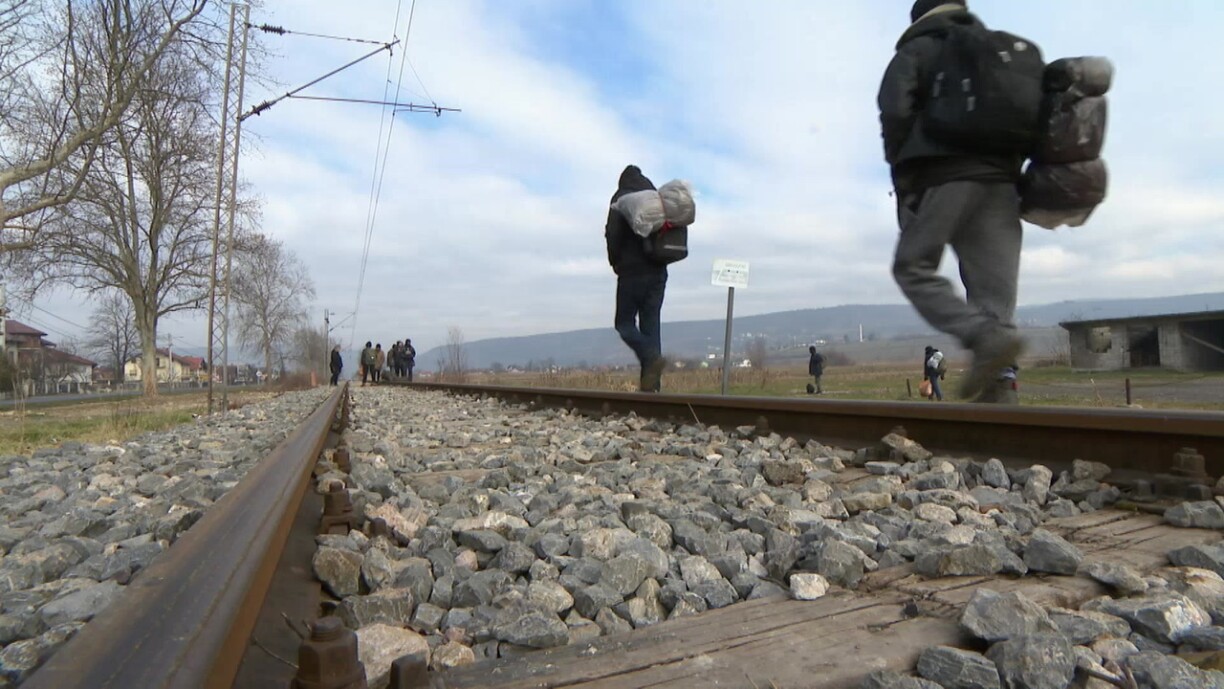
In many ways, this is an important year for the youngest EU member state - Croatia has the EU presidency until the end of June, and the harbour city of Rijeka on the Adriatic Sea is the European Culture Capital for 2020. However, a recent report by the RTL team in the Balkans has revealed a significant issue with respecting human rights.
The number of refugees making their way to the EU is expected to rise in the coming months in the wake of unrest in the Middle East, the Turkish invasion in northern Syria, the uncertainties in Iran and the danger of a new armed conflict in Libya. The Mediterranean is too perilous a journey for the winter months, so many migrants will flee over the Balkans instead. Hungary may have implemented fences, but Bosnia and Croatia still remain a possibility for those seeking refuge in the European Union.
In Croatia, refugees are spotted using thermo-detectors, security cameras and drones, before they are frequently subjected to physical violence and humiliation by police, in direct contravention of human rights. Many are also denied the right to asylum, a right which is guaranteed by European and international law, before being pushed back to Bosnia.
The team from RTL spoke to a number of refugees attempting to cross Croatia and reach the Schengen area in Slovenia. Many expressed harrowing accounts of the torture inflicted upon them when caught by Croatian authorities - their hands and arms were beaten and broken, their valuables and food confiscated, before they were thrown into icy rivers after being stripped of their clothing. Groups of migrants huddle in freezing abandoned buildings in Bosnia, where they are effectively trapped, unless they pay thousands of euros to unsavoury gangs promising to help them make the crossing.
Children as young as three have been separated from their parents while Croatian police force the parents back across the border, and even young boys are subjected to violent beatings by police.
The EU Commission recently confirmed it would be carrying out an investigation into the claims.
When questioned, the Croatian ambassador to Luxembourg said he was aware of the allegations and maintained they were not permissible and would be investigated. However, he declined to comment on the veracity of the allegations.
In spite of the dangers, the numbers of migrants will continue to rise. In 2018, Bosnia counted around 24,000 migrants, 3,000 of which were prevented from crossing into Croatia. In 2019, around 24,000 migrants were able to continue their journey.
In spring, 100,000 migrants are expected to attempt entry to the Schengen zone, while human traffickers will continue to take advantage while Croatia's policies on asylum seekers remain in question.
To view the Reportage in full click here





