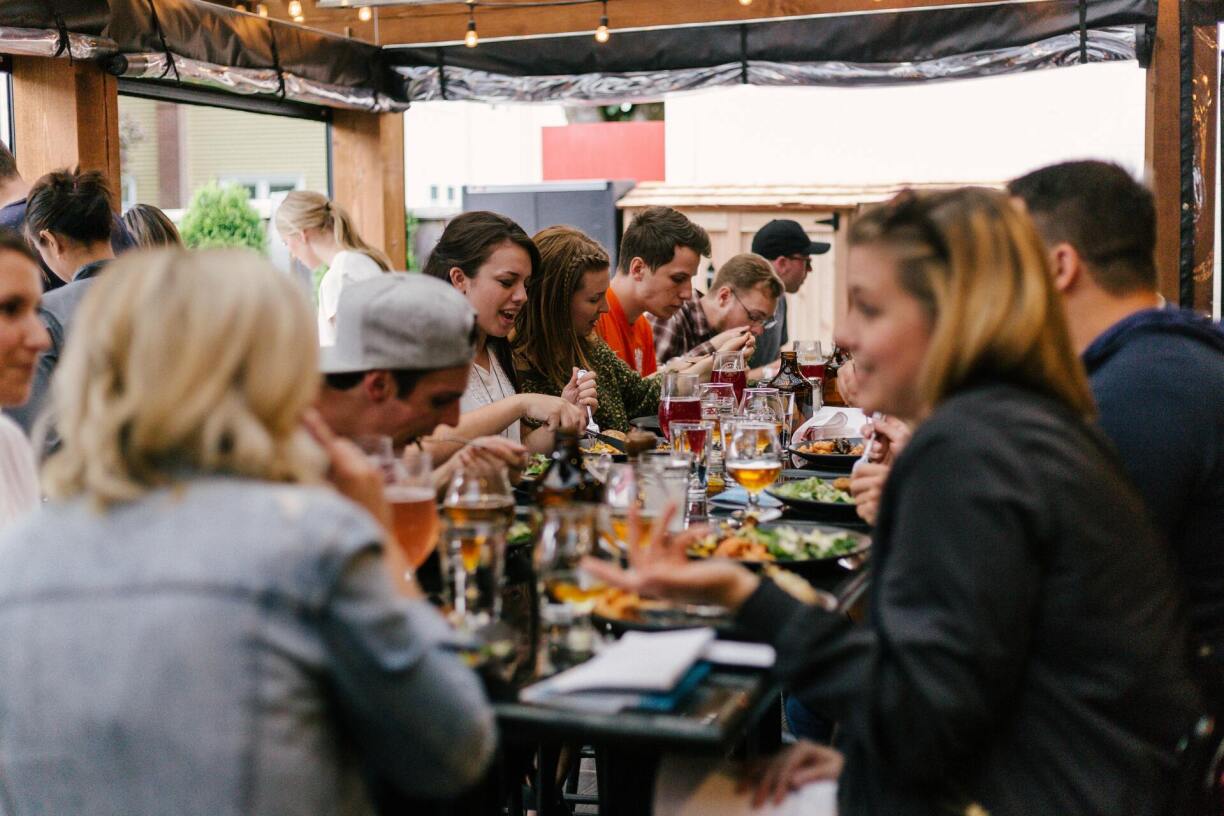
For some restaurant proprietors, such as Thierry Van Damme, who runs 9 restaurants in Luxembourg and Belgium, the introduction of testing would be welcomed if it meant their establishments could open their doors to guests once more. Van Damme told RTL.be he would support mandatory testing if the results could be obtained within 30 minutes, as the safety of clients would also guarantee the safety of his staff. The testing could be implemented alongside existing safety measures, such as staff wearing protective equipment.
Luxembourg's Prime Minister Xavier Bettel said on Friday that plans were afoot to allow the hospitality industry to reopen in the Grand Duchy, although he did not give precise details on the measures on the table.
Rudi Vervoort, Minister-President of the Government of the Brussels-Capital Region, said the subject had been discussed in a committee meeting on Friday. The administration have considered prices and the accessibility thereof, as they vary from country to country. Germany's rapid tests have sold for around €5, while in Belgium, the price has doubled. Vervoort said the tests were 90% reliable and could deliver results in ten minutes, refusing to dismiss the idea completely.
Erika Vlieghe, head of the infectious diseases department at Antwerp University Hospital, said there was much to still be organised before the sector could safely reopen. She said Belgium would be looking at examples from its neighbours, such as France and Germany, to organise measures in a targeted manner.
Vlieghe explained that Belgium has already put saliva tests in place for teachers, which could also be rolled out to other sectors with high risk of infection, such as gyms and sports instructors. As for clients, they would take inspiration from Austria or Germany. However, she warned against getting too complacent even with testing in place, but noted it could offer an additional layer of security.
Deputy Prime Minister George Gilkinet expressed optimism that rapid tests would offer more freedom in opening sectors up once again. He cited Luxembourg as an example to follow, particularly in the cultural sector, where some venues have reopened with reduced capacity for guests. Gilkinet said concerts and theatre performances could run as pilot projects to dictate how other events could take place. However, he said nothing would be set in stone for Belgium until 26 March at the earliest.





