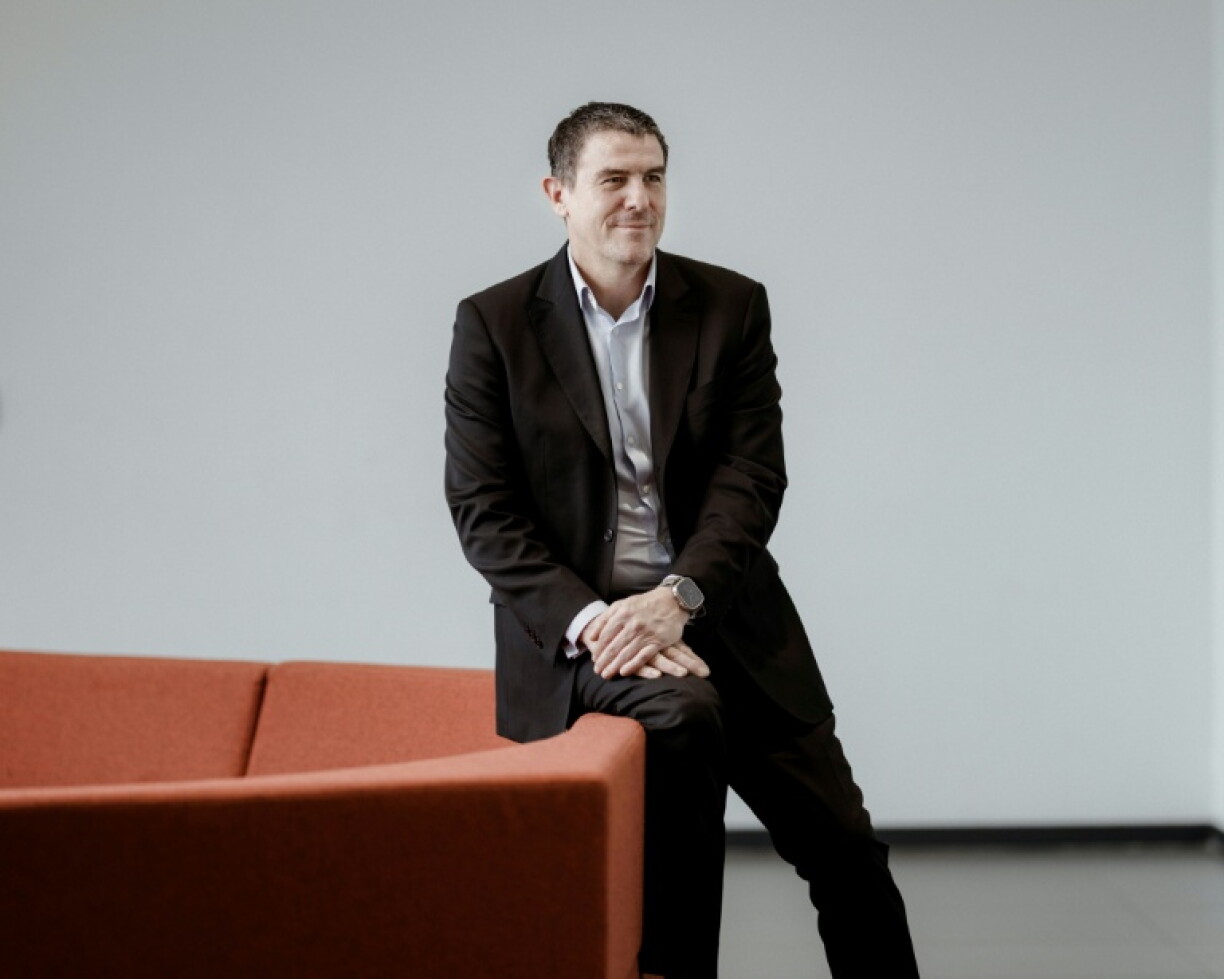
A year after acquiring South African pay-TV giant MultiChoice, French media group Canal+ is aiming to sign up one in every two African households that has a television, its Africa chief told AFP.
The strategy is to "follow the electricity", said David Mignot, CEO of Canal+ Africa and of MultiChoice, which was taken over by the Paris-based group in September last year.
The deal brought Canal+ some 14 million new subscribers from English- and Portuguese-speaking African countries, on top of its nine million in the continent's French-speaking areas.
Africa now makes up 23 million of the group's roughly 40 million subscribers worldwide.
AFP interviewed Mignot at the launch of Canal+ training academy in Johannesburg on Friday.
"It was absolutely essential," Mignot said. "Exactly one year ago, the MultiChoice group was running into a number of difficulties: losing customers, tough financial results."
"The joining of the two companies made it possible to launch a turnaround plan, to actually get the situation back on track fairly quickly," he said.
"It's clear that we're in a global consolidation phase in the media industry. It's clear that scale matters more than ever."
"We've slowed it down, but we haven't completely stopped it," he said.
Several countries "have returned to very strong growth... but there are still a number of markets where we are working hard".
"We have ambitions for growth across all regions," Mignot said, adding much of this would come from areas where the group is already established.
"And Africa, inevitably, thanks to demographics, economic growth and electrification, carries within it growth drivers that mean it will account for a significant share of that growth."
Present in 48 countries in sub-Saharan Africa, "we really have a continent-wide presence", Mignot said.
"In the vast majority of countries, we supply one in two families that own a television. That's a very significant market penetration.
"Our ambition is to be in at least one out of every two households everywhere where there is power, regardless of the area: urban, rural, solar panels or grids.
"We follow the electricity, because where there is electricity, televisions follow."
"We've worked a lot this year on densifying our distribution. We now have 50,000 points of sale. That's 100,000 to 150,000 people who, every day, promote, explain or interact with customers," Mignot said.
"In sub-Saharan Africa, there are roughly 100 million households that have a television and are electrified.
"As of today, about 15 million of them have unlimited broadband internet access, which means you can watch television without having to think about the data costs it will generate.
"And there are 85 million families that still need a good, old satellite dish and a decoder."
"Today, we produce 10,000 hours of content -- fiction, series, drama -- every year, not counting reality TV, not counting live sports, and in around 30 languages," he said.
"There is a creative power on the continent that is emerging as a true force, and this doesn't surprise us because there is the youth of the continent, there is the continent's way of telling stories.
"The question is how we manage to do this in a section of the creative industries that requires the most resources, where there are high entry costs and the biggest barriers, namely producing series and films."
An example of the type of production the group was aiming for, Mignot said, was the film "The Road Home", which was shot entirely in South Africa and is based on Paul Simon's 1986 album "Graceland".
Due for release next year, it is intended for a global audience.
fal/br/ho/phz/kjm