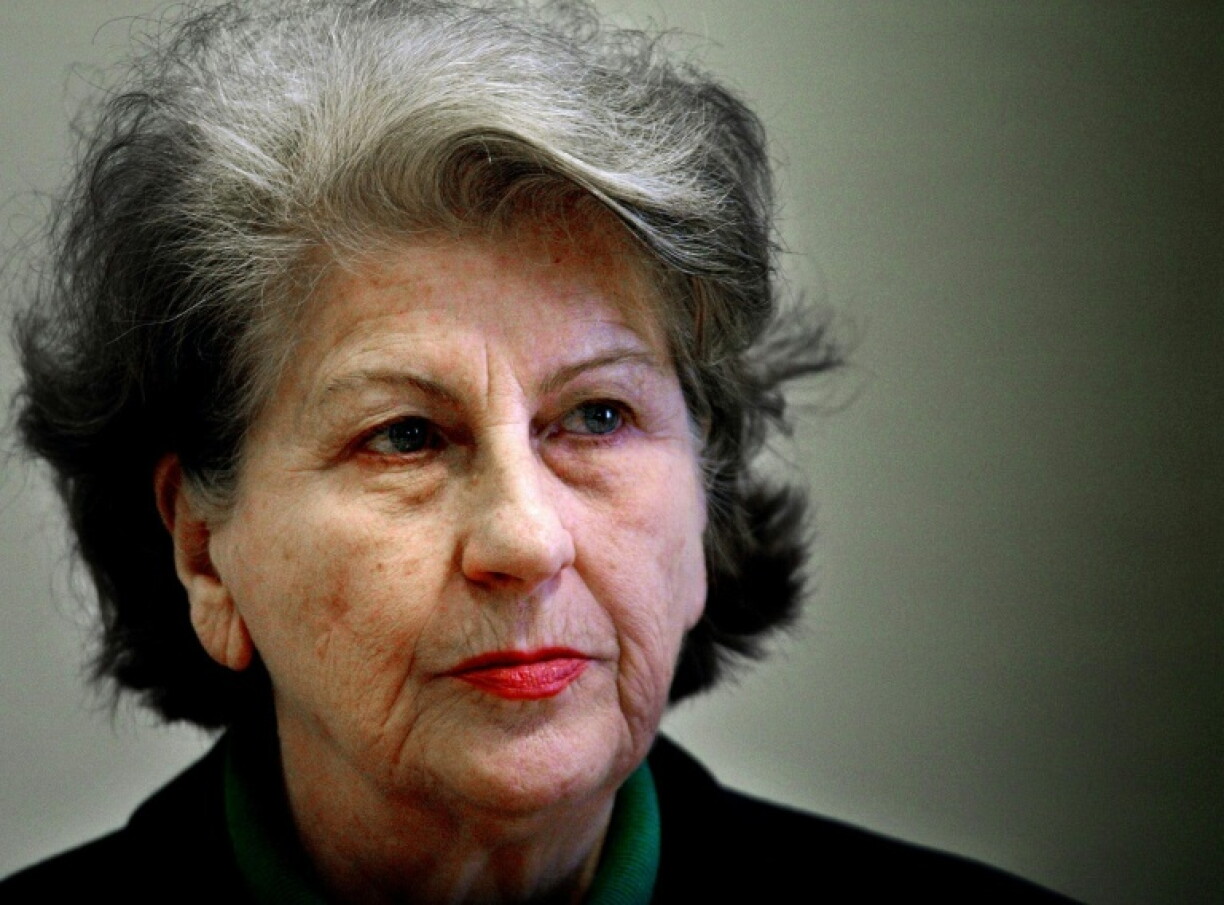
Former Bosnian Serb president and war crimes convict Biljana Plavsic, known as the 'Iron Lady', has died in the Serbian capital on Thursday, aged 96, local media reported.
Plavsic surrendered to a UN war crimes tribunal in The Hague in 2001 after learning that she was the subject of a secret indictment.
In 2003, the court sentenced her to 11 years in prison after she admitted playing a leading role in a campaign of persecution against Croats and Bosniak Muslims during Bosnia's 1990s war.
Plavsic died in Belgrade and will be buried in the Bosnian Serb capital of Banja Luka, Bosnian Serb public broadcaster RTRS television reported.
The 1992-1995 war claimed about 100,000 lives and forced some 2.2 million people from their homes.
Plavsic was the only woman convicted by the International Criminal Tribunal for the former Yugoslavia (ICTY).
She was also the highest-ranking official of the former Yugoslavia to acknowledge responsibility for atrocities committed in the Balkan wars of the 1990s.
In 2009, she was granted an early release after serving two-thirds of her term at a prison in Sweden and returned to live in Belgrade, where she avoided politics.
"Her death is another reminder of the time of struggle, sacrifice and great challenges on the path to creating Republika Srpska," former Bosnian Serb president Milorad Dodik said on X.
Known as the Bosnian Serb 'Iron Lady' for her ruthless leadership, the former ally of wartime leader Radovan Karadzic was a fiery nationalist who, during the war, publicly supported the campaign of persecuting non-Serbs.
Plavssic once famously defended her purge of non-Serbs as "a natural phenomenon" and not a war crime.
But the former biology professor underwent an extraordinary pragmatic conversion in 1996, which saw her cooperate with the international community, turning the tables on her mentor Karadzic -- who was later sentenced to life in prison.
After being in Karadzic's inner circle during the war, she abruptly switched alliances and became increasingly pro-Western after the Dayton peace agreements.
From Banja Luka, where she set up the capital of the Bosnian Serb entity far away from the nationalist stronghold in Pale, she led the opposition against her former hardline allies.
She served as Republika Srpska president from 1996 to 1998.
Plavsic began to withdraw from political life in 2000 after her party's electoral setback in local elections and resigned her seat in the Bosnian Serb parliament in December that year.
rus-ljv/al





