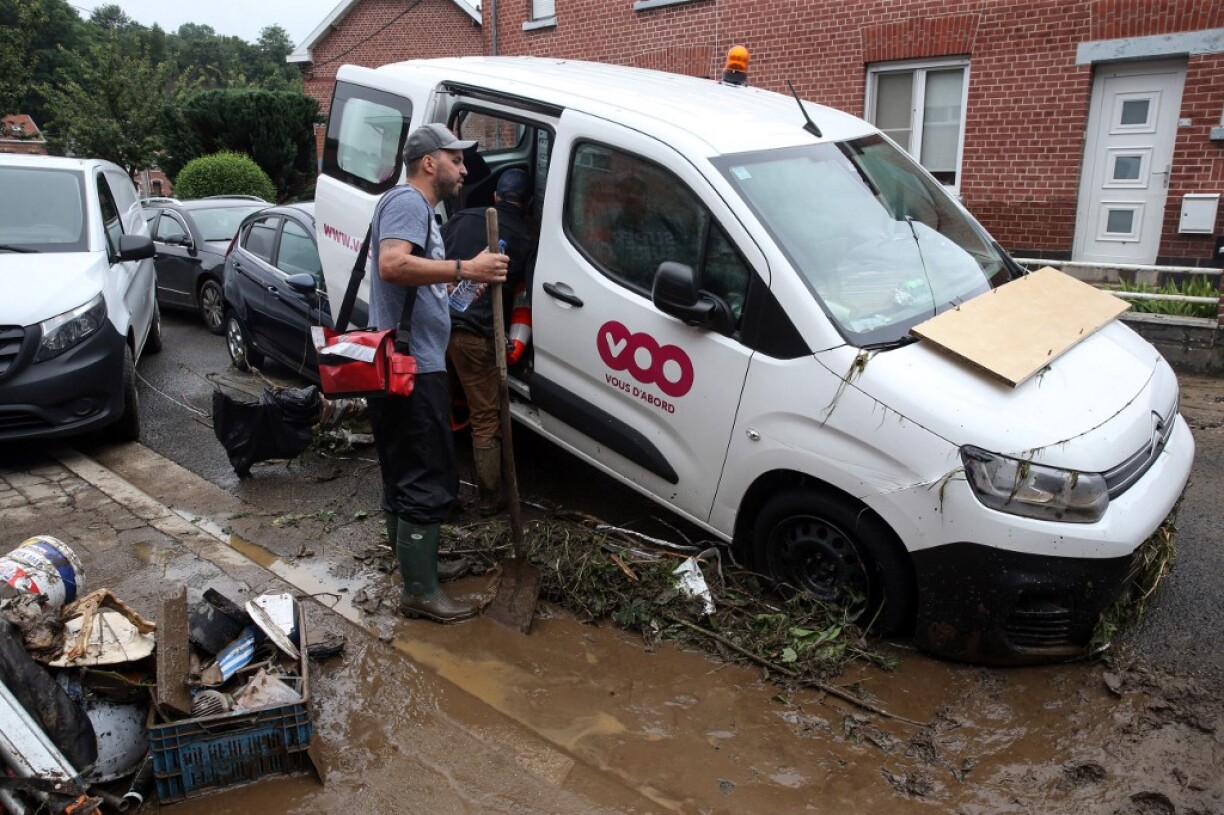
As a guest speaker on the radio, the president of the Walloon region Elio Di Rupo said he feared the death toll would get worse, reminding of the hundreds of people that were still trapped in their homes on Thursday.
Wallonia, a French-speaking region in southern Belgium, was particularly hard hit. More than 21,000 people were without electricity in the region, according to RTL information.
According to the federal police, dozens of road sections remained closed to traffic, as well as most of the railways in Wallonia.
In Liege, Belgium's fourth most populous city, local authorities had called on thousands of residents of neighbourhoods along the Meuse to leave their homes in anticipation of a sharp rise in river levels on Thursday.
Fortunately, the water level in the city centre did not rise during the night and was beginning to fall slowly in the most affected area, as the Liège police reports on Friday morning.
The Meuse is the water receptacle for the vast majority of rivers in southern and eastern Belgium. These rivers, in particular the Ourthe and the Vesdre, have seen their flow increase enormously with the torrential rains of the last few days.
The communes bordering these rivers have been under water since Wednesday, in the regions of Liège and Verviers, notably Theux, Pepinster and Spa.
Evacuations have taken place in Ottignies, Grez-Doiceau, Jodoigne, Mont-Saint-Guibert, Court-Saint-Etienne and Tubize.
Six people died in the eastern district of Verviers alone, according to Belgian media. The bodies of two people were also discovered on Thursday evening in Chaudfontaine (province of Liege).
On the other side of the border, Germany reported more than 80 deaths and continues to search for hundreds of people who are still missing after the devastating floods, unseen since the war.





