Voters in Saxony-Anhalt head to the polls this Sunday to elect a new state parliament, with current projections suggesting the Alternative for Germany (AfD), officially classified as a confirmed far-right party by the state's domestic intelligence services, could secure around 42% of the vote. The ruling coalition of the Christian Democratic Union (CDU), Social Democratic Party (SPD), and Free Democratic Party (FDP) appears on the brink of collapse, raising the possibility of the AfD forming a government at the state level for the first time.
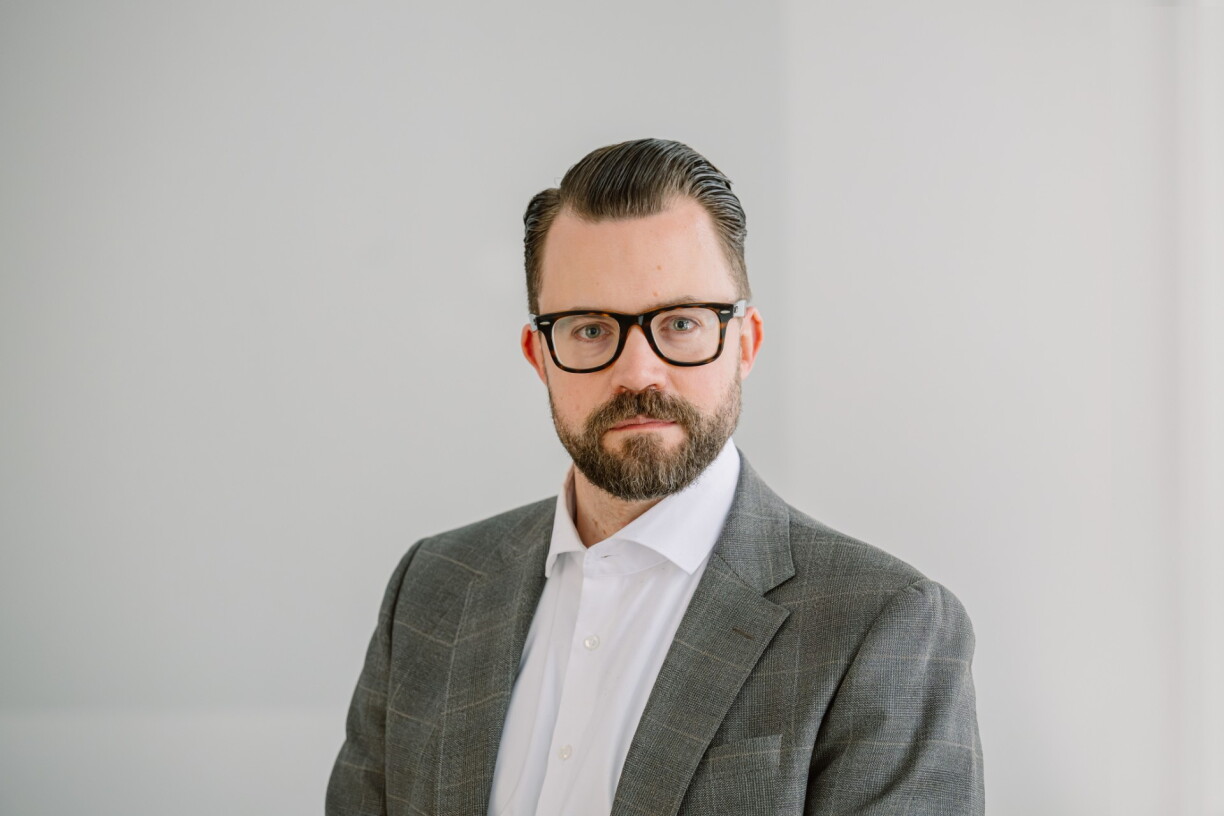
Such a development would have far-reaching social and political implications, particularly for people with a migration background and those identifying as queer. RTL spoke with Professor Marcel Lewandowsky, a political scientist at Martin Luther University Halle-Wittenberg, who specialises in comparative populism and democratic backsliding.
According to Professor Lewandowsky, there are several distinct groups of AfD voters. Some do not believe the party is genuinely far-right, dismissing the assessments of experts and intelligence agencies as attacks from the political establishment. A second group is indifferent to the party’s far-right classification, while a third openly holds far-right views themselves.
However, Lewandowsky stresses that only a minority of AfD supporters have a firmly entrenched far-right worldview. The majority are motivated by populism, seeing themselves as a "silent majority" neglected by mainstream politics and believing the AfD offers a way to restore a lost democracy.
Another subset of AfD voters are drawn to authoritarian ideas, favouring strong leadership unconstrained by institutions, though this group also remains relatively small.
Election forecasts indicate the CDU will see its share of the vote fall from 37% in 2021 to around 23%, while the FDP risks missing the 5% threshold to enter parliament. The SPD is projected to remain stable at around 9%. An alternative three-party coalition including the Greens is only feasible if the Greens surpass the 5% bar.
Even in this scenario, a minority government tolerated by The Left (Die Linke) may be the only viable outcome. Yet, deep historical reservations persist within the CDU about any cooperation with The Left, given the party's roots as the successor to East Germany's former ruling party, the SED. As Lewandowsky explains, many in the CDU base remain wary of aligning with The Left, fearing it would force the CDU to make policy concessions and cause internal tensions.
Lewandowsky concludes that the CDU is "between a rock and a hard place". The only way to avoid reliance on The Left would be for the CDU to join a coalition as junior partner to the AfD, a prospect that would severely test the party’s cohesion and identity.
These scenarios only come into play if the AfD falls short of an outright majority. Should it secure more than 50%, the AfD could govern alone. As the campaign remains highly volatile, Lewandowsky describes the outcome as too close to call because the AfD will strongly mobilise its base, but so will those determined to prevent it from taking office. Hence, every vote will count.
If the AfD does not win an absolute majority, the most likely path to government would be a minority administration tolerated by the populist, left-wing Bündnis Sahra Wagenknecht. However, it currently seems unlikely that this party will enter the state parliament.
The prospect of the AfD entering government has sparked fierce national debate. Some argue that the party’s limitations in office would demystify it, exposing its lack of governing competence. Others warn of a genuine democratic backlash, with the AfD using power to undermine democratic norms.
Lewandowsky is sceptical of the demystification thesis, citing international examples where right-wing populist parties have not collapsed in government. He notes that the AfD is well aware of the risks and has made extensive preparations, recruiting staff and developing strategies for potential governance.
He predicts the party would not dismantle democracy overnight, but would pursue a gradual, three-pronged anti-democratic agenda. The first pillar is migration policy, with the AfD intent on maximising the state's powers to increase deportations. The second target would be public broadcasting, which the AfD aims to abolish in its current form.
The third pillar concerns education policy, where the AfD seeks what it calls patriotic education. This includes changes to history curricula, increased use of national symbols in schools, and a focus on singing the national anthem, essentially promoting a nationalist agenda.
Lewandowsky emphasises that the AfD also intends to reduce the visibility of people who do not fit its heterosexual, family-centric worldview. This would likely impact civil society organisations, with funding for queer associations at risk and efforts to push LGBTQ people out of public view.
If the AfD achieves its objectives, Lewandowsky warns, this could significantly affect civil society and the sense of security for minorities. The political scientist warns that many people in Saxony-Anhalt, those without a German passport, those with a migration background, or those who are queer, may no longer feel safe.
An AfD breakthrough would send shockwaves beyond Saxony-Anhalt, emboldening the party in other states and at the national level. It could also convince voters, including those currently leaning toward the CDU, that the AfD is now a credible governing option.
Lewandowsky explains that if the AfD is successful and the CDU is punished at the polls, this will put enormous pressure on the federal government. The already unpopular Chancellor Friedrich Merz, leading an unpopular administration, could face intense scrutiny at least until the next scheduled federal election in 2029. The AfD is already ahead in national polls, and if it enters government in Saxony-Anhalt, Lewandowsky expect its polling numbers to rise even further.
For over a decade, Germany’s mainstream parties have been united in their determination to keep the AfD out of power. Yet, the party’s popularity continues to grow. Lewandowsky attributes this to a contradictory two-pronged strategy: the so-called firewall of refusing cooperation with the AfD, combined with attempts, especially by conservatives, to win back AfD voters by adopting similar hardline rhetoric on migration and integration.
He notes that there is no consensus among parties on what the firewall actually means, whether it implies ruling out all cooperation or only certain forms.
Meanwhile, attempts by other parties to outflank the AfD on migration issues have backfired. Lewandowsky explains that the underlying idea is that, since AfD voters prioritise migration, mainstream parties should move closer to the AfD’s stance and adopt harsher rhetoric. However, in practice, this behaviour does not shrink the AfD; it only strengthens it.
International comparisons confirm that when mainstream, particularly conservative, parties shift rightwards on migration, it only benefits right-wing populists; voters tend to prefer the original. This cliché, Lewandowsky says, is now turned to reality in Germany.





