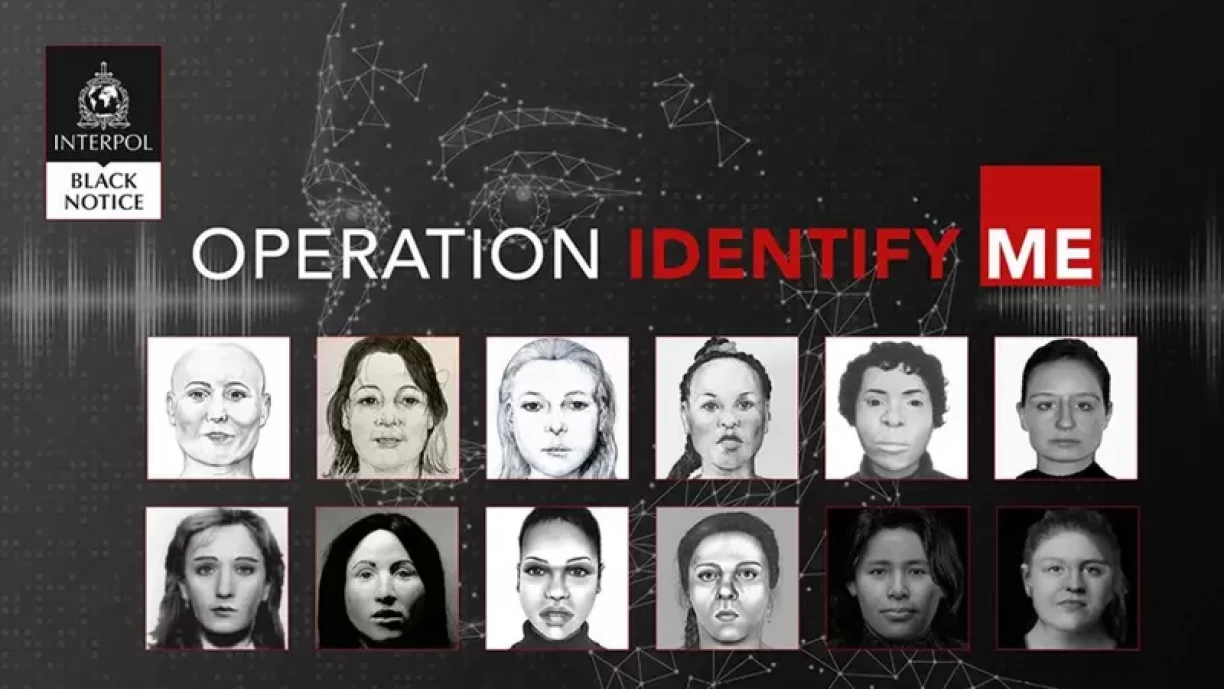
In an effort to identify the victims of numerous unsolved cases, Interpol has published a list seeking information on 22 unidentified bodies found in the Netherlands, Belgium and Germany between 1976 and 2019.
This is the first time such a list has been issued.
Despite extensive police investigations, these women have never been identified. The authorities do not know who they are, where they come from and why they were in these countries, but there are indications that they may hail from the Benelux countries and Germany.
Interpol has issued a "Black Notice" for each victim - alerts which are usually reserved for the police and not made public. But a site dedicated to the unusual operation offers details for each case, including facial reconstruction images and other potential identifiers, in the hopes someone might recognise the victims.
Anyone with information is encouraged to contact the relevant national police team using the form on each profile.
The origin of the campaign was the unsolved murder of a woman found in a wheelie bin thrown into an Amsterdam river. Detective Carina Van Leeuwen has been trying to solve the mystery since she joined the city's first unsolved cases team in 2005.
The woman's body showed signs of gunshot wounds to the head and chest. Recent forensic investigations have narrowed down her place of birth to the Netherlands, Germany, Luxembourg or Belgium.
According to the Dutch police, a case is usually designated as "cold case" if it is unsolved after three years.
A printed T-shirt, a silver bracelet and a rose tattoo are among images posted to Interpol's website and social media accounts, details from usually classified "Black Notices" on each of the killings where investigations have hit the buffers.
The oldest of the remains was found by the A12 motorway in the Netherlands in 1976, while the most recent was found in a park in Belgium in August 2019.
"Partly because the women are likely from countries other than where they were found, their identities have not been established," Interpol said in a statement announcing the "Identify Me" campaign.
The bodies may have been left in different countries "to impede criminal investigations", it added.
A facial reconstruction has been created for each of the victims as well as information about the place and time they were discovered, personal items found on the bodies and their clothing and jewellery.
"Every avenue we could think of to solve these cold cases has been explored," said Francois-Xavier Laurent, who manages Interpol's DNA databases.
"The investigations have reached a dead end and we're hoping public attention will allow us to move them forward," he told AFP.
"Families, friends, colleagues who may have stopped seeing this person from one day to the next" could offer information, "even tiny clues" that could help solve the cases and inform the women's families, Laurent said.
The cases are "not linked together" but share "an international context," he added.
Interpol believes that some of the women may have come from different regions of eastern Europe.
"These could be women who decided to take a tourist trip, but also potential victims of human trafficking," Laurent said.
Further cases may be added to the "Identify Me" scheme in future, Interpol said.





