
Activist Margaret Sanger, heiress Katharine McCormick and researcher Gregory Goodwin Pincus helped develop the very first oral birth control pill and changed the course of history.
Margaret Sanger started working as a nurse in New York’s lower east side in 1911. There she witnessed the ramifications for poor and immigrant women who, due to lack of access to birth control and family planning, had to resort to cheap back alley abortions.
These experiences turned her into an activist, and she started campaigning for every woman's right to avoid unwanted pregnancies.
In the early 1900s the Cumstock act criminalised the distribution and the possession of information about unlawful abortion or contraception. In an interview with NPR Linda Gordon, a historian at New York University, remembers how hard it was for women to access birth control and the stigma that surrounded it:
"When I was in college, a number of women had a wedding ring — a gold ring — that we would pass around and use when we wanted to go see a doctor to get fitted for a diaphragm," Gordon said. "In other words, there were people finding their way to do that, even then."
In 1914 Margaret Sanger coined the term "birth control" and in 1921 she founded the American Birth Control League, the precursor to the Planned Parenthood Federation.
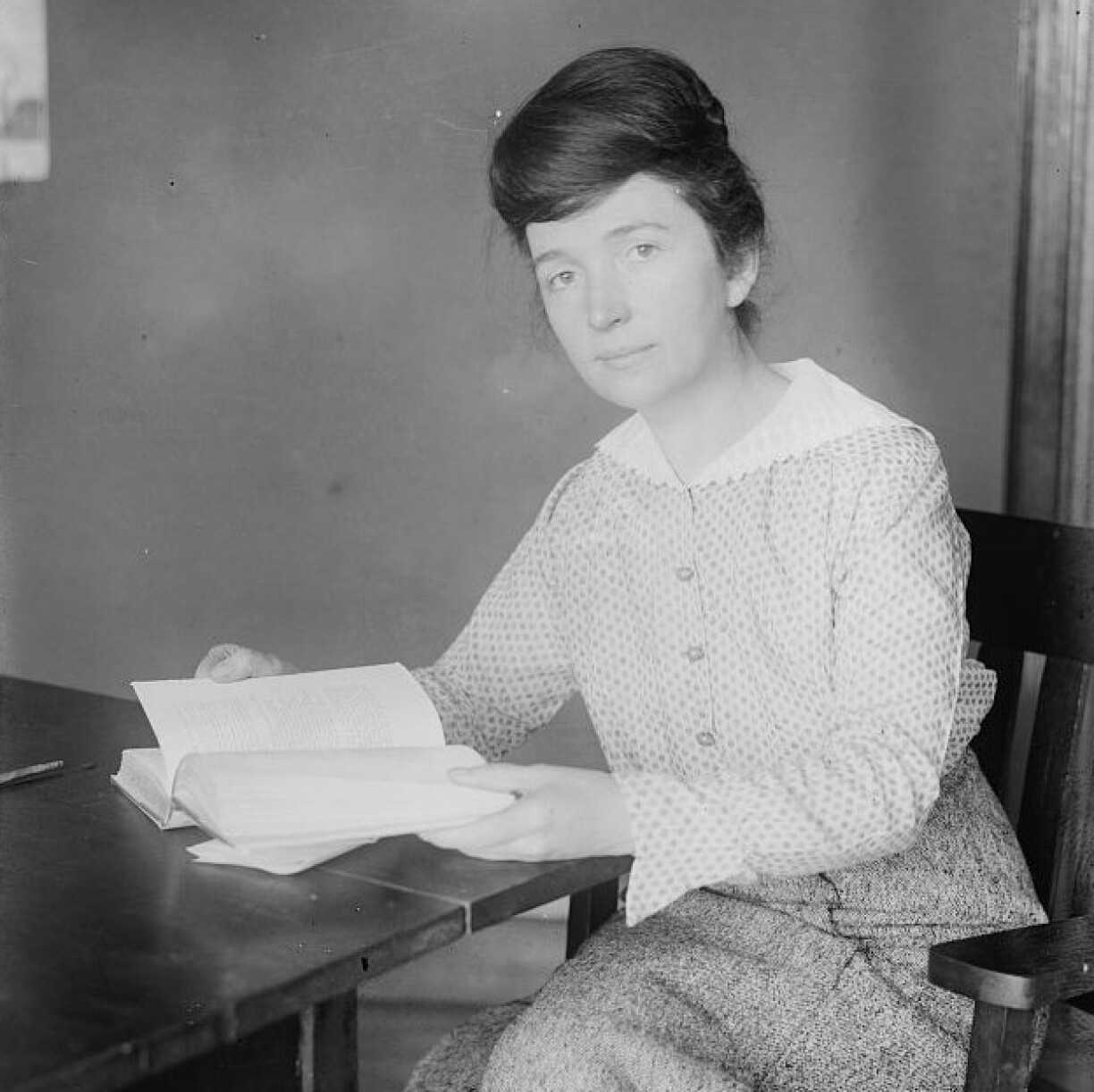
She had progressed the cause considerably by the late 1940s, but remained frustrated by the limited options women had to control their fertility. Birth control solutions remained difficult for unmarried women to access, and what was available to married women was often unreliable. To Sanger. birth control should be as easy as taking an aspirin. So, she set out on a mission to find someone who could her help her achieve that level of access.
In 1951 she got in contact with Gregory Pincus, a researcher who was interested in studying the human reproductive system. She called on her widowed friend Katharine McCormick,who inherited a substantial part of the McCormick family fortune, to raise sufficient funds for him and his team to research hormonal contraceptives. Eventually their research led to the creation of "Enovid-10", the very first birth control pill.
And on 9 May 1960 it was finally approved by the FDA.
1.2 million American women were using within two years of its initial distribition, and by 1965 40% of young married women were on the pill. In 1961 the NHS introduced it to the UK as well.
Unmarried women didn't get access to it until 1967 in the UK and 1970 in the US, but once they did it was a true revolution for all young women. They could now choose when to have children, for instance opting not to until after finishing a college degree. Having a baby at the wrong time risked derailing women's studies or delaying their professional progress.
College enrollment was 20 percent higher among women who could access the birth control pill legally by age 18 in 1970. Furthermore Between 1969 and 1980, the dropout rate among women with access to the pill was 35 percent lower than women without access to the pill.
Decades later, a report from 2019 showed that women gaining access to birth control at a young age has a direct impact on how much they make in their 30s and 40s. Women who have access to legal contraception beginning at ages 18 to 21 make 5% more per hour and 11% more per year by the time they’re 40, compared to those who don’t, according to the report. They also have a reduced probability of living in poverty.
In Luxembourg all forms of birth controlled are now completely reimbursed for residents and cross-border workers. It's hard to imagine that just 63 years ago, birth control wasn't readily available.
In the US however, things are being put into question again. After the overturning of Roe v. Wade in 2022, Justice Clarence Thomas wrote that the justices on the supreme court should reconsider “all of this Court’s substantive due process precedents,” including the case of Griswold v. Connecticut, which ruled a ban on contraceptives unconstitutional.
So far, birth control is safe but once again women in the US have to fear for their bodily autonomy, proving that no historical change is set in stone.





