Summer's late starts are behind us as October brings stargazing back into the evening routine. There is time to enjoy the sky without staying up half the night, though a warmer coat is now part of the equipment.
As autumn advances, October brings longer periods of darkness and more time to explore the night sky, providing the perfect setting for stargazing. This month, Saturn reaches its best observing season, autumn star clusters climb into view, and two meteor showers offer further reasons to step outside.
Here is what to look for in the October night sky.
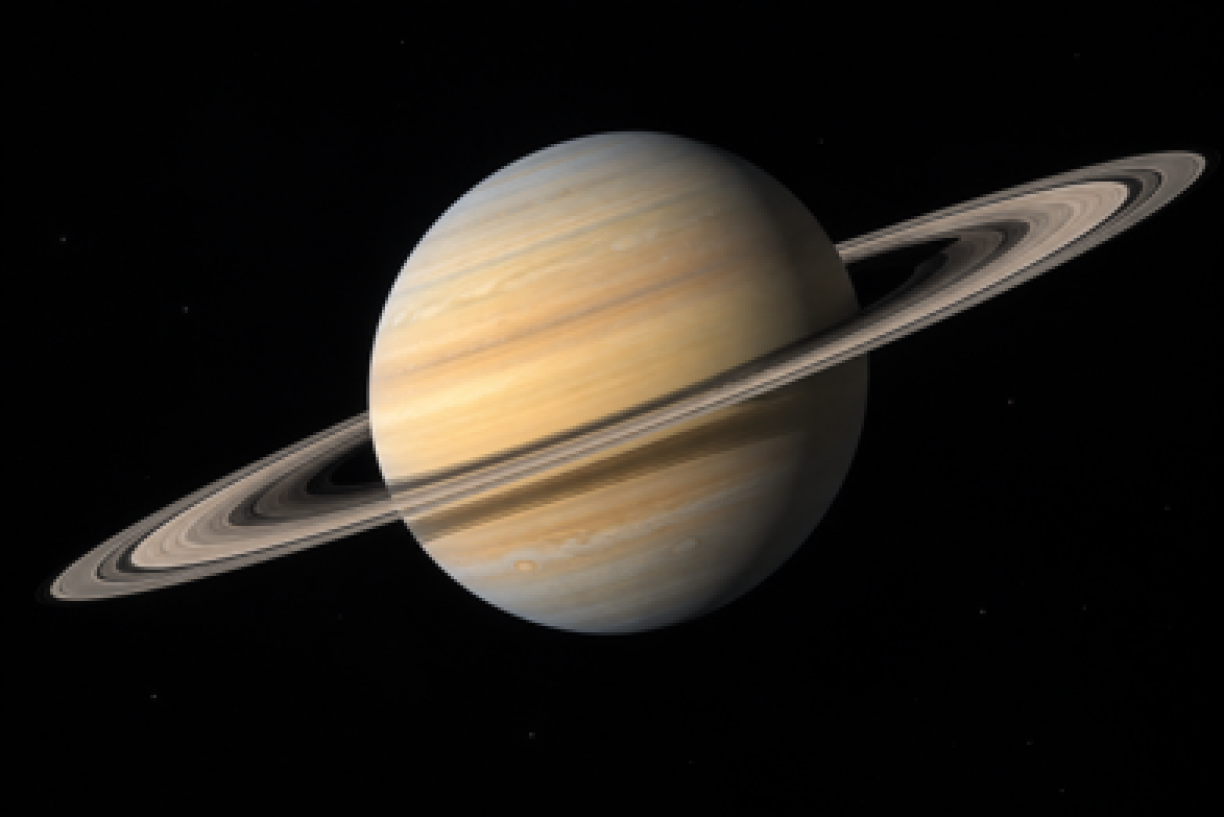
The month begins with Saturn reaching opposition on 4 October, when it appears opposite the Sun in our sky. Earth lies between the Sun and the ringed planet, and Saturn is near its closest approach to us for the year, appearing brighter and larger through a telescope.
Look east after sunset for a steady, pale yellow point of light, then follow it towards the south as the hours pass.
Binoculars make Saturn easier to pick out, but a small telescope is needed to see its rings clearly. Give the planet time to climb above the rooftops: the view usually improves when we look through less of Earth's atmosphere.
The rings appear relatively narrow this year because of our viewing angle, but they remain a rewarding sight. Saturn will be an excellent target throughout the month.
The Moon reaches Last Quarter on 3 October, leaving progressively darker evenings before New Moon on 10 October. This creates particularly favourable conditions for observing the Draconid meteor shower, which peaks around the night of 8–9 October.
Keep expectations modest, however: The Draconids are usually a quiet shower, and a meteor storm should not be expected this year. With virtually no moonlight to interfere, a clear evening offers a pleasant excuse to leave the city behind, settle into a reclining chair and watch a wide stretch of sky.
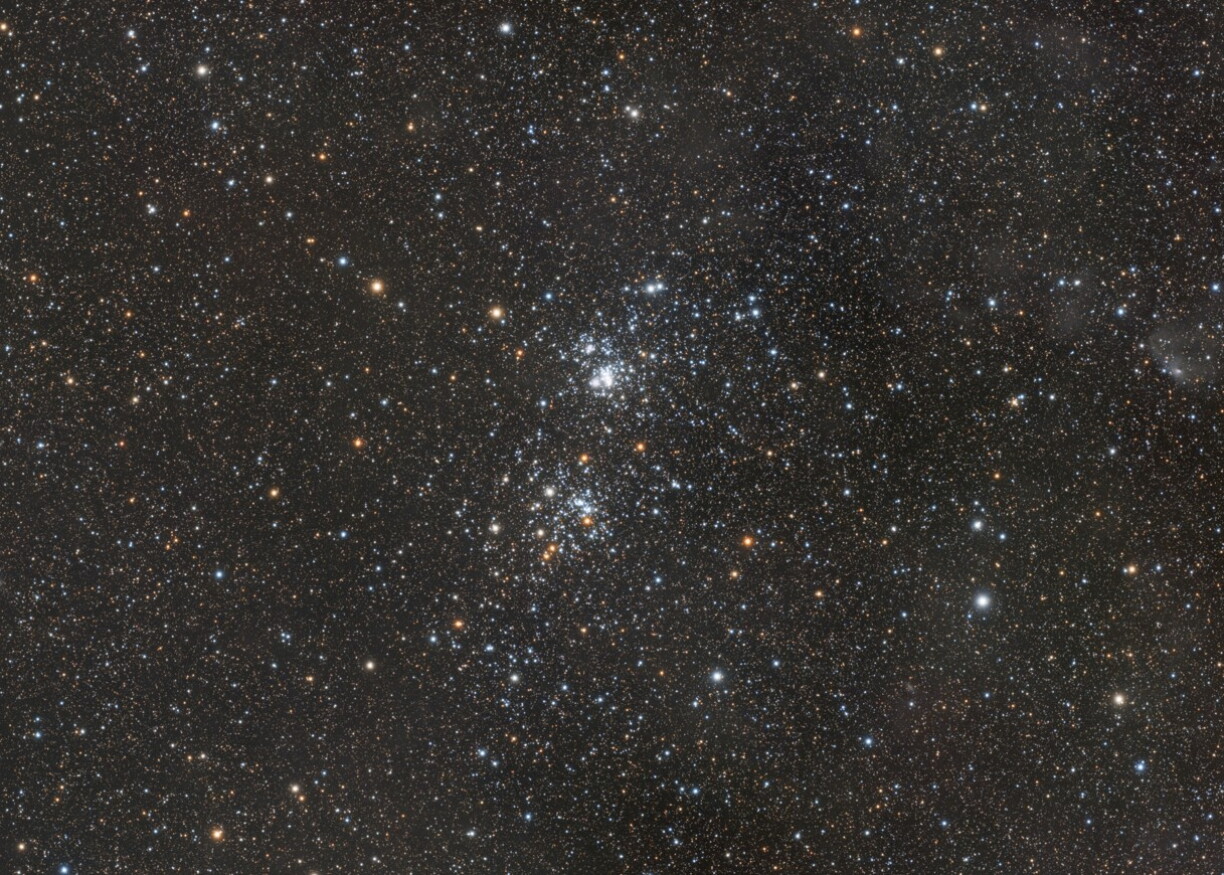
The nights following New Moon are ideal for exploring autumn's fainter sights, especially from dark locations in the Oesling. Between Cassiopeia, the W-shaped constellation, and Perseus lies the Double Cluster: a faint patch to the naked eye that binoculars separate into two neighbouring gatherings of stars.
This is a particularly rewarding target for both observation and photography: A wide view shows both clusters together, with brighter stars scattered among a much finer background of light. Take a little time over it so more stars become visible as your eyes adapt to the darkness.
The clusters lie roughly 7,500 light-years away and contain hundreds of young stars. This means that the light entering your binoculars began its journey long before the Egyptian pyramids were built: a remarkable distance to contemplate from a quiet Luxembourg field.
The Pleiades, probably the most beautiful of all star clusters, also climb into the eastern evening sky, announcing the approach of the winter constellations. They appear as a tiny, tightly packed group of stars and are easy to recognise even from the city.
Binoculars, however, will reveal many more stars than the unaided eye can pick out.
Around First Quarter on 18 October, the Moon becomes a rewarding evening target. Point binoculars or a telescope towards the boundary between lunar day and night, where long shadows bring craters and mountains into relief.
This is one of the best phases for exploring the lunar landscape, although the Moon remains low over Luxembourg, so choose a spot with a clear southern horizon.
The last part of the month offers another meteor shower: the Orionids, which reach their peak around 21–22 October. These meteors come from debris left by Halley’s Comet, producing brief streaks of light as the particles enter our atmosphere.
Halley last visited the inner Solar System in 1986 and will return in 2061, but we can still see evidence of its passage.
The growing Moon brightens much of the night, but there is a useful window for early risers. On 22 October, it sets at around 3.26 am in Luxembourg, leaving roughly three hours before astronomical dawn.
Try watching between about 3.30 and 6am, when Orion is well above the horizon, but take in a broad stretch of sky rather than looking only towards the constellation.
On 25 October, the clocks go back one hour, and, by the end of the month, astronomical twilight ends at around 7pm, making an early evening observing session easier to fit in. Moonlight will still brighten the landscape around the Full Moon on 26 October, commonly known as the Hunter's Moon – a name associated with the autumn hunting season and preparations for winter.
October asks for a little flexibility: a clear evening for Saturn, a darker one for star clusters, perhaps an early alarm for meteors. Keep the binoculars near the door: when the clouds open, there is plenty worth stepping outside for.





