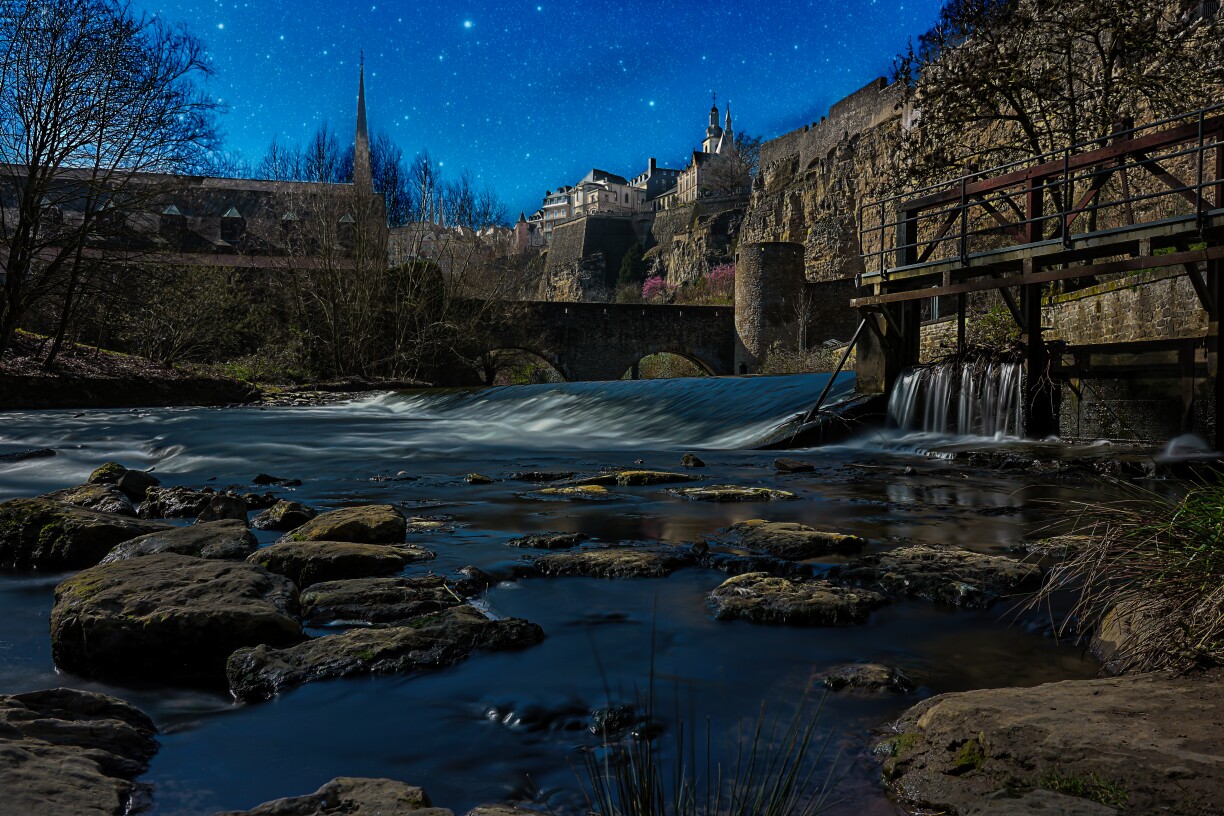
Imagine yourself in the middle of Oesling’s frosty landscapes, under the bright glow of the 'Snow Moon', or over a hill just outside Luxembourg City to spot elusive Mercury after sunset. Later in the month, just when our chances of having better weather increase, a breathtaking parade of six planets will grace our eyes in a magic winter scene.
1–7 February: The snow moon show
The month begins in full swing with a bright Full Moon casting a silver glow on crisp fields and forests on 1 February. The Snow Moon, as it is named in the Old Farmer's Almanac, rises in the east around dusk brightening up the whole night.
As the Moon’s glow washes out most stars from view, two planets take the scene. Jupiter is clearly visible in the east after sunset, appearing as a steady beacon outshining every star: with a pair of binoculars, the four Galilean moons become apparent while a small telescope reveals the striped atmosphere.
Jupiter will dominate the sky the whole month.
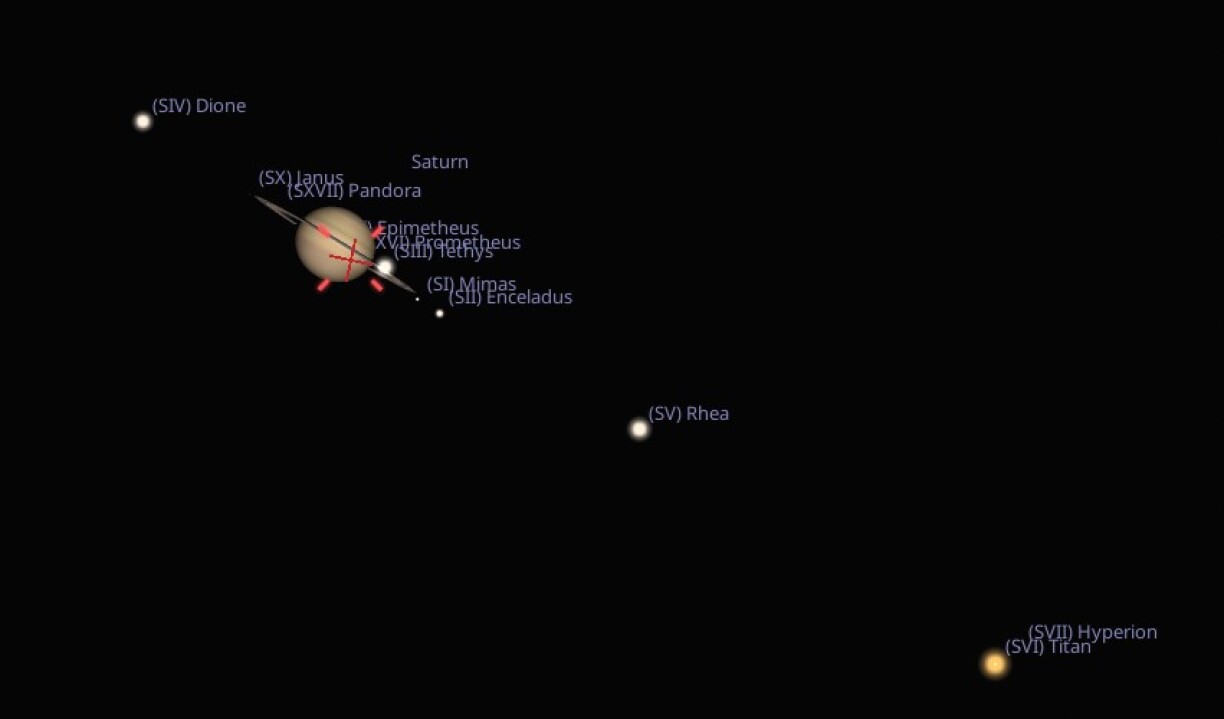
Meanwhile, Saturn lies lower in the southwest twilight. At the start of the month, it still sits about a third of the way up the sky after sunset, showing itself as a pale steady white to the naked eye. Saturn is always a delightful target, especially through a small telescope, though its rings are now nearly edge-on and hard to spot.
The ringed planet will sink into the Sun’s glare by the end of the month.
8–15 February: Back to darker evenings
After its full phase, the Moon rises approximately one hour later each night, leaving the stage back to the stars.
A rewarding sight to spot is the Winter Hexagon, a pattern of six stars, which include Sirius, the brightest star in the sky, Rigel, Aldebaran, Capella, the twin stars Castor and Pollux, and Procyon. All these stars shine vividly on clear winter nights, outlining a large hexagon that frames the heart of the season’s sky.
Almost in the middle of this pattern, Orion shines with its iconic three-star belt and the hazy patch of the Orion Nebula just beneath. Through binoculars or a small telescope, the nebula’s faint glow turns into a lush, cloud-like structure where new stars are forming.
West of Orion, the Pleiades star cluster is impossible to miss. The Seven Sisters look like a smudge of six or seven faint stars to the naked eye, but a quick look through binoculars reveals dozens of blue-white stars. The Pleiades are high in the sky in the first part of the night and are a beautiful sight even from the city.
16–23 February: Moonless skies, Mercury at its peak
As we delve into the middle of the month, the New Moon on 17 February gifts us with several nights of full darkness and excellent observing conditions.
These are the best nights for a trip to the Oesling region or the banks of the Haute-Sûre lake, for a chance to catch a glimpse of the winter Milky Way. It arches across the sky from the northwest to the east, way fainter than its summer version, but still enchanting above the Luxembourg’s darkest areas.
Shifting the focus to the western horizon during twilight, a special treat awaits. On 19 February, Mercury reaches its greatest eastern elongation, its maximum apparent distance from the Sun. It’s Mercury’s best evening appearance of 2026 for the Northern Hemisphere.
And that's not all.
On 18 February, just after sunset, the view gets even more spectacular, as a slender crescent Moon (only 1.5% lit) will be hovering delicately between Mercury and Venus. It is a challenging observation as the show will be immersed in the glow of dusk, but if successful, it will be a truly special one.
24–28 February: The Grand Finale
The last week of February saves the best for last. On 28 February, the sky hosts a spectacular six-planet parade shortly after sunset.
Starting from about 30–45 minutes after sunset, Mercury and Saturn become visible low on the west-southwest horizon. Binoculars are likely necessary as they are quite faint and immersed in the twilight. Just above them, however, Venus shines brilliantly and unmistakable as it moves higher in the sky.
Farther up and to the south, Jupiter will outshine even Sirius below it while the outer planets Uranus and Neptune complete the lineup, although too dim to see without optical aid. Uranus lies between Venus and Jupiter, while Neptune sits not far from Saturn.
The late February sky is a delight too, with the Moon waxing from first quarter toward full. On 25–26 February, a bright half-moon will be high in the southwest after dark, gliding past the constellation Taurus and not far from the Pleiades cluster. This is a magnificent sight and a great photography opportunity.
At a glance – February 2026
Moon Phases:
Planets:
Notable Events:
Deep-Sky Highlights:





