Did you know that your body is constantly fighting cancer? And that you might have just killed cancer cells at this very moment?
Your body actually has highly efficient defence mechanisms. Superheroes within your body are almost constantly winning against mutants. But unfortunately, sometimes it goes wrong.
In this episode of Ziel mir keng!, we’ll explain how cancer develops, why this disease can become so dangerous and what roles chance, lifestyle choices, genes, and other factors play.
We understand that this is a difficult and sensitive topic. Our goal is to inform you about this disease while also showing how you can protect yourself from it, and how the chances of recovery have improved in recent years.
This episode was produced with the support of Audrey Gustin from Fondation Cancer and Johannes Meiser from the Luxembourg Institute of Health (LIH).
Cancer causes our body to go haywire: damaged cells suddenly multiply uncontrollably, harming the entire organism.
To understand exactly how cancer develops, we need to take a brief detour into biology.
Our body is made up of trillions of cells – skin cells, brain cells, lung cells, blood cells, etc. – all working together to keep the entire organism alive. For this to work, they follow very strict rules. They divide when needed, stop when there are enough, are replaced by new ones when they age, and even self-destruct if they become damaged.
The instructions for what each cell should do are stored in its DNA, in other words in its genetic material.


But this DNA can be damaged. This happens frequently:
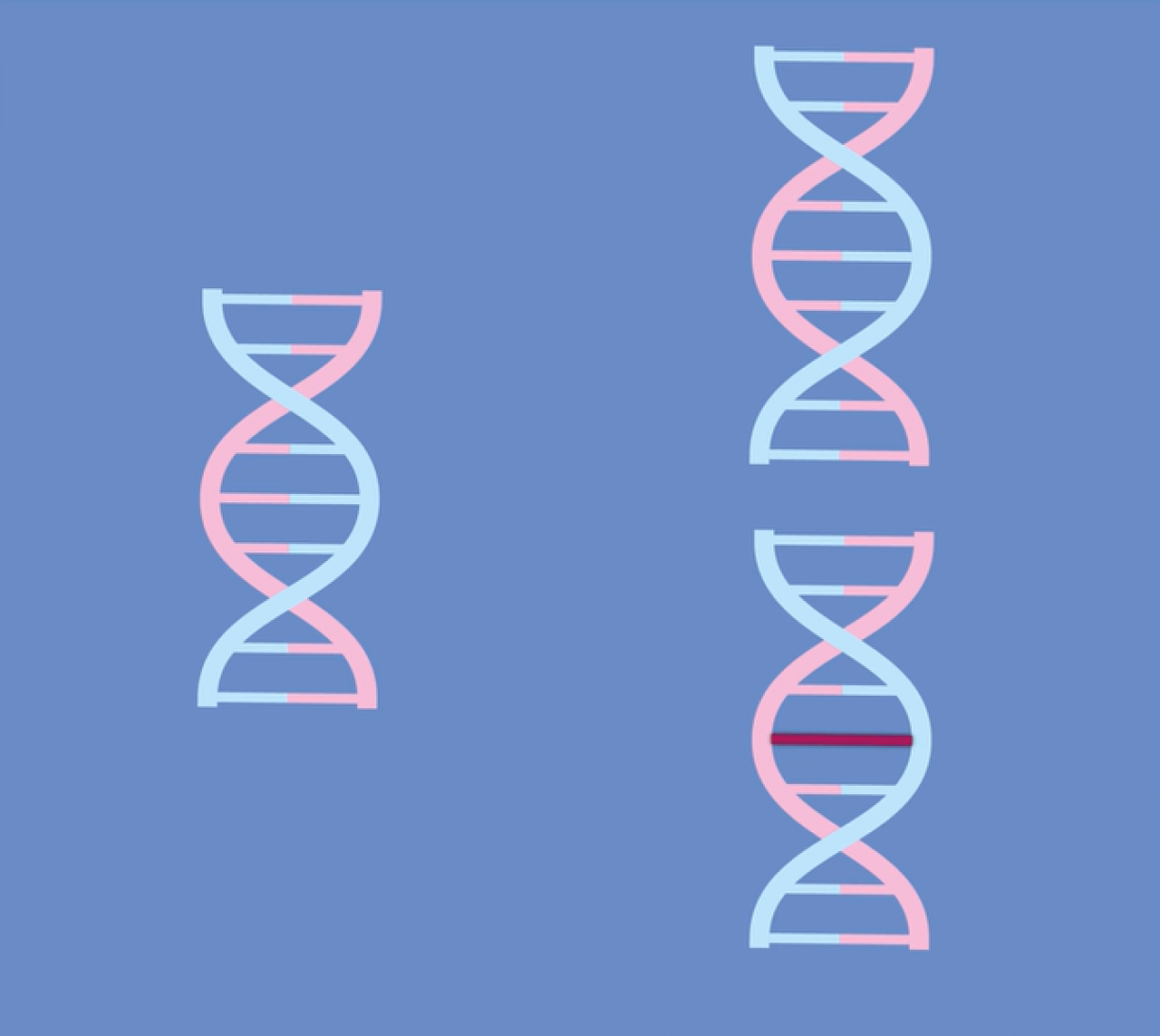
This alters our DNA: segments shift, get lost, or are put back together incorrectly. These are referred to as mutations.
Tens of thousands of such mutations happen every day.
But fortunately, our cells have mechanisms to immediately detect and repair these errors. And just like that, the problem is solved.
But sometimes, our cells fail to fix an error. Now we have a cell with mutated DNA. So basically, a mutant. That's not necessarily dangerous either. Many mutations aren't harmful at all and have no negative consequences. Others cause the cell to die.
A third kind of mutation damages the cell in different ways, causing it to go haywire from that moment on and no longer follow the rules. So now we have a cancer cell, a potentially dangerous mutant.


Fortunately, we have a second line of defence: specialised superhero cells, our immune system cells. They find these mutated cells and destroy them. And just like that, the problem is solved again!
The real trouble starts when multiple mutations occur at once. For example,
Because then a tumour forms that grows uncontrollably and takes up more and more space in the body. But the good news is: even at this stage, our superhero immune system cells can still win the battle. If that's the case, you probably won't even notice it.
But sometimes a cancer just becomes too strong to be beaten.
A truly vicious circle sets in. Because cancer cells multiply so rapidly and can no longer repair themselves, more and more mutations occur, leading to even more mutant cells.
Depending on the mutations, the cancer may also learn to hide from the immune system or make it weaker. In that case, the superheroes won't even notice the tumour anymore.
"Alongside the three characteristics already mentioned, this is the fourth essential property of cancer cells. The immune system distinguishes between 'good' and 'bad' cells by analysing their surface proteins. These surface proteins can be compared to specific bar codes. Cancer cells begin to display bar codes that are recognised as 'normal', which means immune cells fail to detect them as cancerous. Cancer cells thus manage to evade immune surveillance, as immune cells can no longer identify them. This discovery was awarded the Nobel Prize a few years ago and led to the development of immune checkpoint therapy."Johannes Meiser
With a bit of luck, the tumour is relatively harmless. It becomes life-threatening when the cancer is aggressive, when it displaces and destroys healthy tissue and/or attacks blood vessels to greedily feed itself by stealing nutrients from organs. Sometimes cancer cells can also start travelling through the body – these are known as metastases – forming tumours and causing damage elsewhere.
Eventually, our superhero cells can no longer keep up, and people who are affected become dependent on medical help from this point onwards.
Fortunately, modern medicine can now cure many cancer patients or at least extend their lives.
Sometimes skin cancer or other tumours can simply be removed through surgery. In other cases, many types of cancer can now be successfully treated with chemotherapy, radiotherapy and/or immunotherapy.
In immunotherapy, specific immune cells are deliberately used to fight cancer. These treatments have significantly improved survival rates for certain types of cancer, such as skin cancer.
In radiation therapy, tumours are targeted with radiation in an attempt to destroy them. Chemotherapy involves administering drugs designed to destroy cancer cells. However, these therapies can also cause quite severe side effects, for example because healthy cells are also damaged in the process.
But why do people sometimes get cancer even when they live very healthily?
Let's start by looking at the roles of chance and age.
Because processes like cell division happen very frequently – every day, millions of cells divide in our bodies – it's partly a matter of statistics, or chance, whether something goes wrong or not.
Age plays a role, in that our immune system gradually becomes weaker over time, so our defence mechanisms don't work as well anymore. Besides, one or two mutations often aren't problematic, but over a lifetime, mutations accumulate, and eventually there will be some that will lead to cancer.
There are certain cancers where chance plays a bigger role, for example with brain, prostate, or bone cancer, while with others the influence of chance is smaller, such as with lung cancer. However, it's possible that we don't yet understand all the causes – meaning we might currently be giving chance more credit than it deserves.
But what does that mean exactly? Since chance is involved, does that mean our lifestyle doesn't matter? No, absolutely not. 50% of cancer cases and 40% of deaths are preventable. 21% of cancer deaths are caused by smoking, 4% by alcohol, and 4% by obesity.
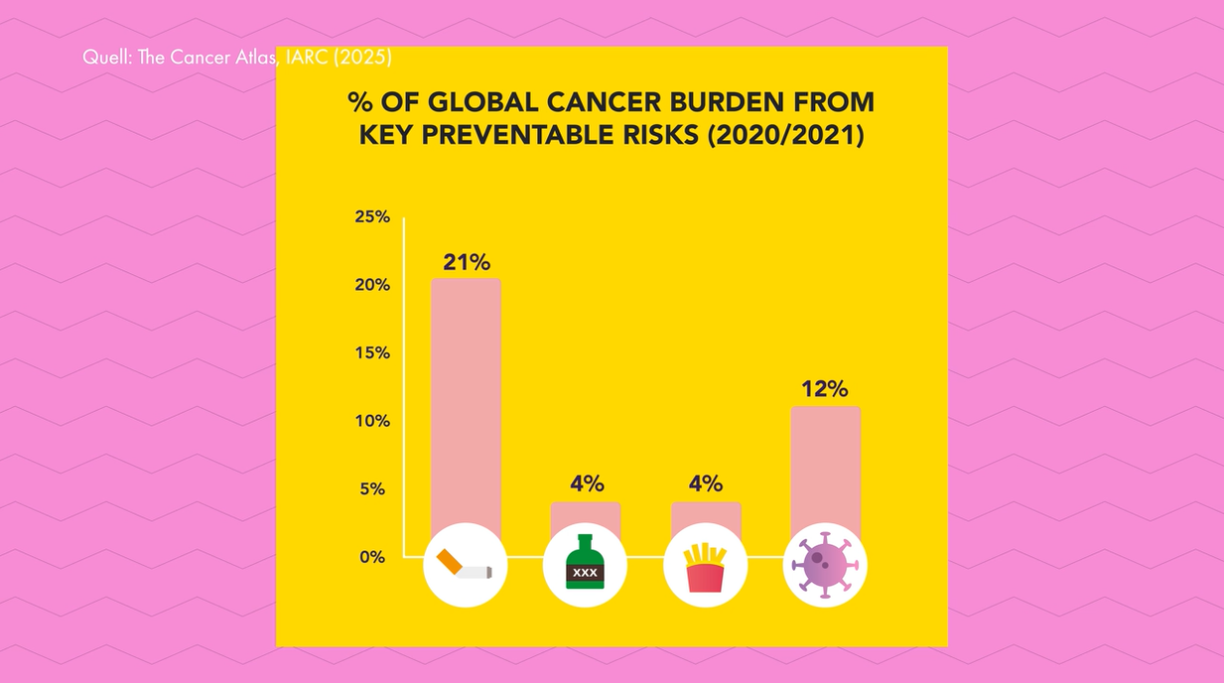
A further 12% of cancer cases are due to infections such as the human papillomavirus or hepatitis virus, which we can vaccinate against.
But certain substances in our environment, such as asbestos or diesel exhaust fumes, are also carcinogenic. According to estimates, these environmental toxins are responsible for 10 to 20% of cancer cases. So staying away from them is also a good idea.
According to a study by Fondation Cancer, the general public vastly overestimates the influence of our genes. Nearly half believe cancer is hereditary. But research suggests only 5 to 10% of cancer cases are actually caused by hereditary factors.
The chances of survival depend on the type of cancer, meaning which organ is affected, but also which mutations occurred – i.e. what abilities the cancer has – as well as how early the cancer was detected, which highlights the importance of early screening programmes.
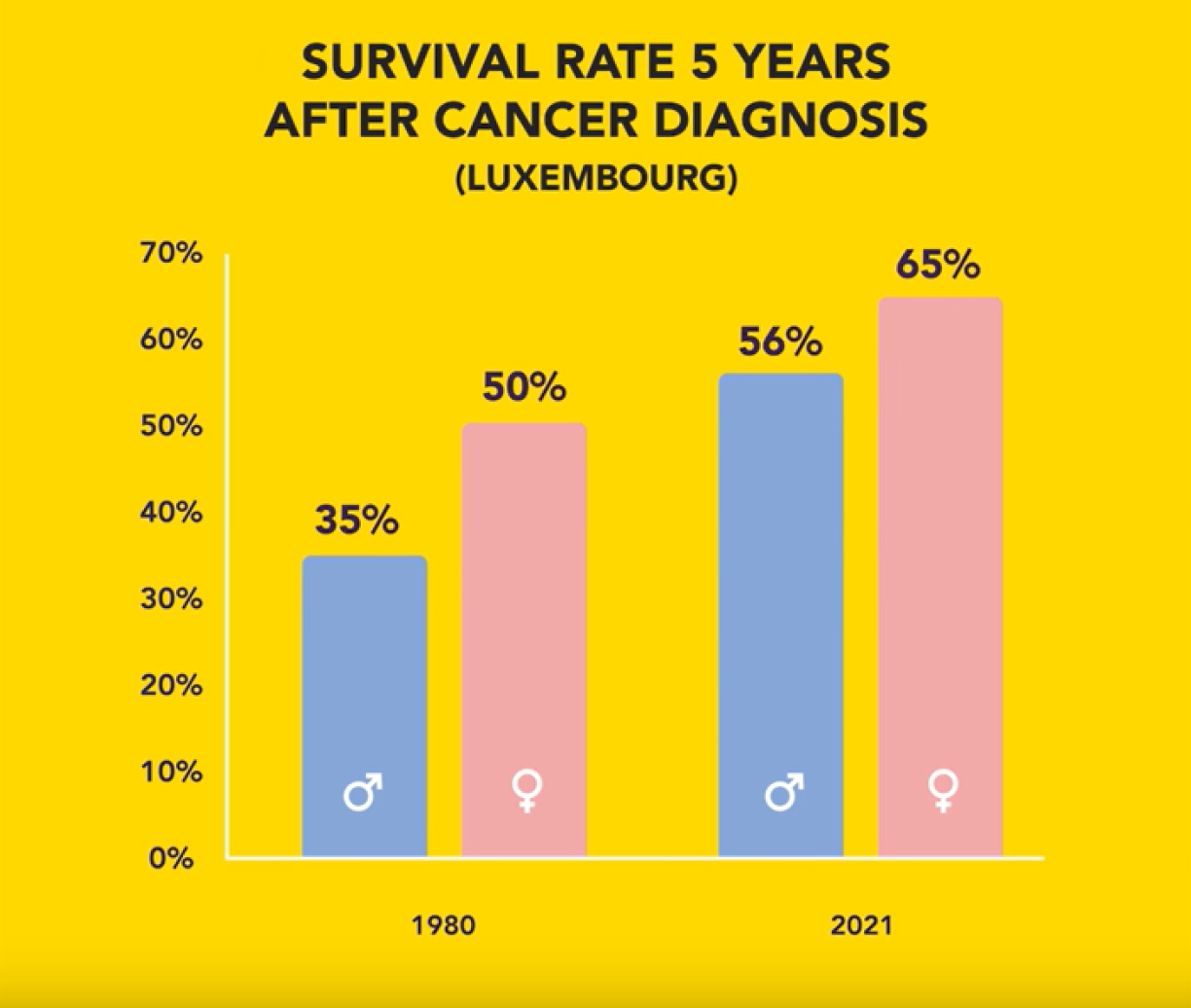
The good news is that cancer survival rates are improving all the time.
In Luxembourg, in the 1980s, 35% of men and 50% of women were still alive at least five years after their cancer diagnosis. By 2021, this share had increased to 56% of men and 65% of women. And progress continues to be made.
When you think about cancer, fear is often the first reaction – that’s understandable. But remember: your body contains tiny superheroes that are constantly fighting cancer cells. And they usually win.
Sometimes, though, they don't. This is partly due to chance, but also to our lifestyle! That's why you should support your superheroes and protect your DNA. Don't smoke, do wear sunscreen, exercise, eat healthily and get regular medical check-ups. Let’s hope that research keeps making progress, so more and more people can be cured in the future. And to everyone currently affected, and their loved ones, we wish you strength and courage.
Ziel mir keng! is broadcast on Sunday evenings after the programme Wëssensmagazin Pisa on RTL Tëlee and is a collaboration between RTL and the Luxembourg National Research Fund. You can also watch the episodes on RTL Play.
Author: Jean-Paul Bertemes (FNR)
Editing: Michèle Weber, Linda Wampach, Melanie Reuter (FNR)
Advice: Dr Audrey Gustin (Fondation Cancer), Dr Johannes Meiser (LIH)
Video and illustrations: SKIN
Translation: Nadia Taouil (www.t9n.lu)
Pictures: AdobeStock (main picture), Claude Piscitelli (Audrey Gustin), LIH (Johannes Meiser)





