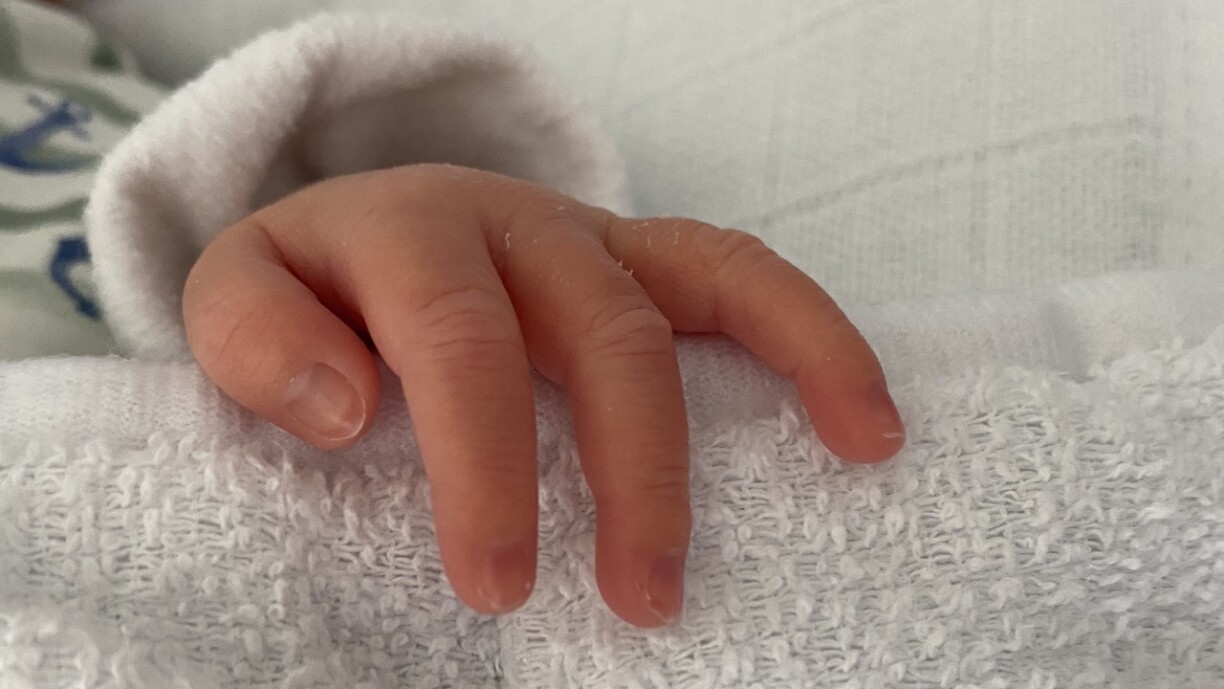
Births can be an emotional time for parents, filled with anxiety, joy and anticipation, but for some families, the journey proves more difficult than expected. For the Alakma family, that difficult chapter is now gradually coming to an end. Little Jennah-Rym had been expected to be among the first babies born in 2026, with her arrival originally planned for the first week of January. But a routine check-up in early October changed everything. At just 27 weeks, she decided it was time to enter the world. It was an anxious period for her parents, as their daughter had to be placed in an incubator for the first few days.
"There are still worries, questions and a lot of doubts every day", her father says. For the past two months, the parents have been making their way to the CHL every day to be by their daughter's side.
The Alakma family is not on their own. Many parents in a similar position have to juggle their daily life, work and visiting the hospital. The situation becomes even more complicated when premature babies have to be delivered abroad, because the neonatal unit here is at full capacity. With the long distances and countless kilometres, parents could spend much more time with their newborn if the baby were being cared for in Luxembourg, especially given that constant parental presence is crucial in cases of premature birth. The hospital stays become challenging: either one parent must remain with the baby at all times, or the constant back-and-forth disrupts normal life. "We try to repatriate children to Luxembourg after birth whenever possible, but we also lack the space for this type of intervention", explains Dr Charlotte Pierron, a doctor specialising in neonatal care.
Luxembourg currently has 16 intensive-care beds dedicated to premature babies, 90% of which are almost permanently occupied, leaving virtually no room for emergency cases.
Despite the tireless efforts of medical teams and their close cooperation with parents, death is an unavoidable part of neonatology. In general, it is the youngest babies who do not survive, a reality that must then be handled with care by the team and support staff as they guide families through their most difficult moments.
As parents, and often siblings, spend long hours in the neonatal unit, the medical staff take their comfort and well-being very seriously, within the limits of what is possible in such an environment. Much of the decoration, furniture and layout of the common areas is funded through donations. The CHL also receives items such as toys, clothing, and other gifts that can support families during this testing time.
One mother even went a step further by writing a book, which has sold more than 300 copies to date. Her initiative has already raised €3,500, all of which has been donated to the neonatal ward.





