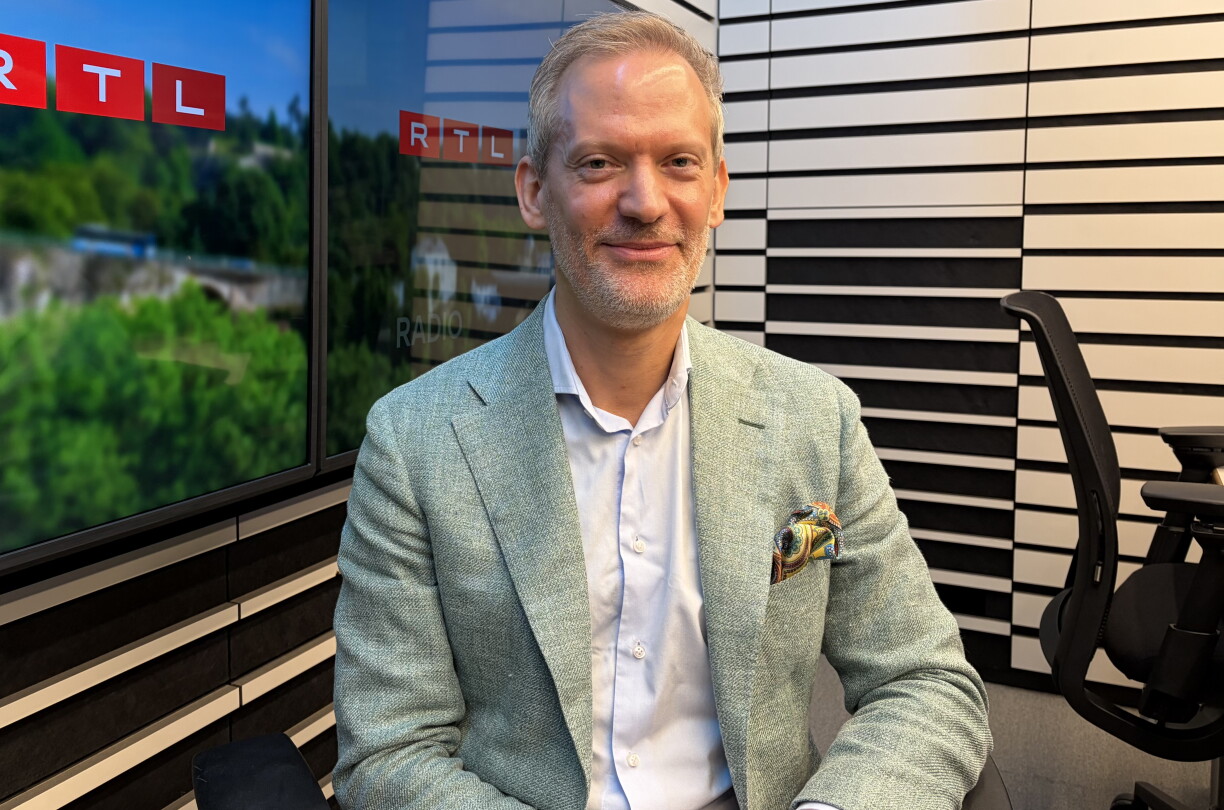
Dr Chris Roller, president of the Luxembourg Association of Doctors and Dentists (AMMD) has voiced strong criticism of both the government and the National Health Fund (CNS), saying doctors can no longer accept an agreement that does not reflect reality or address their concerns.
According to Dr Roller, the main problem is that doctors, as a liberal profession, are now tightly controlled by the CNS, which sets not only what they may do, but where, how, and at what price, regardless of real costs.
CNS dictates to doctors what they can do, where they can do it, how they can do it, and at what fee, and "these fees often have nothing to do with actual costs", he explained.
He also stated that despite years of promises for health policy reform from the government, these have not been fulfilled.
As a result, the AMMD decided to terminate the existing conventions after many years, as the government and CNS have shown little real willingness to create a better agreement for doctors and ultimately for patients.
Instead, he claimed, the Health Minister, Martine Deprez, is continuing to favour hospitals, which he described as expensive and often responsible for long waiting times.
Despite the impasse, talks between the AMMD, the CNS, and the government have continued, but Dr Roller insisted these have brought little progress. He described the process as exhausting and said that despite repeatedly asking to negotiate, the government has not listened.
The AMMD cannot sign a new convention if it is just a copy of the old one as this would not be credible and would not serve patients’ interests either, he resumed.
He noted that "the model of conventional medicine, as we knew it in Luxembourg, is now over", and declared that they wouldn't be able to sign such a convention again.
Instead of meaningful negotiations, the AMMD now faces a Grand-ducal regulation that will regulate the profession strictly, which he described as unsatisfactory.
Referring to ongoing working groups initiated by the health ministry, he complained that nothing concrete has come out of the solutions offered, except for "wasted time".
A central point in the dispute is the role of hospitals versus doctors’ private practices, especially for minor interventions that could be done more efficiently outside hospital walls.
Many small procedures, such as cataract operations, certain urological interventions, and bone density scans, are reserved for hospitals in Luxembourg, which he believes is a political decision intended to keep hospital workloads artificially high.
This system leads to long waiting times for patients and higher costs overall. He explains that waiting times of up to two years for simple things like mammograms or bone density tests are expected, and even in emergency rooms, waiting times now exceed 11 hours.
"This is not good medicine for patients", he warned.
According to Dr Roller, political and CNS reluctance to adapt has stifled not only dialogue but also innovation in Luxembourg’s healthcare system.
He alleged that new medical initiatives by doctors have often been shut down quickly by the authorities.
He highlighted several doctor-led initiatives to improve healthcare provision that were initiated, but "these projects were quickly wrecked by the CNS and by politics", citing examples like the medical centre at Potaschberg and recent projects at Findel.
According to him, the reimbursement system is too vague and restrictive. New techniques that come onto the market cannot be offered by doctors, as there is no official fee and nothing can be billed outside the official nomenclature.
Looking ahead, Dr Roller was pessimistic about the chances for a new national convention under current conditions.
He said the AMMD’s only option was now to accept a Grand-ducal regulation, which he described as "state medicine".
Despite the strained situation, he repeated that dialogue should continue for the sake of all patients and healthcare workers, but he warned that without actual change and willingness to compromise, little will improve.
As of now, the positions of the AMMD and the government remain far apart, and the outlook for a negotiated solution appears bleak.





