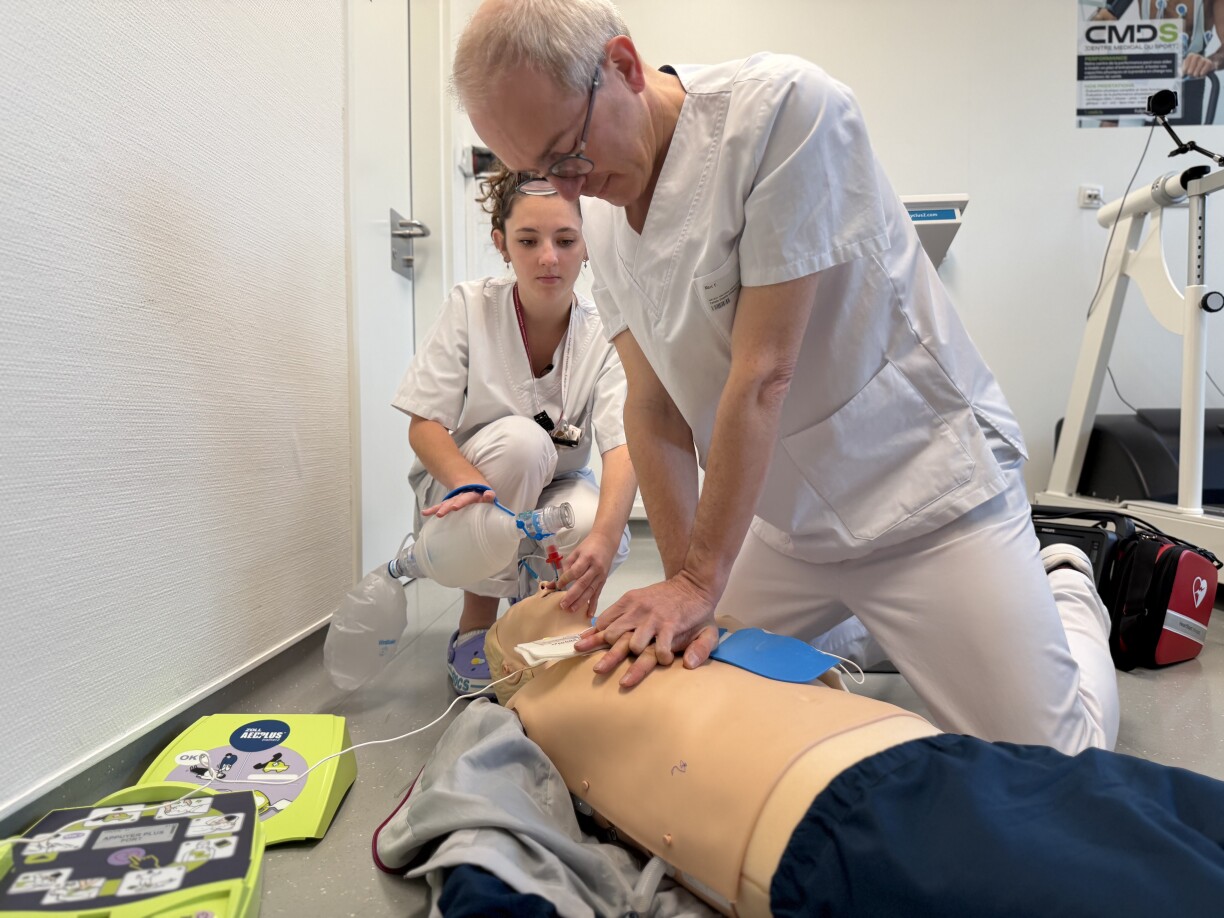
The Centre Hospitalier Emile Mayrisch (CHEM) in Niederkorn conducts an annual, large-scale rescue exercise designed to test its staff's reflexes and protocols under realistic emergency conditions.
These drills, held for the past 10 years, involve personnel from across the hospital. The goal is to enhance workflows, identify potential weaknesses, and ultimately guarantee the safety of both patients and staff. The simulation covers the entire sequence of an emergency, from the initial alert to the coordinated teamwork of response crews.
As Dr Andrea de Faria, an anaesthetist and resuscitation specialist at CHEM, explained, the training is critical because real emergencies demand flawless procedures. The exercises focus on improving reaction times, communication, and coordination between departments whose staff may not normally work together. "This means we really have to look at how to best work together, how to create efficient communication, so that the best possible patient care can be provided. And then you can put theoretical knowledge into practice", Dr de Faria said.
Trainers in a control room manage and adapt the simulation in real-time, creating scenarios based on situations teams may encounter daily. The aim, according to Audrey Nicholas, a nurse and trainer, is to place staff in a highly realistic situation. While technical proficiency is a key component, the training also heavily emphasises the human factors present in crises.
In the A&E department in particular, staff often have to deal with aggression or insults. This is also practised so that staff are prepared for it, Nicholas noted. The simulation incorporates emotional stressors and unforeseen events – such as verbal assaults – to ensure that high-quality patient care remains the unwavering focus. "We do our utmost to leverage both the technical and non-technical aspects of efficiency", she said.
Each simulation is recorded to enable a structured review. In these debriefings, participants and trainers jointly analyse what succeeded and identify areas for improvement, with staff encouraged to share their personal perspectives on the challenges they faced. This process allows trainers to provide targeted advice, better preparing teams for future real-life situations.
A recurring focus is on managing violence, aggression, and verbal abuse. Michel Dewes, Head of Training, explained that the critical topic of communication is integrated into the scenarios. The simulations address key questions: How can communication be optimised and processes streamlined? How can staff effectively de-escalate tension? These interactions are later assessed in debriefings, where trainers evaluate communication effectiveness and pinpoint potential improvements.
"This is certainly a topic we will expand on in the future, especially with regard to the problems that are currently emerging in all hospitals, particularly in A&E departments", Dewes stated regarding the rise in aggression against staff.
The hospital's training programme was reviewed and certified this year. CHEM notes that a decade of simulations has yielded positive results, affirming that knowing procedures thoroughly is essential for acting safely and calmly under stress.
CHEM plans to mandate annual simulation training for every employee starting in 2026.





