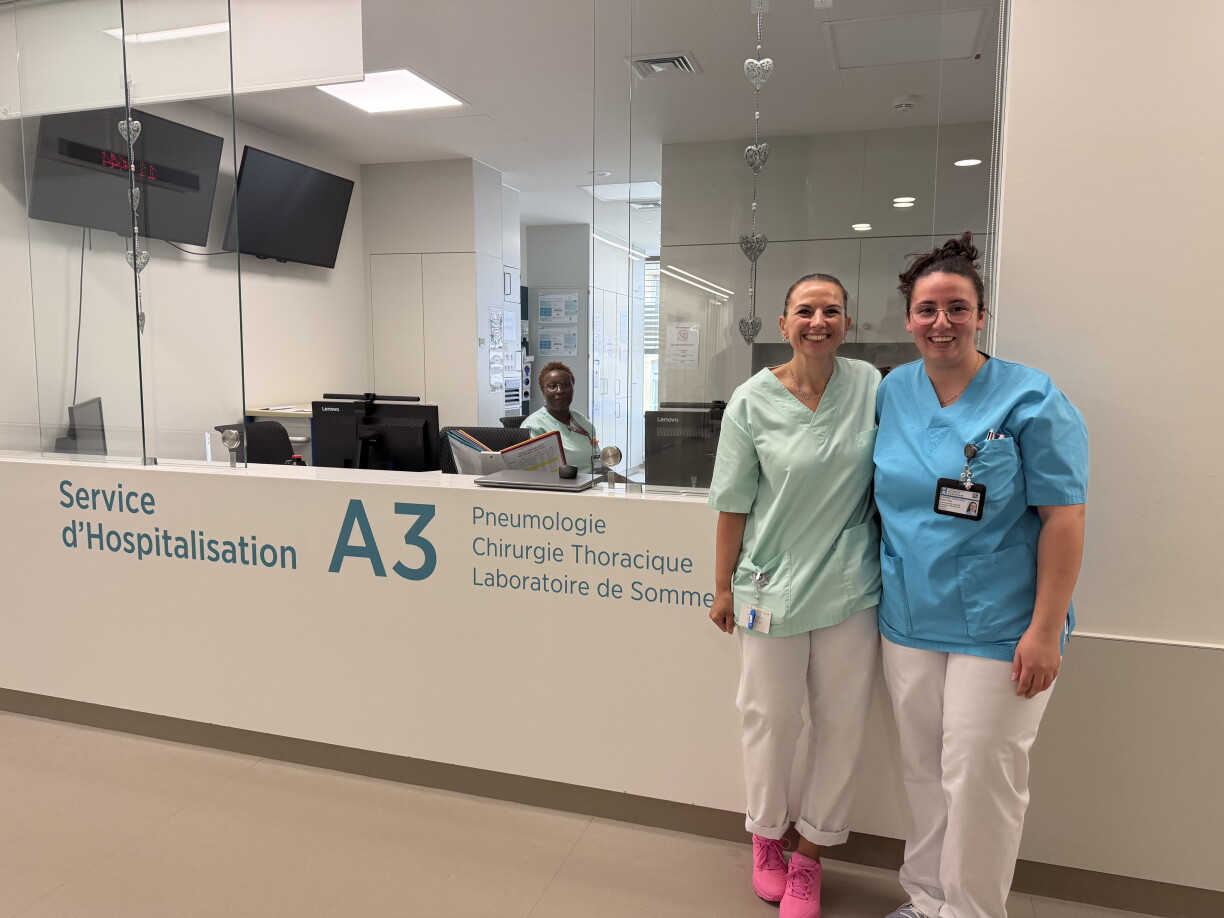
A new initiative introduced last year at ZithaKlinik is helping to ease the daily pressures on nursing staff by assigning administrative and logistical tasks to dedicated support workers. This move is designed to give nurses and healthcare assistants more time for what matters most: attentive patient care, meaningful human interaction, and ensuring a higher quality of support for those in the hospital. Initial results now presented by the hospital show that not only has the project improved the working environment for nursing staff, but it has also contributed to reducing stress on the wards and further strengthened the quality of care provided to patients.
Hospitals across Luxembourg have seen increasing pressure on care staff for years, with administrative duties, logistical coordination, and organisational work consuming more and more of their working day – often at the expense of direct patient care. The OxySoins pilot project at Hôpitaux Robert Schuman was created specifically to address this challenge.
The rationale was clear from the outset: nurses and healthcare assistants were spending an ever-growing share of their shifts on tasks unrelated to actual care, such as ordering material, handling deliveries, arranging appointments, or resolving logistical issues. This additional workload meant less time spent with patients and resulted in higher stress, more overtime, and a profession that is increasingly seen as less attractive. OxySoins was introduced to reverse this trend and give care staff the breathing space they need, explains Marc Berna, Director of ZithaKlinik. Berna emphasises that this is a long-term initiative with benefits not just for staff but for the entire population.
“We have a fourfold objective: firstly, to improve public health; secondly, to ensure economic sustainability; thirdly, to guarantee an optimal patient experience; and fourthly, to create good working conditions for our staff. The OxySoins project tackles all of these priorities at once”, Berna explains.
Early results from the pilot phase show a clear positive trend. Nursing staff have, on average, around 20% more direct contact time with patients. At the same time, overtime hours have dropped by nearly 60%. Staff evaluations also report a decrease in perceived stress by about 10%.
Patient safety has also improved alongside staff well-being. In areas equipped with the new system, a 41% reduction in patient falls has been recorded – a change which, according to the hospital director, is largely attributable to increased staff presence in patient rooms.
The trend is heading in the right direction: higher patient satisfaction, greater employee satisfaction, and better quality of care, as measured by key indicators such as fewer falls, support the success of the initiative. Berna adds that with lower rates of staff absence and overtime, they are also seeing noticeable cost savings.
The tasks now taken off nursing staff’s shoulders are being handled by newly recruited support workers, including logistics assistants, hospitality staff, and patient care aides. These team members help with organisational and service tasks on the wards, allowing nurses to focus on patient care. In the long term, around 66 additional positions are expected to be created as the system expands to other departments.
During the pilot phase at the Zitha site, eight new team members have already joined. One of them is Soledade Alves, who has been at ZithaKlinik for 20 years. Moving from reception to the OxySoins team, she is pleased to be working closer to patients and having more direct contact with those receiving care.
“When I started here, I was surprised at how much admin work nurses used to do themselves. I honestly do not know how they managed before – it is a huge workload. We get wonderful feedback from patients. Sometimes they arrive in tears before even being admitted, and just those extra five minutes we can give them really make a difference”, Alves shares.
Nurses themselves are feeling the benefits. Nicole Biernath, one of the nurses on the ward, says having support with administrative and organisational duties has been a true relief. Despite being sceptical at first, she quickly realised how helpful the initiative is. "The phone rings 40 or 50 times a shift, and now I am not constantly interrupted, so I can concentrate on my tasks, whether changing dressings or providing care. Patients are pleased as well, as we can visit their rooms more often, bring them water or a newspaper, or simply have a chat”, Biernath explains.
Another key aim of the project is to better value the work of healthcare professionals and to sustainably improve their working conditions. By doing so, ZithaKlinik hopes not only to boost quality of life for its staff, but also to make careers in healthcare more attractive – a crucial step in tackling shortages of qualified personnel.
The ambition is to gradually roll out the OxySoins service across the entire clinic and to integrate it at other Hôpitaux Robert Schuman sites in the coming years.





