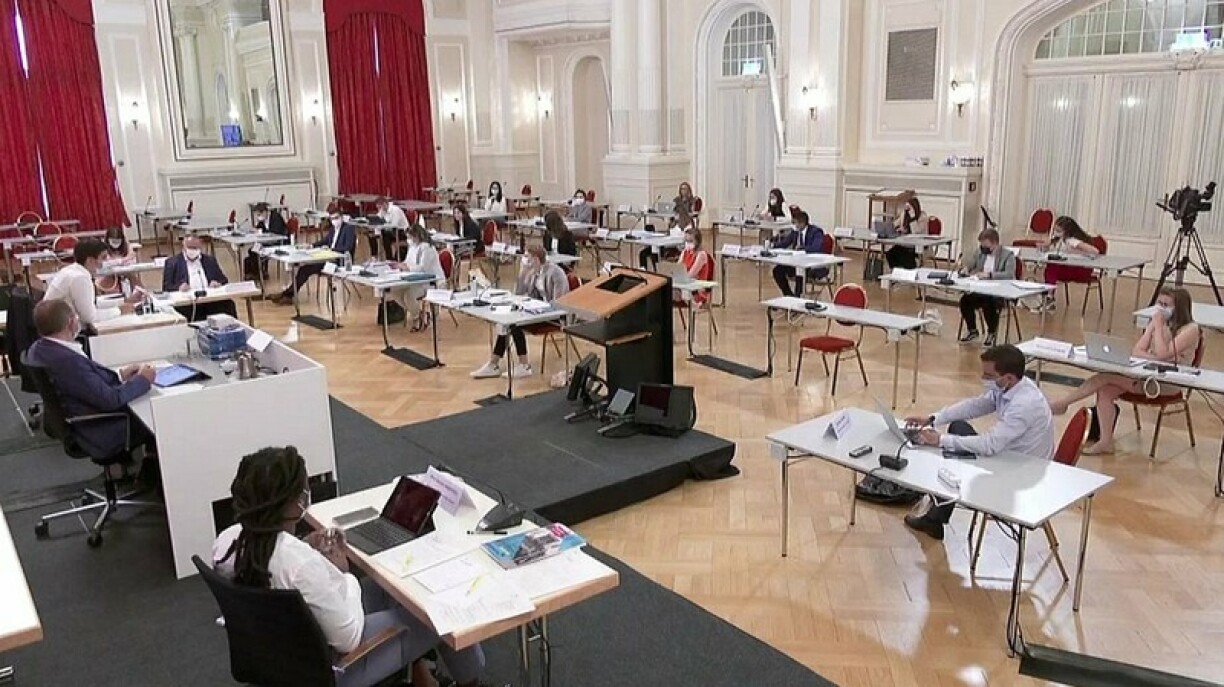
A key topic was stress and the resulting feelings of anxiety at school, which have a major impact on students' mental health and performance. During the pandemic, these problems have intensified, stated Till Winzen, president of the Commission of Education.
Winzen explained that some teachers have a tendency to announce homework very late in the day, with pupils sometimes receiving their tasks for the following day as late as 5 pm. Another problem with this is that not everyone "is on their phone at all times". Winzen also criticised teachers giving homework during bank holidays or school holidays, requiring them to reach their students at times "that are completely inconvenient".
Migration policy was also discussed. The Youth Parliament calls for more awareness of integration, the situation in refugee camps, and the provision of psychological care for refugees.
Iness Chakir, the Secretary General of the Youth Parliament, stressed the importance of raising awareness of non-binary people and the concept of being non-binary.
Chakir stated that young people should be taught that "there are no boxes", which includes people being "something other than a woman or a man". However, Chakir continued, such an awareness campaign should not only be targeted towards young people, but also the general public, who "do not know enough about the subject".
Another issue raised was the competitiveness of small and medium-sized enterprises, especially in the post-Covid context. Charel Bollig, president of the Commission for Economic Affairs, said it should be easier to start a new business.
Bollig explained that the Youth Parliament thinks that the costs of starting a business should be reduced. In addition, the time needed to be able to start a business should be "optimised and greatly reduced" as well.
The impact of intensive agriculture on the environment and human health also interests young people. In Luxembourg, purchases of organic products are 7.3% higher than in the rest of Europe, but the Grand Duchy produces proportionally little. Pesticides from traditional agriculture are bad for the environment, water quality, and human health. The Youth Parliament therefore calls for the limitation of the use of pesticides, the development of organic farming, and the raising of public awareness.
The resolutions were generally well received by both MPs and ministers. The Youth Parliament's current president, Hugo Da Costa, stated that the junior policymakers are not going to limit themselves to this one hearing, but plan to follow up the discussions with other political actors, such as individual ministers.
Iness Chakir will become the Youth Parliament's first female president next year.





