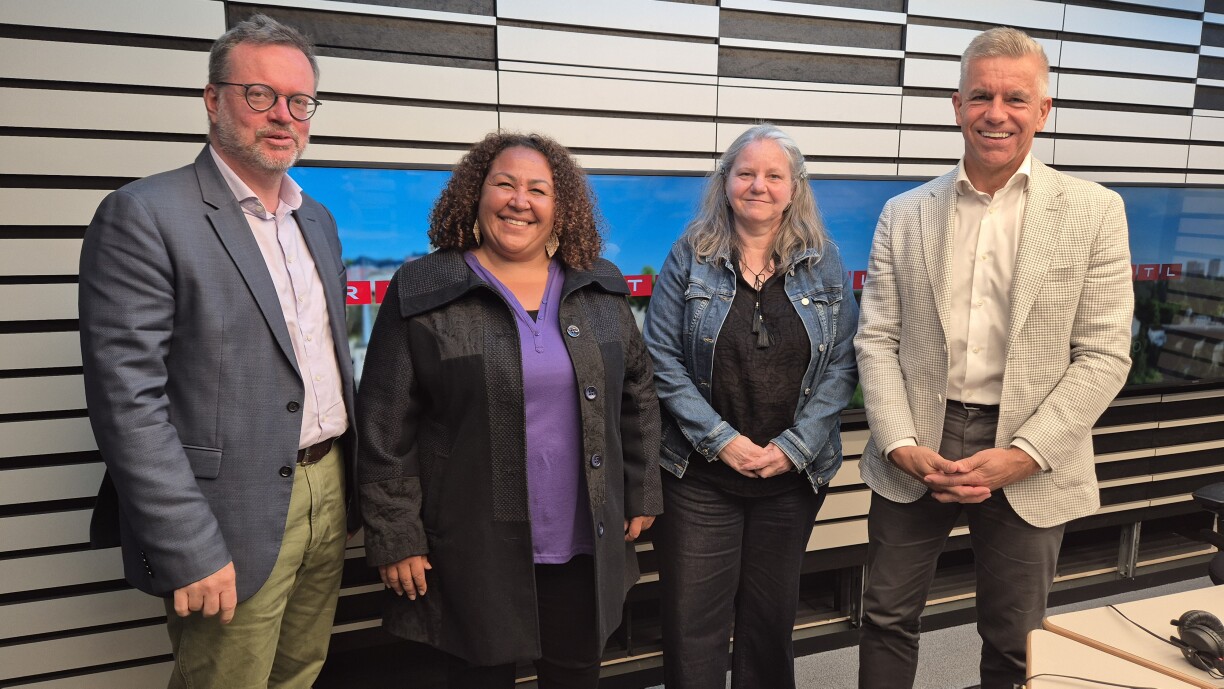
Crises, wars, and political tensions are also making the environment and work conditions more difficult for development aid, according to the four panellists who took part in a Saturday roundtable discussion hosted by RTL Radio.
The panellists were Nicole Ikuku, Director of the NGO Cooperative Network; Denise Richard, Director of the Partage Foundation; Fernand Schaber, President of the Unity Foundation; and Georges Ternes, Director for Cooperation at the Ministry of Foreign and European Affairs.
Commitment to the cause remains, including from Luxembourg. The country currently invests 1% of its gross national income (GNI) in international cooperation, a level that Georges Ternes reaffirmed should remain in place – even after the minister responsible, Xavier Bettel, recently called the figure into question.
According to Ternes, the ministry’s primary concern is transparency. He explained that officials wanted to clarify which additional expenses are being made outside the cooperation budget, as those would effectively push spending beyond the 1% mark.
Projects in development aid and those combating the climate crisis are sometimes closely aligned, Ternes said. He explained his ministry is in discussions with the Ministry of the Environment to create synergies and avoid "overlaps". These considerations were met with understanding by Nicole Ikuku, though she would have liked to have been better informed about them in advance.
The panellists agreed that dedicating 1% of GNI to international cooperation sets Luxembourg apart on the global stage. According to Ikuku, that is something to be proud of.
The global situation, however, is different. Last year, US President Donald Trump decided to almost completely cut US aid, with the cooperation agency USAID being virtually dissolved overnight. A number of other EU countries, including Germany, have also reduced their cooperation budgets.
Ternes pointed out that the amount of money flowing into the international aid sector has fallen by more than 30% within three years – a development he described as "disastrous". He stressed that this is money missing on the ground. In Rwanda, for example, a number of NGOs have had to suspend their activities, Denise Richard lamented.
As a result, local partners are coming under severe pressure, Richard said. She added that her organisation reacted quickly, ensuring that people who depend on aid could go to work to help themselves, but she stressed that that process takes time. The people dependent on aid are currently in a difficult situation, she regretted.
However, difficult conditions on the ground are not only a matter of funding. In some places, the work is also becoming more dangerous for NGO staff, such as in the Sahel region.
Luxembourg has suspended development work in Mali, Burkina Faso, and Niger, also closing its embassies there. Dialogue with the military authorities is "partly impossible", Ternes explained.
Richard stated that her organisation remains active in Mali, but not for much longer. Given the current situation, she regretted that new projects would be impossible to undertake.
In Luxembourg itself, the sector has had to reposition its awareness-raising and educational work. A recent development is the House of NGOs at the Gare district in Luxembourg City.
Fernand Schaber welcomed the initiative, noting that meaningful partnerships and exchanges between NGOs can develop there.
Regarding awareness-raising in schools, Schaber sees a great need. It is important for young people to understand what cooperation means and what they gain from showing solidarity and empathy, he said.





