Housing in Luxembourg is expensive, a reality that refugees experience first-hand. Once their status is officially clarified, they are required to leave reception centres, yet many struggle to find accommodation they can afford.
The rules are clear. When an application for international protection is rejected, those concerned must leave the facilities of the National Reception Office (ONA) within five days. But even refugees who are granted international protection cannot stay in a reception centre indefinitely. They are given one year to find housing, after which they are also required to leave. The same applies to people whose situation has been regularised through a permanent employment contract.
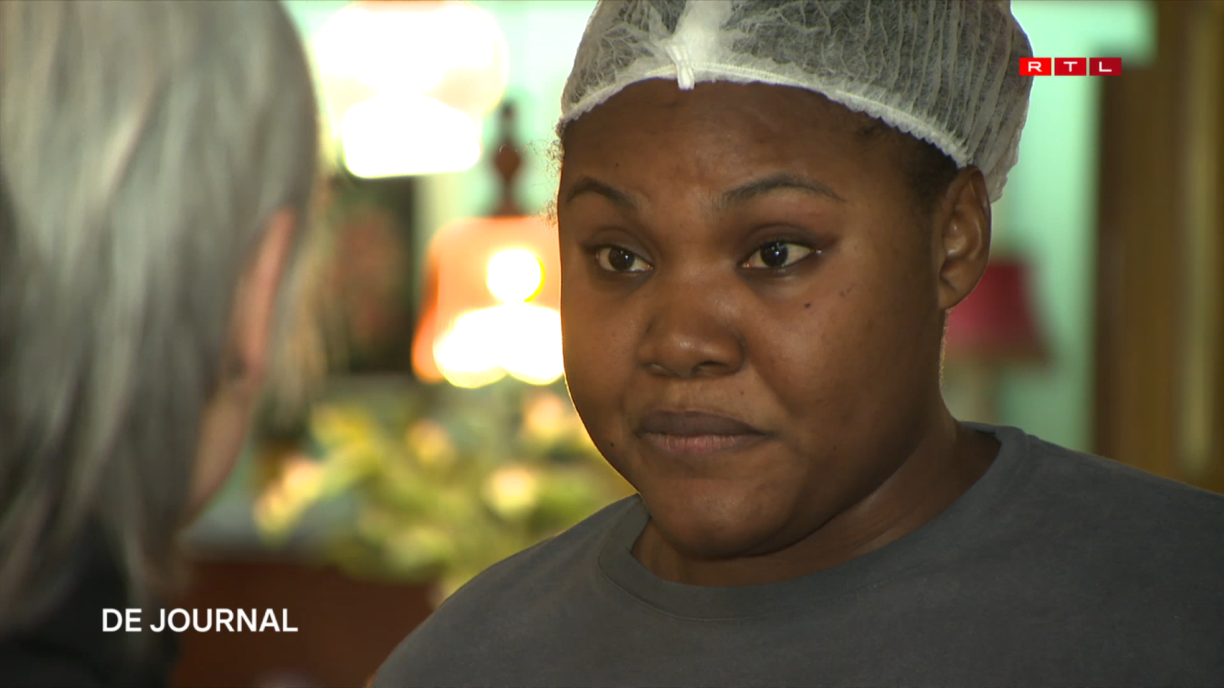
Blessing Sajowa arrived in Luxembourg from Nigeria nine years ago. Her application for international protection was rejected, but she later obtained a residence permit through her permanent job at the restaurant Chiche!. As a third-country national employee, she is no longer entitled to stay in ONA accommodation.
In conversation with RTL, Sajowa said that she has been told to leave the centre by 11 February, and that she feels under intense pressure to do so. She added that she has tried to explain that she is actively searching for housing. In her view, she is not at fault, pointing instead to the severe shortage of affordable homes in Luxembourg.
Sajowa earns the minimum wage and is raising four children aged between two and eight. She had hoped that a stable income would allow her to secure housing quickly and build a future in the country. Instead, she said those hopes have been shattered: rents are unaffordable, and landlords are reluctant to rent to a single mother with four children.
As the deadline approaches, Sajowa fears that being forced to leave the reception centre could also put her family at risk, stating: "They will take my children away because children can't live on the street. But I can't give up my children, they belong with me. If they throw me out, they must not take my children away as well. This is absolutely devastating for me. It gives me sleepless nights."
Sajowa's employer, Marianne Donven, founder of the social restaurant Chiche! and president of the refugee support association Open Home, said attitudes towards refugees have hardened in recent years. She stressed that Sajowa's situation is far from unique, saying she has heard of 197 recognised refugees who are expected to leave reception centres in the coming weeks. According to her, losing access to accommodation can also mean losing an official address, and with it, employment contracts and social security coverage.
Donven has studied the housing market closely and insists that soaring rents affect not only refugees but also a growing number of Luxembourg residents living in increasingly precarious conditions. She argues that current housing policies are failing and says urgent action is needed: "It won't sort itself out anymore. You simply can't keep saying this should be left to the private market, especially when developers and investors are being supported at the same time. Something has to be done now for tenants." Donven therefore advocates for rent controls and a significant increase in public and municipal housing supply to prevent people from ending up without a roof over their heads.
She also strongly criticised comments made by Minister of Family Affairs, Solidarity, Living Together, and Reception of Refugees Max Hahn, who reportedly told Eritrean women at a recent conference that they should have been aware of Luxembourg's high cost of living. Donven said it is unacceptable to suggest that families are responsible for their housing insecurity, arguing that when such a large share of the population faces poor or non-existent housing, the problem lies with the minister. In her view, it is the minister's responsibility to ensure families have access to decent housing.
Contacted by RTL, the Ministry of Family Affairs confirmed that beneficiaries of international protection receive a letter from ONA after 12 months, informing them that the period they are allowed to stay has ended and that they must leave the reception centre. Last year, this occurred an average of 47 times per month.
However, the ministry spokesperson stressed that this does not mean people are immediately evicted. They explained that an eviction can only take place following a court ruling ordering someone to leave a facility. In 2025, this applied to eight cases involving beneficiaries of international protection, according to the spokesperson.
The ministry clarified that no families with minor children were affected, and that there are currently no known evictions scheduled to be carried out in the near future.





