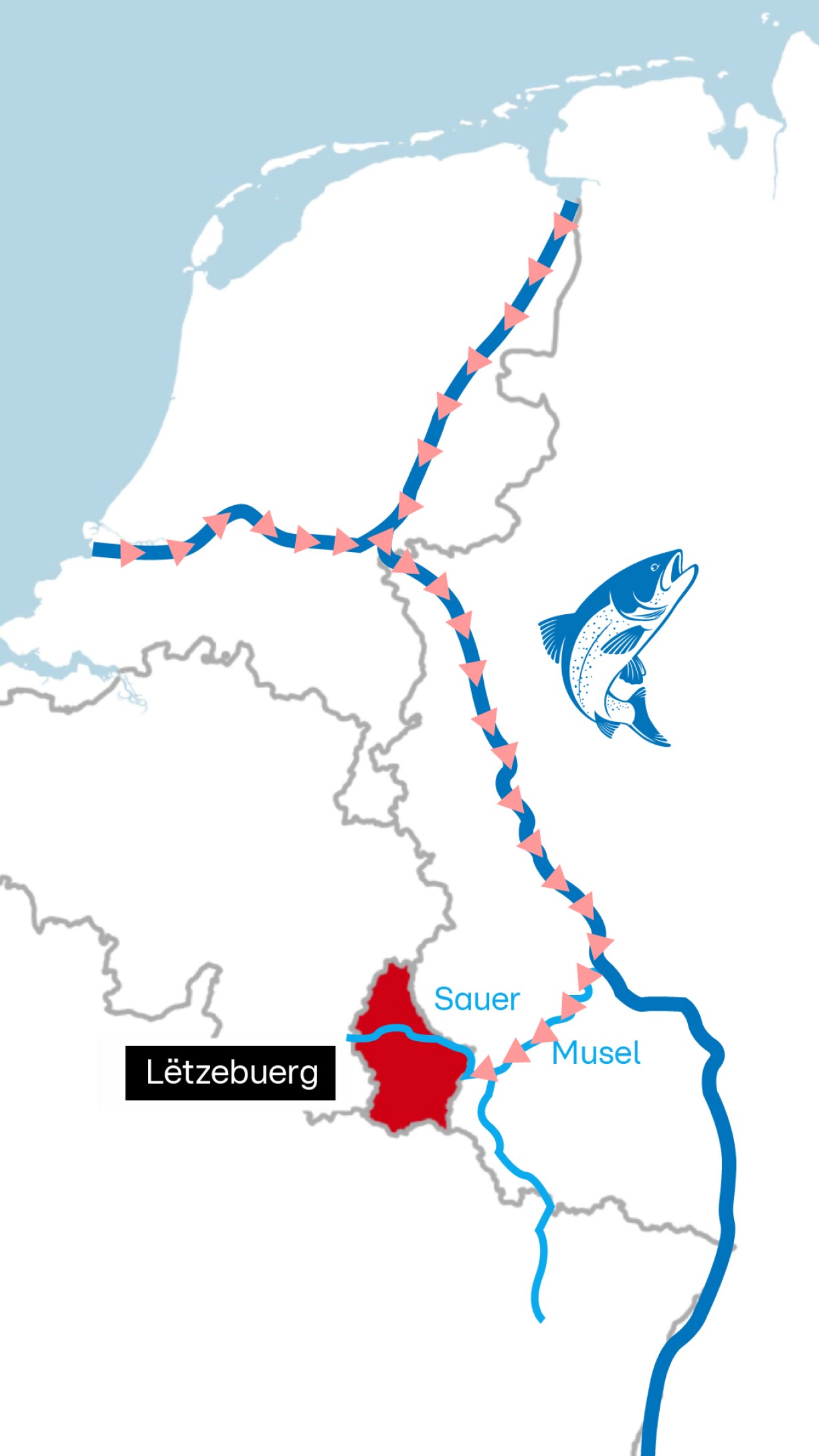
Despite the natural migration route from the Atlantic to Luxembourg's rivers, the presence of numerous dams along the Rhine, particularly between Wasserbillig and Koblenz, has posed a substantial barrier to the salmon's upstream journey.
Carole Molitor, representing the Water Management Authority, underscores the critical role of these barriers in impeding the salmon's return, stating, "It is not merely the distance that hinders their migration, but rather the obstruction posed by the dams."
Notably, there are nine specific locations along the Moselle locks — Lehmen, Müden, Fankel, St. Aldegund, Enkirch, Zeltlingen, Wintrich, Detzem, and Trier — where salmon face insurmountable obstacles in their upstream migration.
Luxembourg actively participates in the Rhine Commission, a collaborative initiative dedicated to restoring natural conditions in tributaries and facilitating the unhindered passage of migratory fish throughout the Rhine basin and beyond. Currently, the Rhine remains navigable up to Koblenz.
Molitor emphasises the dual necessity of clearing migratory pathways and enhancing aquatic habitats to support fish populations sustainably, stating, "Our waterways require significant restoration efforts to reinstate natural habitats that have been disrupted by human activities. Clearing the passage is essential, but equally vital is the creation of conducive habitats for the completion of fish life cycles."
Highlighting the broader context, Molitor, referencing the International Union for Conservation of Nature's 2022 Red List, underscores the alarming reality that one-third of freshwater species face imminent extinction threats. Molitor elaborates, "In addition to existing threats, climate change exacerbates vulnerabilities, particularly with rising water temperatures."
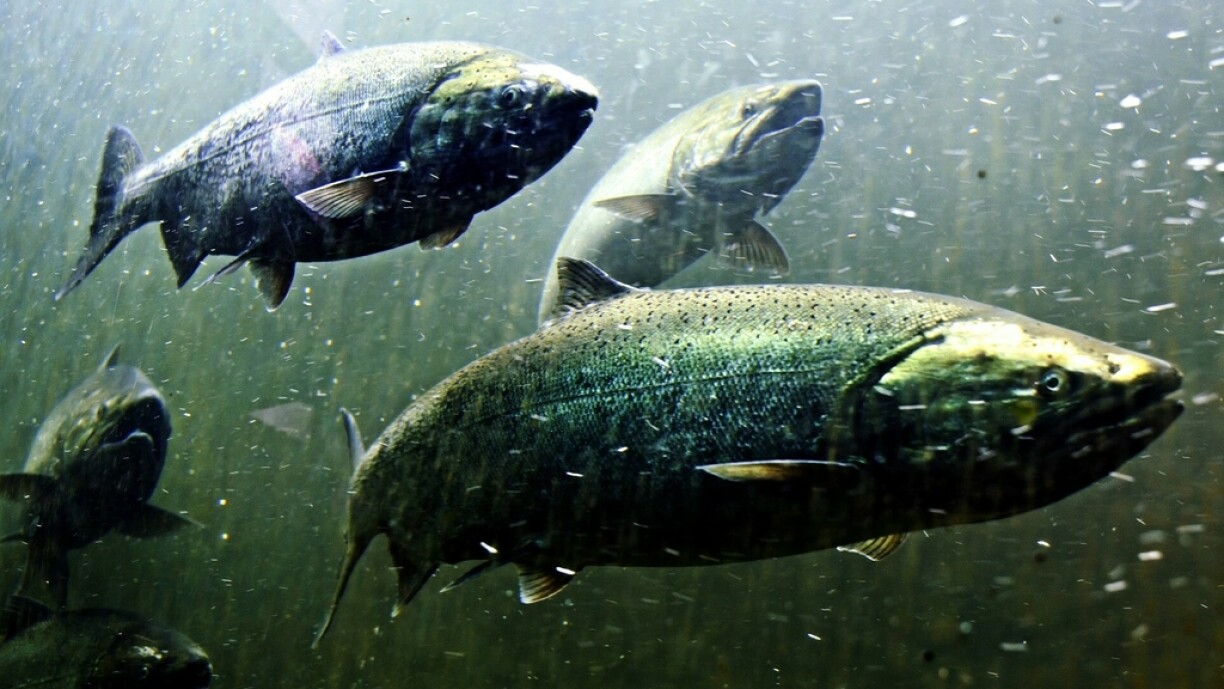
A TV report from 2017 initially forecasted the return of salmon to Luxembourg's waters by 2027. While this projection has not materialised, there remains optimism that this anticipated return may occur in the coming years.





