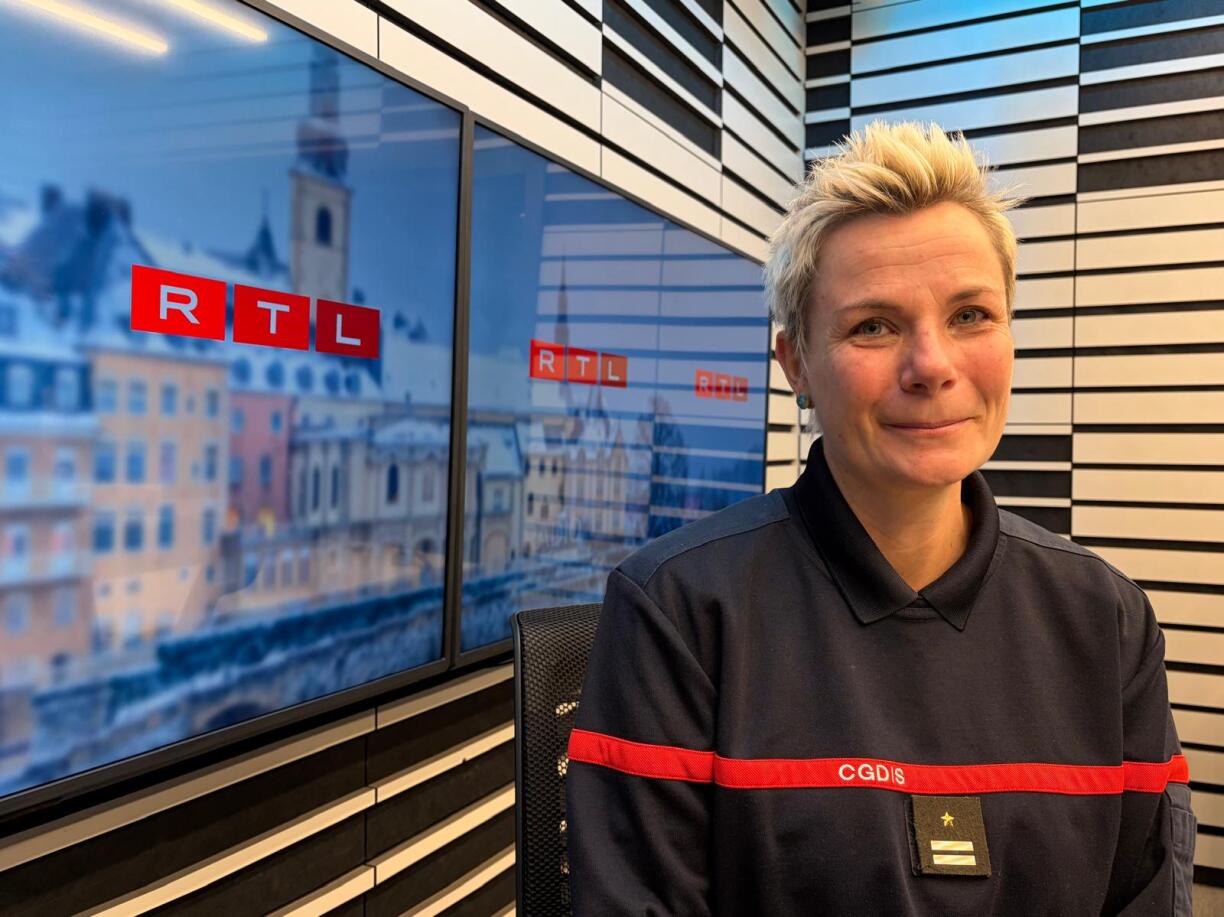
"Simply being present and listening to people is already extremely important", explained Laurence Diederich, deputy head of the Psychological Support Group (GSP) of the Grand Ducal Fire and Rescue Corps (CGDIS), in an interview on RTL Radio on Tuesday.
The GSP is deployed in the wake of serious incidents, such as fatal accidents, disasters, evacuations, assaults, or suicides. "Our goal is to stabilise people", Diederich said, "Many are in shock, unable to think clearly. We are there to absorb that shock and then help them plan the next step – what will happen in the coming hours and days."
She emphasised that no two interventions are the same: reactions range from calm to highly emotional. "There's no set rule", she noted.
The group consists of roughly 50 volunteers who respond to about 250 calls per year. As a unit within the CGDIS, the GSP is typically activated via the 112 emergency number. It primarily assists in cases involving death or serious accident, though Diederich clarified that anyone can request their help.
"While requests most often come from the police or fire brigade, families, friends, or even witnesses to a serious event can also contact us", she said.
An intervention lasts approximately three hours and must take place within 72 hours of the incident, but the team only visits once. "Afterward, we ensure the individuals have a support network in place for when we leave – whether that's social support from friends or family, or professional external help", Diederich added.
All GSP members are trained firefighters. They operate under strict protocols: they always respond in pairs, they only attend upon request and never unannounced, and they prioritise discretion to protect those affected. To maintain a low profile, volunteers use personal vehicles and do not wear uniforms.
The backgrounds of the volunteers serving in the GSP are diverse. Its 50 members undertake this role alongside their regular jobs, except for some who are retired. A professional psychology degree is not required, but every volunteer must complete dedicated psychological training. Diederich underscored the importance of this preparation for the group's demanding work, stating, "We learn precisely how to manage these types of situations, to maintain a certain professional distance while remaining empathetic."
The practice of deploying in pairs or as a team is another key support, she added, ensuring no individual bears the emotional weight of an intervention alone. Members participate in structured supervision sessions three times annually and can request additional support following an especially difficult or complex incident. Volunteers also have access to psychological support for themselves if needed.
The group is actively considering its future as intervention numbers rise alongside the country's growing population. While the GSP has managed all call-outs to date, Diederich noted the challenge of scaling their operations. "Professionalising is not so simple, but there are already some thoughts and ideas on how we could develop", she explained.
To sustain its mission, the GSP recruits new members every two years. Two information meetings are scheduled in February. Interested individuals must attend at least one of them. No specific prior knowledge is mandatory, however, all volunteers must be, or become, active members of the CGDIS. Further details are available on the CGDIS's website.





