
Here are five things you should know at the end of this week:

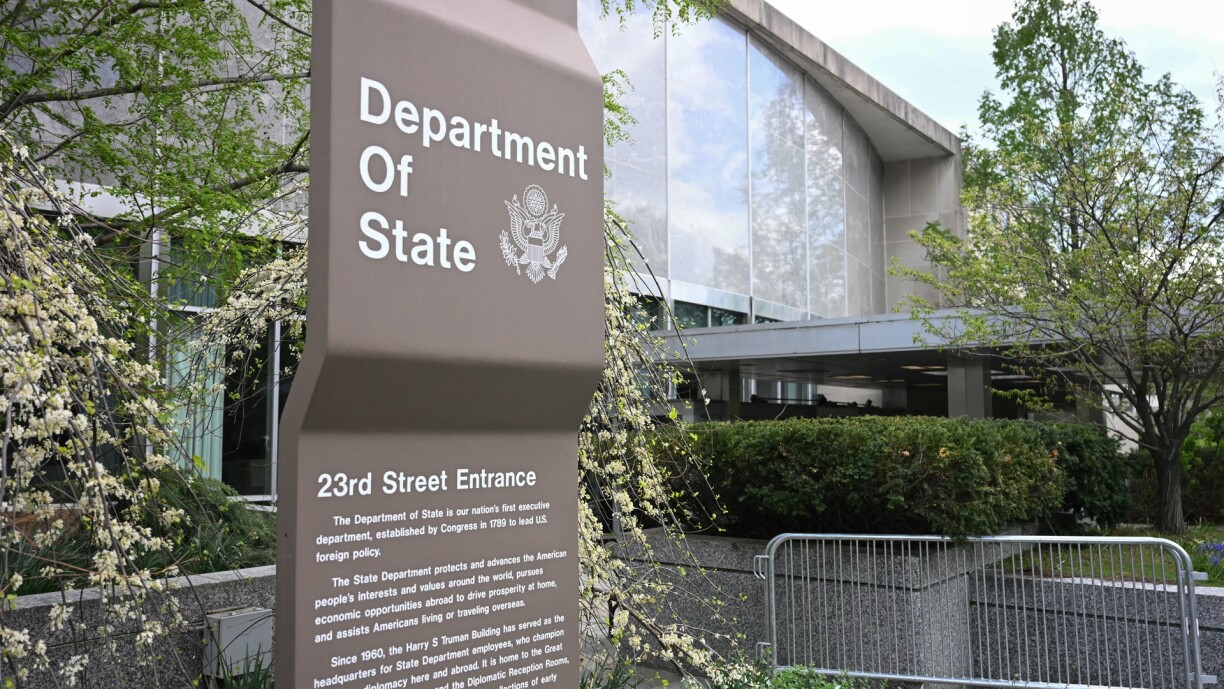
A leaked State Department proposal suggests the US embassy in Luxembourg may permanently close as part of a major cost-cutting plan affecting ten embassies worldwide.
Strategy leaked – A confidential proposal from the US State Department, revealed by Politico, indicates that the embassy in Luxembourg is among ten diplomatic missions targeted for permanent closure. This plan is part of a sweeping effort to reduce the State Department's budget by nearly 50%, a move that would significantly alter the US' diplomatic presence abroad.
The embassies in question span a wide geographic range, including countries in Africa, the Caribbean, and Europe, suggesting a broad and potentially disruptive restructuring of US foreign relations.
Concrete proposals – Under the proposed changes, the diplomatic functions of the affected embassies would be transferred to US missions in nearby nations. For Luxembourg, this would likely mean a loss of direct diplomatic representation, with responsibilities managed remotely from another European capital.
Similar arrangements are proposed elsewhere, such as the US embassy in Nairobi taking over duties for Eritrea and the Rome embassy covering Malta. Critics argue that this model risks weakening bilateral ties and diminishing on-the-ground engagement with host countries.
Uncertainty prevails – The possible closure of the US embassy in Luxembourg is especially significant given the country's strategic importance in Europe as a centre for finance, diplomacy, and EU governance. The embassy has already faced challenges in recent years, including negative findings in a 2022 Inspector General report that highlighted issues like costly housing and high staff turnover.
Since the departure of Ambassador Thomas M Barrett following President Trump's second-term inauguration, the mission has been led by Chargé d'Affaires Michael Konstantino. Trump's 2024 appointment of businesswoman Stacey Feinberg as the new ambassador now hangs in limbo, adding to the uncertainty surrounding US Luxembourg diplomatic relations.

Misconduct allegations against Luxembourg police rose by nearly 25% in 2024, with increases in reports of brutality, abuse of power, and inappropriate behaviour.
The General Inspectorate launched 109 criminal and 76 disciplinary investigations, with a significant number related to internal violations and off-duty misconduct.
Of 300 closed cases, 42 resulted in action against officers, while 12,700 fines were annulled as unjustified, representing 1.42% of all police-issued fines.
Complaints surge – According to the General Inspectorate of the Police (IGP), there was a significant year-on-year surge in misconduct allegations against police officers. The report details a range of accusations, with police brutality accounting for 29% of all criminal investigations – making it the most common type of complaint.
Other notable allegations include threats, off-duty assault and battery, abuse of power, and racism or xenophobia.
Stats and figures – The IGP opened 109 criminal investigations in 2024, many of which stemmed from claims of brutality and abuse. At the same time, 76 disciplinary proceedings were initiated, covering infractions such as driving under the influence, failure to meet reporting deadlines, and improper access to police databases.
At 43.3%, administrative investigations made up the largest share of inquiries overall, with many of these cases centring on procedural violations and inappropriate behaviour by officers.
Margin of error – In total, 300 cases were concluded during the year, including 74 criminal, 137 administrative, and 90 disciplinary investigations. Notably, 42 disciplinary cases led to sanctions against individual officers, with 12 financial penalties imposed as a result.
The report also sheds light on the accuracy of police-issued fines – of which 12,700 were overturned by the IGP for being unjustified. While this figure represents just 1.42% of all fines, it points to a non-negligible margin of error in enforcement practices and signals the importance of oversight in ensuring accountability and fairness.

A wolf has been confirmed in the Kiischpelt-Clervaux region of northern Luxembourg, with photographs verifying its presence.
The Nature and Forest Agency urges the public to report sightings, as the wolf's current location remains unknown.
While wolf encounters are rare, the agency shared safety guidelines to follow in case of a sighting.
Sighting confirmed – Luxembourg's Nature and Forest Agency (ANF) confirmed the presence of a wolf in the northern region between Kiischpelt and Clervaux last Friday. This identification was made possible through photographic evidence captured at two different locations.
Specialists carefully analysed the images, focusing on key identification features to ensure accuracy before officially verifying the sighting. This marks one of several sporadic appearances of lone wolves in the country since 2017, highlighting a growing trend seen across neighbouring regions.
Location unknown – Although the agency confirmed the wolf's presence late last week, its current whereabouts are uncertain. Officials noted in a press release on Tuesday that it's unclear whether the animal is still within Luxembourg's borders or if it was simply passing through.
As a precaution, the ANF is asking residents to remain vigilant and report any suspected wolf sightings to wolf@anf.etat.lu to help with ongoing monitoring and data collection.
Safety pointers – The ANF reassured the public that wolves are naturally wary of humans and tend to avoid interaction. However, in the rare event of an encounter, they have published a list of safety recommendations. Key advice includes not feeding or approaching the animal, staying calm and visible, and avoiding sudden movements or direct eye contact.
If a wolf does not leave the area, people are advised to back away slowly and use available objects to deter the animal if necessary.

Trump and El Salvador's President Bukele have deepened cooperation on a controversial deportation scheme, with Bukele refusing to return a wrongly deported man despite a US Supreme Court order.
Trump's administration is under fire for using an obscure wartime law to deport nearly 300 migrants – many without due process – to El Salvador's notorious CECOT mega-prison, sparking accusations of human rights violations and enforced disappearances.
US courts and lawmakers are clashing with the Trump administration over its refusal to comply with court orders, as critics warn the situation is edging toward a constitutional crisis and undermining judicial authority.
Presidents aligned – During a highly publicised Oval Office meeting, President Donald Trump and Salvadoran President Nayib Bukele solidified their partnership in a contentious plan to deport migrants – including some US residents – to El Salvador. A central flashpoint in the controversy is the case of Kilmar Abrego Garcia, a legally protected US resident who was mistakenly deported in defiance of a court order.
Despite rulings from a federal judge and the Supreme Court mandating his return, Bukele flatly refused to facilitate it, claiming he lacked the authority to send the man back. Critics see this as a political alliance trumping legal obligations, with the El Salvadoran government receiving millions of dollars from the US to detain deportees under harsh conditions.
Notorious prison – The Trump administration has revived the centuries-old Alien Enemies Act to justify mass deportations of migrants – many of them asylum seekers or US residents – to El Salvador, where they are held in the brutal CECOT prison. Rights groups, including Human Rights Watch, have raised alarms over what they describe as enforced disappearances, with detainees denied legal representation and contact with the outside world.
Some of the migrants have not been charged with any crime, yet they are imprisoned alongside violent gang members in conditions likened to torture. Critics argue that the scheme is effectively outsourcing US detention to a foreign state, transforming El Salvador into a "black hole" of legal accountability.
Trump defiant – The Trump administration's defiance of court orders – particularly in the Abrego Garcia case – has drawn intense criticism from judges and lawmakers alike, with one federal judge finding "probable cause" to hold the government in criminal contempt. The administration's position that foreign affairs override judicial timelines, combined with public attacks on the judiciary, has prompted warnings from legal experts and Democrats that the country is facing a dangerous erosion of the rule of law.
Lawmakers such as Senator Chris Van Hollen, who travelled to El Salvador to advocate for Abrego Garcia's release, were initially blocked from even seeing the detainee, further inflaming tensions and fueling concerns about executive overreach and institutional breakdown.
Sudan's civil war, now entering its third year, has displaced 13 million people and triggered famine, ethnic violence, and mass suffering, with the UN calling it the world's worst humanitarian crisis.
The RSF paramilitary group has declared a rival government and intensified its offensive in Darfur, capturing the famine-hit Zamzam camp and besieging El-Fasher, displacing hundreds of thousands.
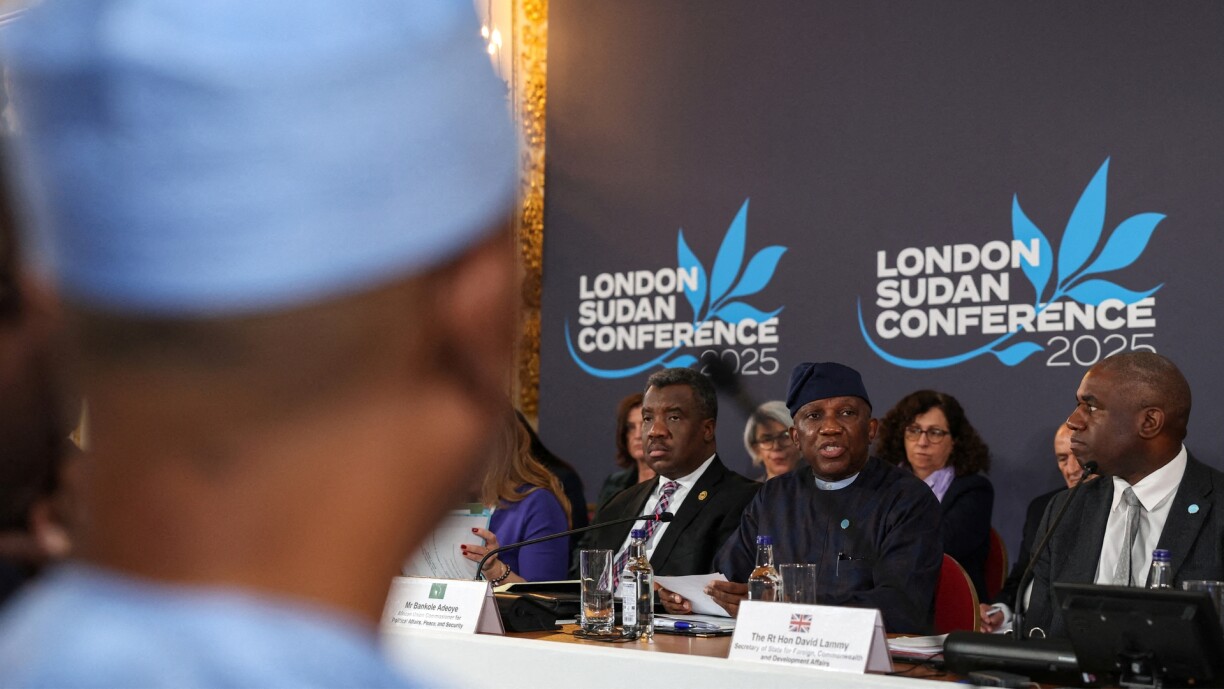
An international conference in London pledged over €800 million in aid, urged an immediate ceasefire, and warned against Sudan's possible partition, though neither of the parties at war attended.
The forgotten war –Since violence between Sudan's regular army and the paramilitary Rapid Support Forces (RSF) erupted on 15 April 2023, tens of thousands have been killed and millions forced from their homes. The conflict has fractured the country, crippled essential infrastructure, and pushed vast regions into famine, with over 30 million people now in desperate need of humanitarian aid.
The situation is particularly dire for women and children, with widespread reports of sexual violence and malnutrition.
Paramilitary advances – In a move condemned by international powers, RSF leader Mohamed Hamdan Daglo announced the formation of a "government of peace and unity" in RSF-held territory, intensifying fears of Sudan's potential partition. The RSF has besieged El-Fasher, the last army-held city in Darfur, while claiming control of the Zamzam displacement camp, where up to one million people had been sheltering.
Satellite imagery and aid groups warn of a looming large-scale assault, as 400,000 people have already been forced to flee the camp under fire.
Humanitarian efforts – Hosted by the UK and co-chaired by Germany, France, and the African Union, a London gathering brought together foreign ministers and senior UN officials – though notably excluded both at-war parties, citing their unwillingness to engage. Officials stressed the need to preserve Sudan's territorial integrity and support a civilian-led peace process.
Meanwhile, UN agencies and NGOs on the ground continue to warn that without a halt to fighting and unrestricted humanitarian access, the scale of human suffering will only deepen.
Business & Tech – The European Central Bank cut interest rates again Thursday amid fears that US President Donald Trump's stop-start tariff announcements could threaten growth across the eurozone.
Science & Environment – Pop star Katy Perry completed a brief foray into space Monday, roaring to the edge of the cosmos with an all-women crew on one of billionaire Jeff Bezos's rockets.
Entertainment – Comedian Nate Bargatze, one of the United States' most successful stand-ups, will host this year's Emmy Awards, organisers said Wednesday.
Public order–A proposed law aimed at strengthening public order enforcement in Luxembourg has sparked strong criticism from civil society groups, who argue that the bill could lead to arbitrary enforcement and disproportionately affect vulnerable groups.
Wildlife –Luxembourg authorities have confirmed a new case of tularaemia in wild rabbits within two weeks, prompting renewed warnings about the disease's transmission risks to humans and pets.
Mobility–Luxembourg City's new Héienhaff park-and-ride facility opens on 28 April, featuring nearly 500 parking spaces and direct tram access to Kirchberg and Findel Airport.

Your Weekly Recap is published every Friday at noon. Read earlier versions.





