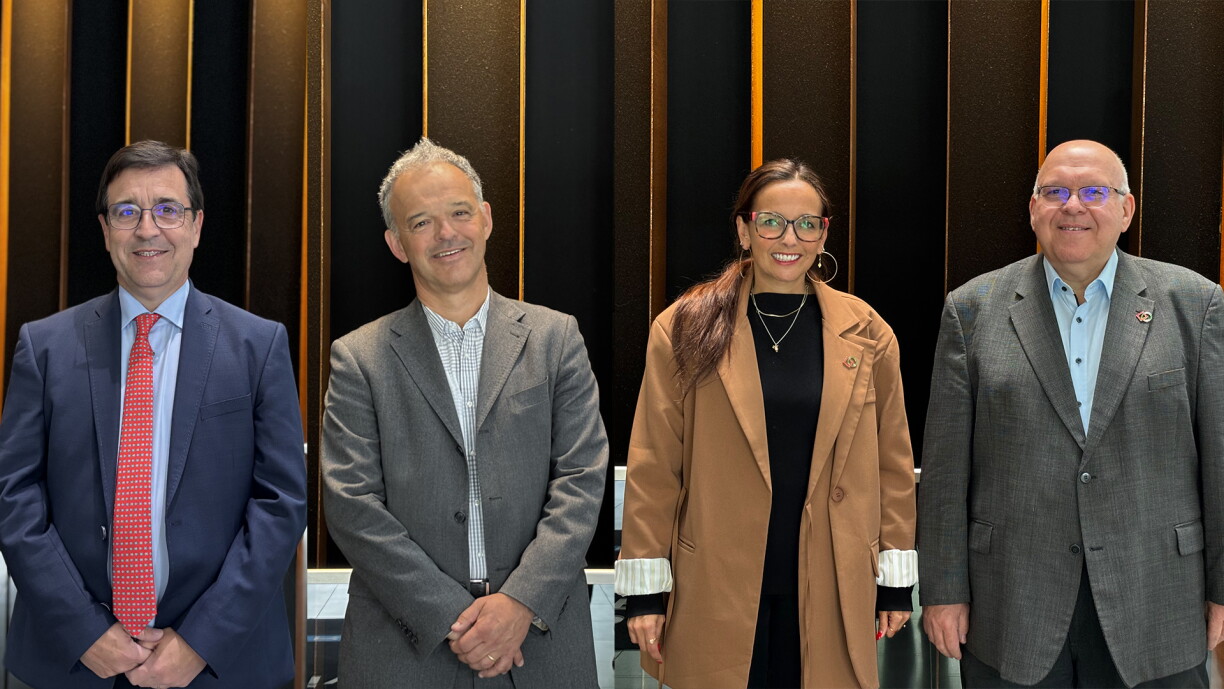
PM Luc Frieden's State of the Nation address drew mixed reactions from trade unions and employers, who largely saw it as a prelude to the upcoming tripartite talks.
The State of the Nation address was overshadowed by the tripartite talks. As a result, there were no new announcements, and the major current issues will instead be discussed during the talks, where solutions will hopefully be found, president of the Independent Luxembourg Trade Union Confederation (OGBL) Nora Back said.
Back said the unions would have liked to hear something positive about the minimum wage, as well as remarks on cross-border workers who travel into Luxembourg every day.
She said what had really been missing from the address was any mention of cross-border workers or the Greater Region. According to Back, this is a real problem, as Luxembourg is currently facing an attractiveness issue, with fewer cross-border workers wanting to come to work in the country, despite Luxembourg's reliance on them.
While the OGBL regretted the absence of cross-border workers from the speech, Patrick Dury, president of the Luxembourg Confederation of Christian Trade Unions (LCGB) welcomed the announcements on healthcare.
Dury said it was positive that Frieden had clearly stated that the agreement between the National Health Fund (CNS) and the Association of Doctors and Dentists (AMMD) had to be signed, that the government did not want a two-tier healthcare system, and that it stood by the agreement. This, he said, was reassuring.
As for the General Confederation of the Civil Service (CGFP), secretary general Steve Heiliger said the measures had been listed in detail, but had not yet taken effect and did not go far enough. The CGFP would also have preferred the speech to take place later.
Heiliger said the CGFP had asked, or would have found it more sensible, for the State of the Nation address to be postponed until after the tripartite meetings. In his view, the speech would then have had more substance.
At the same time, he acknowledged that social issues had run like a common thread through the address, which he welcomed. Over the coming weeks, he said, the government would have to show how serious it really was about them.
Michel Reckinger, president of the Union of Luxembourg Enterprises (UEL) also said the key issues currently affecting businesses and citizens would be discussed in the tripartite. He said Frieden had rightly pointed to the responsibility of the social partners.
Luxembourg was operating in a very difficult environment, he said. While there was no need to paint everything black, the situation was definitely not easy and the future would be complicated.
The task now, he added, was to find the right solutions so that businesses and people could get through the crisis.
Expectations for the tripartite are therefore high. The OGBL and LCGB maintain that purchasing power and job security must be discussed.
For Reckinger, however, the issue of the minimum wage itself is closed. The government had said there was currently no room for manoeuvre for businesses, he noted, although it might have other ideas. Three years ago, he added, measures had also been taken for "ordinary people".
The first tripartite talks are to take place on 2 June.





