
Here are five things you should know at the end of this week:


The Chamber of Deputies passed amendments to enhance the law on services for the elderly in residential facilities, focusing on staff ratios based on residents' dependency levels.
Legislation revised – The recent legislative amendments passed by the Chamber of Deputies aim to improve the quality of services provided to the elderly in dedicated residential facilities. Previously, the law linked staffing requirements solely to the number of residents.
However, the revised legislation now considers the varying degrees of dependency among residents, ensuring that those requiring more intensive care will have access to higher staffing ratios. This change is expected to significantly enhance the care quality for elderly residents, aligning staff availability more closely with individual care needs.
Doubts raised – The amendments have faced criticism, especially from members of the Pirate Party, who argue that the changes represent a step backward from previous standards. They contend that the new staffing ratios, particularly the shift from a 30-bed to a 60-bed threshold for additional staff for less dependent residents, dilute the quality of care.
Moreover, critics highlight a lack of consultation with frontline workers in the development of these amendments, suggesting that the changes were made without adequately considering the input of those directly involved in elderly care.
Enforcement scheduled – The context of the amended law reflects a broader demographic trend where individuals are entering care facilities later in life, often with more significant health and care needs. This demographic shift has prompted a reevaluation of care standards to ensure facilities can meet these evolving demands.
Despite opposition, the law is scheduled to take effect on 1 March 2024.

ADEM director Isabelle Schlesser warns of an increase in job losses in the coming months, with the unemployment rate projected to rise from 5.5% to 5.9%.
There is a "hard-to-comprehend" phenomenon resulting in a discrepancy between unemployment figures and job openings; which has mostly been attributed to mismatches in skill sets and language proficiency.
Long-term unemployment has been growing in the 45+ year-old demographic, which now constitutes over 40% of the total job-seeking population.
Unemployment expected to rise – The director of the National Employment Agency, Isabelle Schlesser, shared a sobering prediction: the unemployment rate is expected to rise to 5.9% by the end of the year. Luxembourg appears to be suffering the consequences of the economic storm caused by the Covid crisis and the ongoing war in Ukraine at a greater level than its neighbouring countries.
The coming months will bring an increase in job losses throughout various sectors.
A matter of skills? –While unemployment figures are on a rising trend, there doesn't seem to be a shortage of job openings. What could explain this discrepancy? Schlesser says this is likely due to mismatches in skill sets, notably in terms of language proficiency. The IT and financial sectors seem to be the most affected by this shortage.
Schlesser highlights the importance of training initiatives and continuing education when faced with job-market difficulties.
Older job-seekers struggle –There has been a growing trend of long-term unemployment in the 45+ year old demographic, which now makes up over 40% of job-seekers. And out of that number, over half of them have been unemployed for more than a year.
Prejudices and misconceptions about older workers still abound, with many seen as undesirable by employers, despite their valuable skills and qualifications.

Apdikt in Steinfort, led by Belgian-Luxembourg chef Mathieu Van Wetteren, has earned its first Michelin star, joining the exclusive list of Michelin-starred restaurants in Luxembourg.
The list of one-star restaurants in Luxembourg remains largely unchanged, with Ma Langue Sourit in Oetrange still the only two-starred establishment.
Four Luxembourg restaurants meanwhile lost their Bib Gourmand status, which is given to restaurants offering quality food at moderate prices.
New star – Apdikt in Steinfort, under the leadership of Belgian-Luxembourg chef Mathieu Van Wetteren, has been recognised for its culinary excellence with a first Michelin star, marking a significant achievement for the restaurant. This accolade has been highly anticipated by many, as the restaurant was frequently mentioned as a favourite to win a Michelin star.
The award was announced during the Belux 2024 Michelin Guide ceremony in Antwerp, signaling a notable entry for Apdikt into the prestigious realm of Michelin-starred dining establishments in Luxembourg.
Consistency is key – In the latest Michelin Guide for Luxembourg, there were no new additions to the list of one-star restaurants besides Apdikt, indicating a year of stability and consistent quality among the established dining venues. Ma Langue Sourit in Oetrange continues to stand out as the only restaurant in Luxembourg holding two Michelin stars.
Bib gourmand – The Michelin Guide's latest edition also brought changes to the Bib Gourmand category in Luxembourg, with four restaurants losing their status. This category recognises establishments offering quality food at moderate prices, and the removal of Brasserie des Jardins, La Cantine du Châtelet, Kamakura (all three located in Luxembourg City), and Bistronome in Strassen, reflects the dynamic nature of the dining scene and Michelin's stringent evaluation criteria.
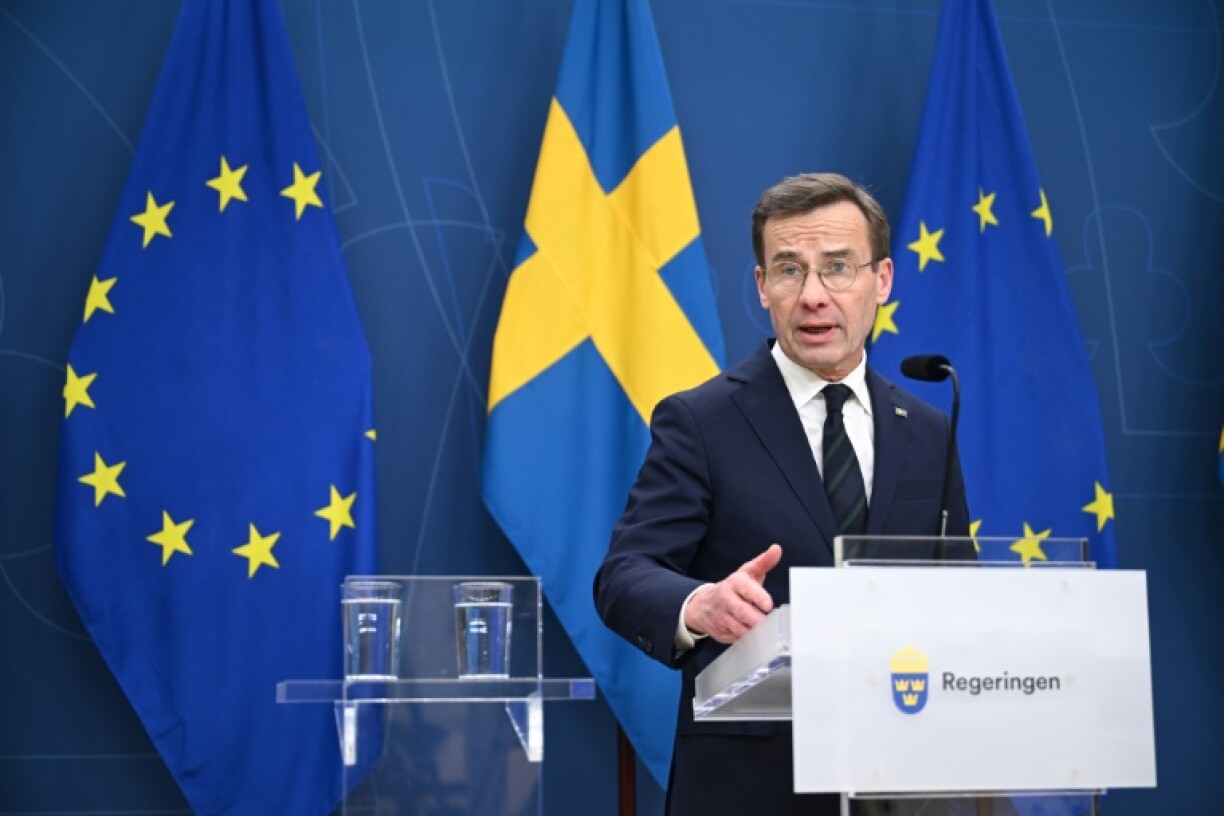
Sweden's accession to NATO was finalised after Hungary's parliament ratified its bid, marking a significant shift in Swedish security policy in response to Russia's invasion of Ukraine.
Hungary's delay in ratification was seen as a strategic move by Prime Minister Viktor Orban, but was eventually resolved, allowing Sweden to enhance Euro-Atlantic security.
The addition of Sweden to NATO is considered a strengthening factor for the alliance and European security, despite potential Russian disapproval and internal political maneuvers in Hungary.
Historic shift – Sweden's long-awaited entry into NATO marks a pivotal change in the nation's security stance, primarily influenced by the heightened tensions following Russia's invasion of Ukraine. This historic move ends Sweden's centuries-long policy of military neutrality, signaling a realignment in the geopolitics of the region. The ratification by Hungary's parliament removed the last hurdle for Sweden, reflecting a collective effort within the alliance to bolster security against Russian aggression.
This expansion of NATO highlights the shifting dynamics as European countries reassess their security policies in light of ongoing regional threats.
Orban appeased – Hungary's protracted ratification process was seen by many as a strategic move by Orban to assert national interests and leverage within the European Union. The delay was attributed to various demands from Hungary, including requests for Sweden to alter its criticisms of the Hungarian government.
However, the situation evolved after diplomatic negotiations, leading to Hungary's approval of Sweden's bid.
Welcome addition – Sweden's accession to NATO is widely viewed as a strategic enhancement to the alliance's strength and the overall security of Europe. The move has been met with positive reactions from several member countries and NATO officials, who believe that Sweden's military capabilities and strategic position will contribute significantly to the collective defense mechanism.
Despite disapproval from Russia, which sees NATO expansion as a threat to its own security, the addition of Sweden is a critical step in consolidating the northern European defence architecture.
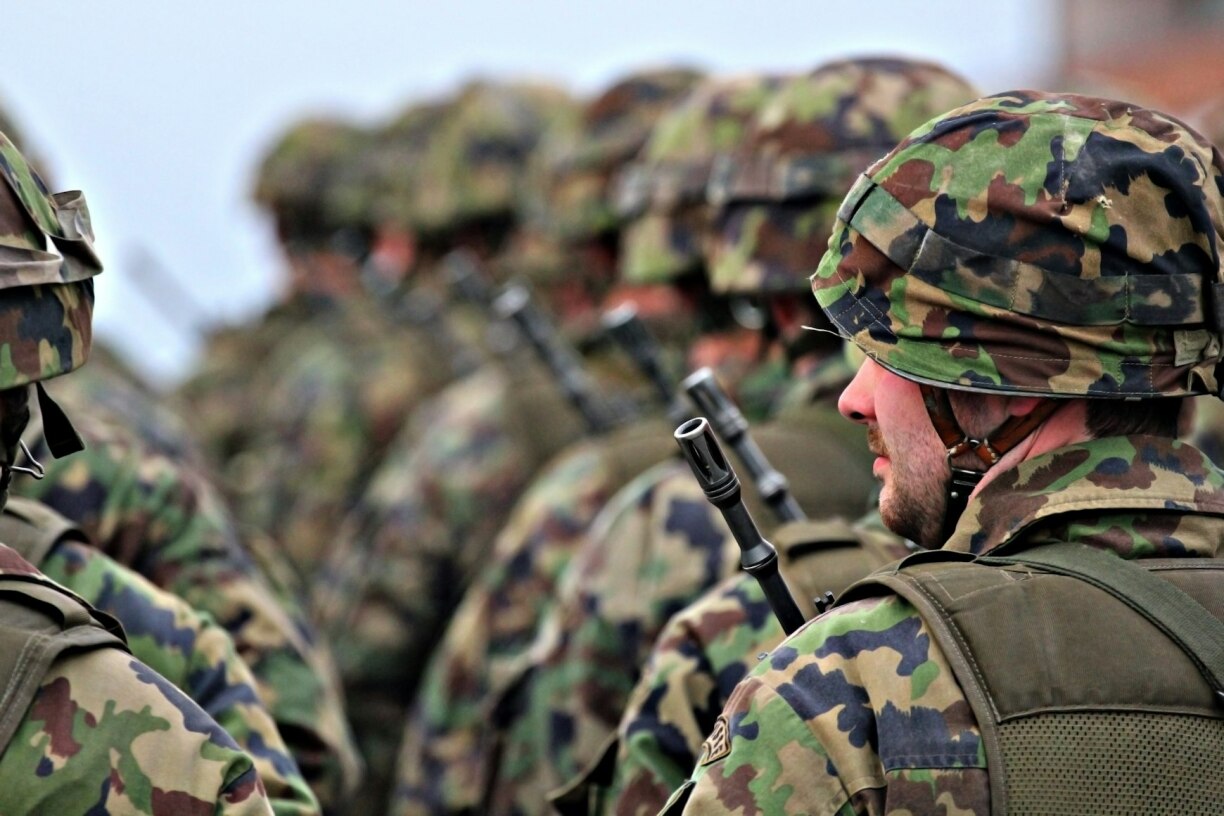
EU countries will not be sending troops to Ukraine, in what has become a contentious topic following the recent Conference in Support of Ukraine.
Speaking at the Conference, French President Macron said "everything that is necessary" must be done to ensure the defeat of Russia, a comment which elicited a brisk warning from the Kremlin, along with divisive reactions from fellow EU leaders.
Leaders advising against troop deployment mention the danger of escalation of belligerence, and warn that the EU "is not at war with Russia".
No troops deployed – There are currently no plans to send any EU or NATO troops to Ukraine, despite the unprecedented military support that has been reaffirmed at the Conference in Support of Ukraine, which took place in Paris.
Stances are mixed on the subject but most agree that troop deployment will not be in the cards for now. German Chancellor Olaf Scholz has said "Ukraine needs weapons, ammunition and air defence. We are working on it. It is clear: there will be no ground troops from European countries or NATO."
Mixed response to Macron –The French President had called on European leaders to do whatever it took to ensure Russia's defeat, not ruling out troop deployment. Macron's intervention elicited strong responses from all camps, with the Kremlin warning of the "inevitability of confrontation" if NATO troops appeared in Ukraine.
Focusing on non-front line work such as de-mining, securing neighbouring countries and thwarting cyberattacks, actions described as not breaking "any belligerence threshold" by French Foreign Minister Sejourne, the proposed plan was still met with opposition from most allies, with Croatia's President Milanovic calling it a "foolish act".
Danger of escalation –EU leaders are wary of potentially escalating and spreading the conflict with the presence of external troops in Ukraine. So far, European support has mostly taken the form of non-direct intervention, such as sending supplies and military equipment, or economic measures including potential profit seizing, which have left EU-Russia relations in an uneasy yet hands-off situation.
Troop deployment must be handled with extreme caution: "We are not at war with Russia", says Italian Foreign Minister Antonio Tajani, with Swedish Prime Minister Ulf Kristersson reinforcing the common feeling that direct intervention "is not on the cards at all for the moment".
Business & Tech – Luxembourg, Belgium, and Netherlands will be initially exempt from Prime Video ads, which Amazon is getting ready to incorporate into the streaming service.
Science & Environment – Apple has reportedly abandoned its decade-long electric car plans, now moving affected employees to generative AI projects.
Entertainment –SAG awards top honours to 'Oppenheimer', as Nolan's epic drama rides hot streak and takes home the prizes for best cast, actor and supporting actor.
Ronan Keating is set to receive an award and perform at the European Culture Award Ceremony 2024, taking place at the Philarmonie in Luxembourg.
New meal voucher system faces criticism in Luxembourg, with the cost increase casting doubts.
Luxembourg approves universal phone charger directive from the EU, aimed at simplifying consumer access to the popular electronic products.

Your Weekly Recap is published every Friday at noon. Read earlier versions.





