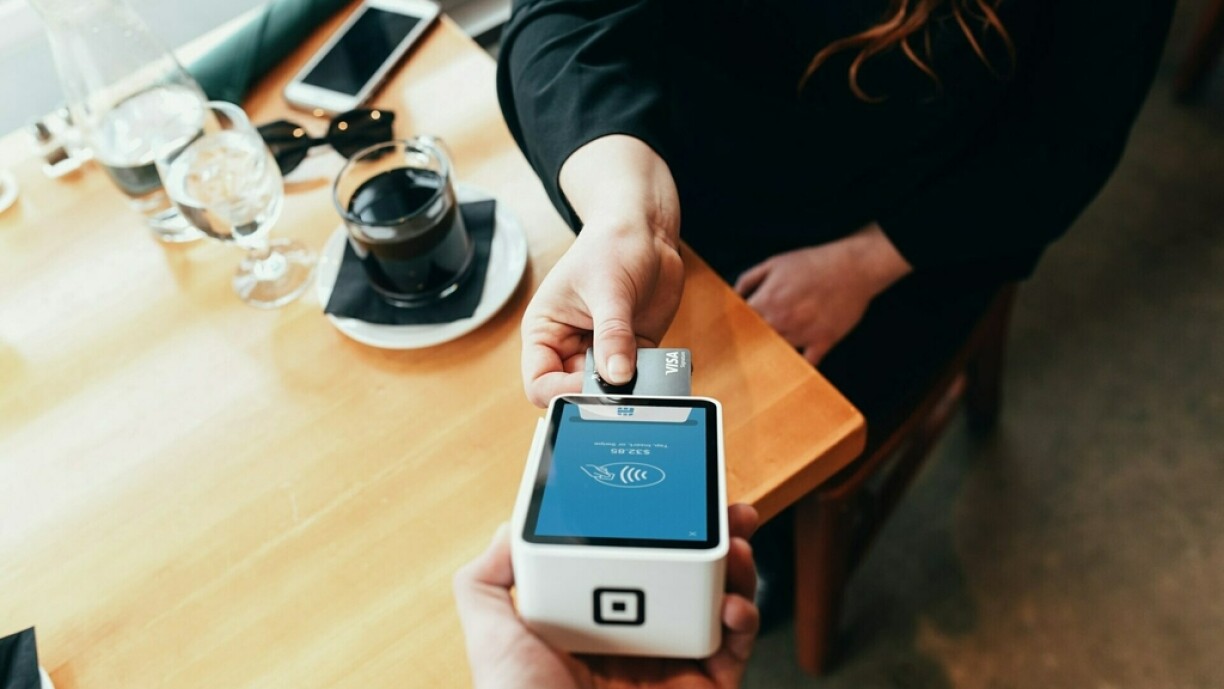
Nowadays, most payments are made by card, and the cost of living keeps rising. We thus asked ourselves whether people were more or less open to tipping after a meal or a coffee. Here’s a hint for you: it's not more.
According to Nico Heinen, who has been working in the hospitality industry for nearly 18 years, tipping has been on a steady decline, even before recent crises. However after the Covid-19 pandemic, the situation worsened; consumers were encouraged to pay by card and now, the habit stuck.
"During peak times, we could count on an additional €200 or €300, cash, per month. That’s, of course, a great bonus for any waiter, for anyone really – to have a bit of extra money like that," Heinen explains.
Today, the number is about a third of what it used to be, with the impact being more keenly felt at the end of each month. Christophe Diderich's company manages several restaurants, and he notes that people who tip have become rare. To encourage customers to leave a little extra for service, a pilot project was launched.
"We added a step to the payment system where, after paying by card, the customer was asked if they'd like to leave a specific tip. The test phase was received quite negatively overall", Diderich says.
A few years ago, customers used to leave around 10% of the price as a tip; now, it's about three percent on average.
In Luxembourg, all taxes are included in the restaurant bill, including the service charge, as emphasised by Alain Rix, the president of Horesca, the Federation of Hotel, Restaurant, and Bar Owners. This means that there is no obligation to tip. Although he observes that tipping is decreasing, he mentions that Luxembourgers are still relatively generous.
"I'd say Luxembourg is ahead in this regard. Most people do tip, I think. A large portion do, anyway. But it also depends on the establishment. If you have a really good waiter and you're completely satisfied with what you ordered, you are naturally more inclined to leave a little extra," Rix says.
And that keeps people coming back. However, a clear distinction should be made between cafés, restaurants, and fine dining establishments. But no matter the place, Rix suggests leaving a cash tip if possible.
As part of this report, our colleagues at De Magazin wanted to hear from you: do you tip, maybe less than before, and how much?
When it comes to tipping practices in Luxembourg, opinions seem as varied as the meals themselves. For some diners, tipping is a flexible habit rather than a strict rule. "I don't really think about it – it depends," explains one restaurant-goer. "I give what I have left. But if I’m at a fancy restaurant, I might leave a bit more for the service."
Others lean toward a consistent approach, typically rounding up the bill slightly. "Rounding up is always a decent way to go about it," shares another interviewee. "If the bill is around €14.50 or €16, I’ll usually add a bit to even it out."
However, not everyone feels the same way.
Some residents see tipping as unnecessary, especially in cases where they feel tipping is not reciprocal. "Absolutely not," remarks one retail worker. "No one tips me, and I also work in retail, so I don’t leave a tip."
For those who do tip, the amount varies. One respondent typically leaves "around two euros," while another sees tipping as an essential acknowledgment of good service, stating, "It's just something we do, right? Maybe a bit less sometimes, but it’s nice to leave a tip because those people do their job well."
Despite this range of practices, many acknowledge a subtle shift. "I think we tip a bit less, but we still keep tipping," says another interviewee.
Nico Heinen enjoys working as a waiter, and doesn't rely on tips to get by. Still, he appreciates those extra euros that he sees as a form of recognition.
"We are sensible about it, of course, we don't count on this money at all. But still, it’s nice to have it. Yes, it would naturally be better if I got a bit more. That's just normal," Heinen says.
When talking to people on the ground, it can be observed that tipping is indeed on a downward trend. The reasons, however, vary. Among other things, the decrease in cash transactions has led many people to simply loose the habit.





