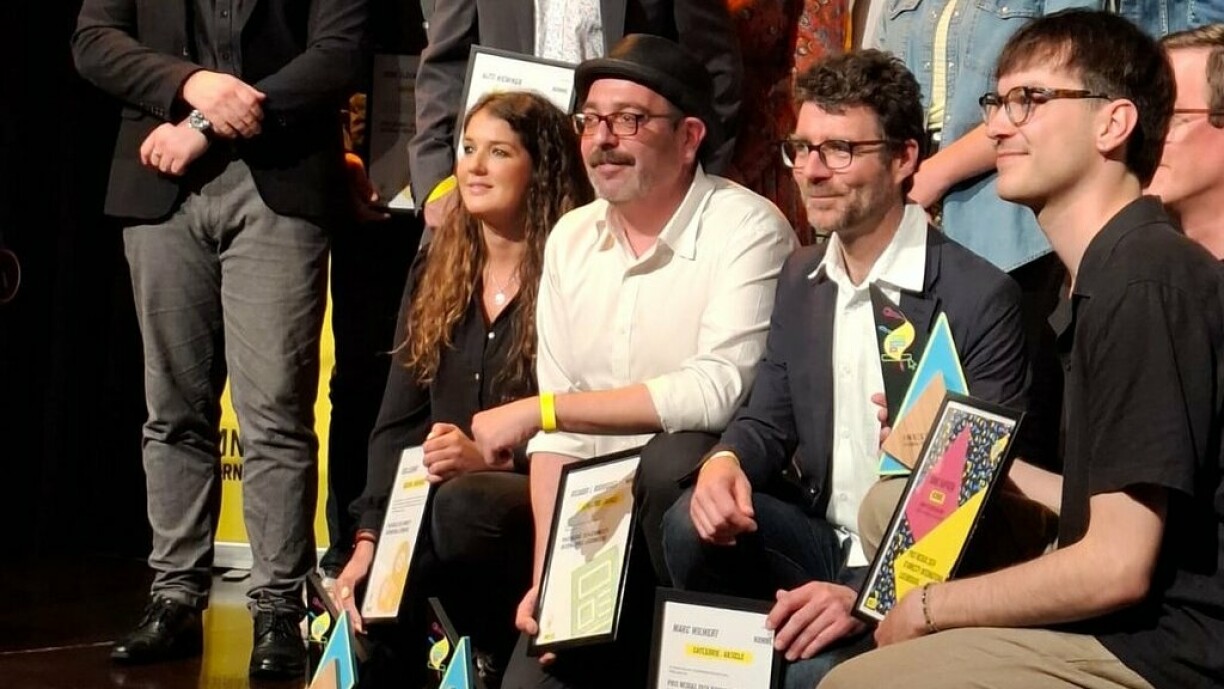
At the ceremony, RTL journalist Rosa Clemente was awarded the prize for the best audiovisual report. Amnesty International in particular was struck by her report in which she gave a voice to drug-addicted women in Luxembourg.
It was important to her not only for this particular article, but in her work in general, to give a voice to socially marginalised people:
"It's important to me that I show the outside world that people who are less well off, who are in bad situations, are also human beings. I've come to realise that we don't pay attention to them in our everyday lives and even look away. My contribution was about vulnerable women who have a very difficult time, and that's exactly what I wanted to show."
Ricardo Rodrigues had written an article about the begging ban in Luxembourg City. He told the story of people who, in his eyes, are being made invisible:
"Instead of fighting poverty, the poor are attacked, or I have the impression that they are. My aim was to restore some faith in humanity by telling the stories of the people who are being made invisible."
Jang Kapgen was honoured with the Jury's Favourite for his article on the LGBT+ community in Ukraine. The lawyer and former president of Amnesty Luxembourg, Frank Wies, was a member of the jury and explains why this article was chosen:
"What is important to us is that this article sheds light on an aspect of the war in Ukraine, on a minority, the LGBT+ community, which is already discriminated against and is even more endangered by the war."
The Amnesty Media Prize has been awarded in Luxembourg since 2016. Its aim is to encourage journalists to continue pointing out abuses and situations in which human rights are not respected in their work.





