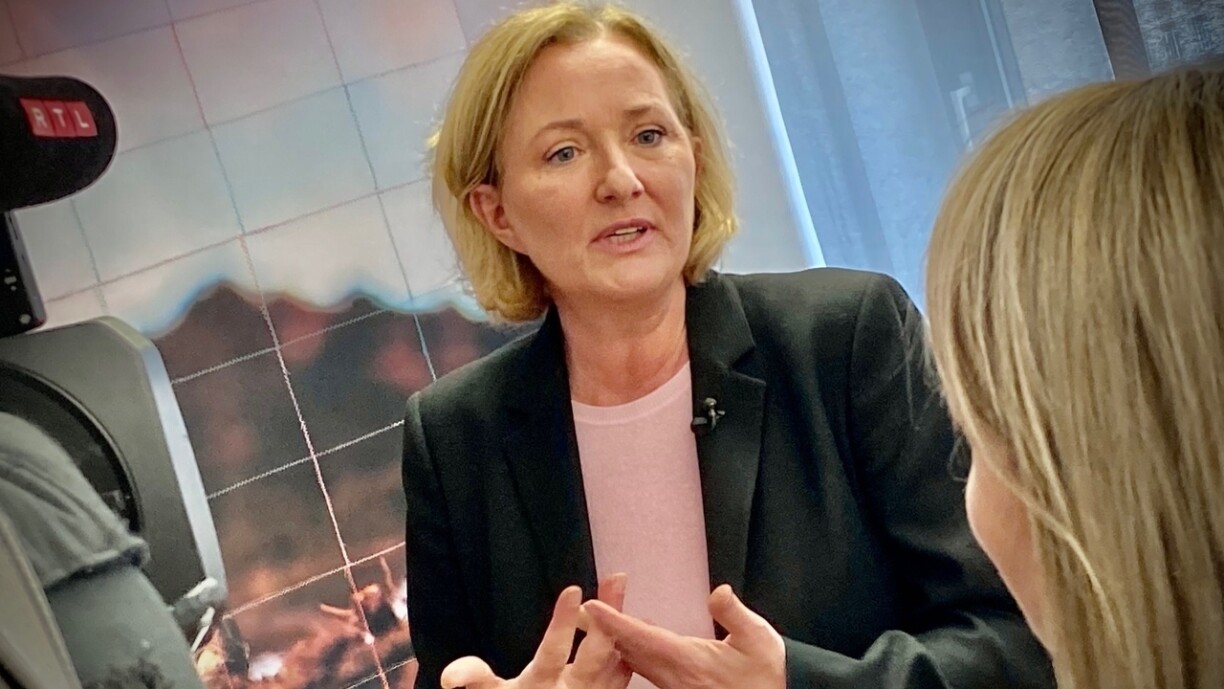
Former Minister of Health Paulette Lenert of the Luxembourg Socialist Workers' Party (LSAP) has rejected claims that the Large Scale Testing strategy during the Covid-19 pandemic in 2020 prioritised mass testing over protecting vulnerable populations.
Lenert's comments came in response to criticism from MP Dr Gérard Schockmel of the Democratic Party (DP), who argued that targeted testing of the elderly could have saved more lives.
Dr Schockmel's remarks were made in relation to the presentation of the Court of Auditors' special report on Luxembourg's Covid-19 testing programme, which invited individuals to participate in random testing. In an interview with our colleagues from RTL Radio on Thursday, the infectious disease expert stated that targeted testing for elderly populations was implemented too late, suggesting that earlier action could have prevented additional deaths.
Lenert countered these claims by highlighting that, alongside the Large Scale Testing strategy – which she noted was a project spearheaded by Schockmel's party colleague Claude Meisch – a parallel initiative was launched by the Health Inspectorate and the National Health Laboratory (LNS). This initiative focused on systematic testing in retirement homes. "Specific and targeted screening was carried out in these facilities from the outset", Lenert emphasised. She added that the LNS, in collaboration with her ministry, conducted around 10,000 tests in retirement homes during the early stages of the pandemic.
The retirement home testing programme was announced on 20 April 2020. Large Scale Testing started a week later.
In response to Dr Schockmel's criticisms, Dr Thomas Dentzer, who served as a virologist at the National Health Directorate during the pandemic, challenged some of the MP's assertions, particularly the claim that tests were conducted "blindly" during the Large Scale Testing programme. In an interview with RTL Radio, Dr Dentzer acknowledged that testing was indeed carried out on a broad scale at the outset of the initiative but emphasised that the approach became more targeted as the programme progressed.
Dr Dentzer also highlighted the value of the Large Scale Testing in providing health authorities with a comprehensive overview of where the coronavirus was spreading within Luxembourg. When hotspots were identified, officials conducted more focused investigations, he explained. While conceding that errors were made – such as initially taking swabs from the throat rather than the nose – Dr Dentzer dismissed Dr Schockmel's claim that 80% of test results were false as "definitely an exaggeration".





