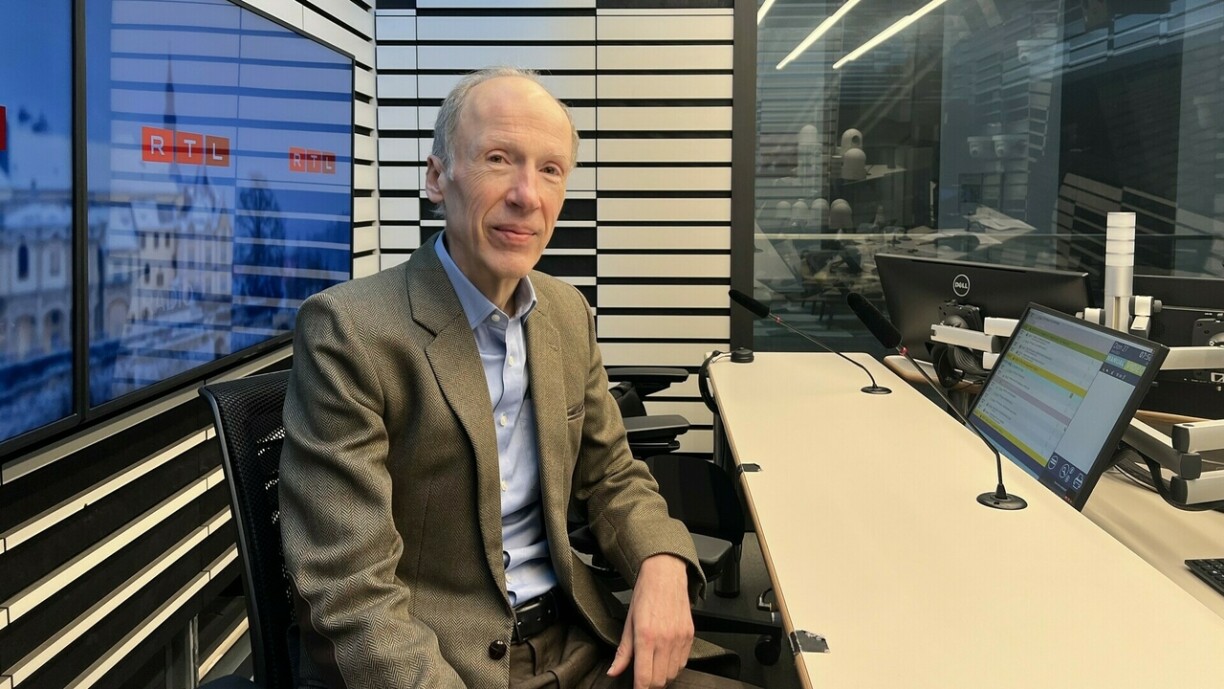
On Monday, the Court of Auditors presented its report on Luxembourg's Large Scale Testing strategy during the Covid-19 pandemic to members of the Parliamentary Budget Oversight Committee. According to Dr Gérard Schockmel, a more "targeted approach" focused on vulnerable populations, such as the elderly, would have been more effective.
The Court of Auditors analysed three key aspects of the mass testing programme: financial expenditure, legal foundations, and overall effectiveness. The Luxembourg State allocated a total of €160 million for the three phases of testing, which spanned from April 2020 to September 2021.
However, the report highlighted several shortcomings, including unclear budget classifications, concerns over the procurement process for the testing contract awarded to Laboratoires Réunis without a public tender, and inefficiencies in contact tracing following tests. Additionally, the report noted that test centres experienced significant overcapacity during the three phases.
Dr Gérard Schockmel, an infectious disease specialist and an MP for the Democratic Party (DP), criticised the large-scale testing strategy even during the pandemic, when he was not yet an elected representative, arguing that it amounted to "throwing money down the drain."
At the onset of the pandemic, the World Health Organisation (WHO) urged governments to conduct extensive testing. In an interview with our colleagues from RTL Radio on Thursday, Dr Schockmel acknowledged the importance of testing but emphasised the need for a more strategic approach rather than "blind" testing.
He explained that during the early stages of the pandemic, the focus was on identifying asymptomatic carriers, yet the number of positive contacts traced from these cases was minimal.
Dr Schockmel criticised the lack of transparency regarding the data on positive contacts linked to asymptomatic cases. Based on his own calculations using available data, he estimated that there may have been only 65 positive contacts traced from asymptomatic individuals. Given the €34 million spent on this aspect of the testing programme, Dr Schockmel believes that the cost per positive contact amounted to approximately €500,000.
According to Dr Schockmel, a more targeted approach to testing, focusing on vulnerable groups such as elderly individuals in retirement and nursing homes, would have been more effective in saving lives during the pandemic. "We already knew that the elderly had the highest mortality rate," he explained. "If we had conducted targeted tests among the elderly and established a cordon sanitaire around them, we could have saved many more lives." While acknowledging that such measures were eventually implemented, Dr Schockmel argued that they came "much too late–perhaps a year later."
The Court of Auditors' report also raised concerns about the exclusive awarding of large-scale testing contracts to Laboratoires Réunis without a public tender process. This practice prompted Bionext laboratory to file a complaint against the state in 2021. Dr Schockmel echoed these criticisms, stating that in matters of national interest, the National Health Laboratory (LNS) should have played a more prominent role. "The LNS has a clear mandate and is not a for-profit entity either," he emphasised.
Additionally, Dr Schockmel pointed out that hospital laboratories, along with three private labs, were all accredited to perform PCR tests. "This means we could have leveraged the existing infrastructure of hospitals, private laboratories, and the National Health Laboratory, without requiring masses of people to travel to different testing sites," he said.
Dr Schockmel also criticised the delay in obtaining data for the Court of Auditors' analysis, noting that it took months to gather the necessary information. "Five years after the start of the pandemic is a bit late," he remarked.
At the most recent meeting of the Parliamentary Budget Oversight Committee, members were able to review only the first phase of the large-scale testing programme. However, they were already able to determine that budget items were defined rather vaguely. The next meeting of the committee will take place on 10 March.
In response to Dr Schockmel's criticisms, Dr Thomas Dentzer, who served as a virologist at the National Health Directorate during the pandemic, challenged some of the MP's assertions, particularly the claim that tests were conducted "blindly" during the Large Scale Testing programme. In an interview with RTL Radio, Dr Dentzer acknowledged that testing was indeed carried out on a broad scale at the outset of the initiative but emphasised that the approach became more targeted as the programme progressed.
Dr Dentzer also highlighted the value of the Large Scale Testing in providing health authorities with a comprehensive overview of where the coronavirus was spreading within Luxembourg. When hotspots were identified, officials conducted more focused investigations, he explained. While conceding that errors were made–such as initially taking swabs from the throat rather than the nose–Dr Dentzer dismissed Dr Schockmel's claim that 80% of test results were false as "definitely an exaggeration."





