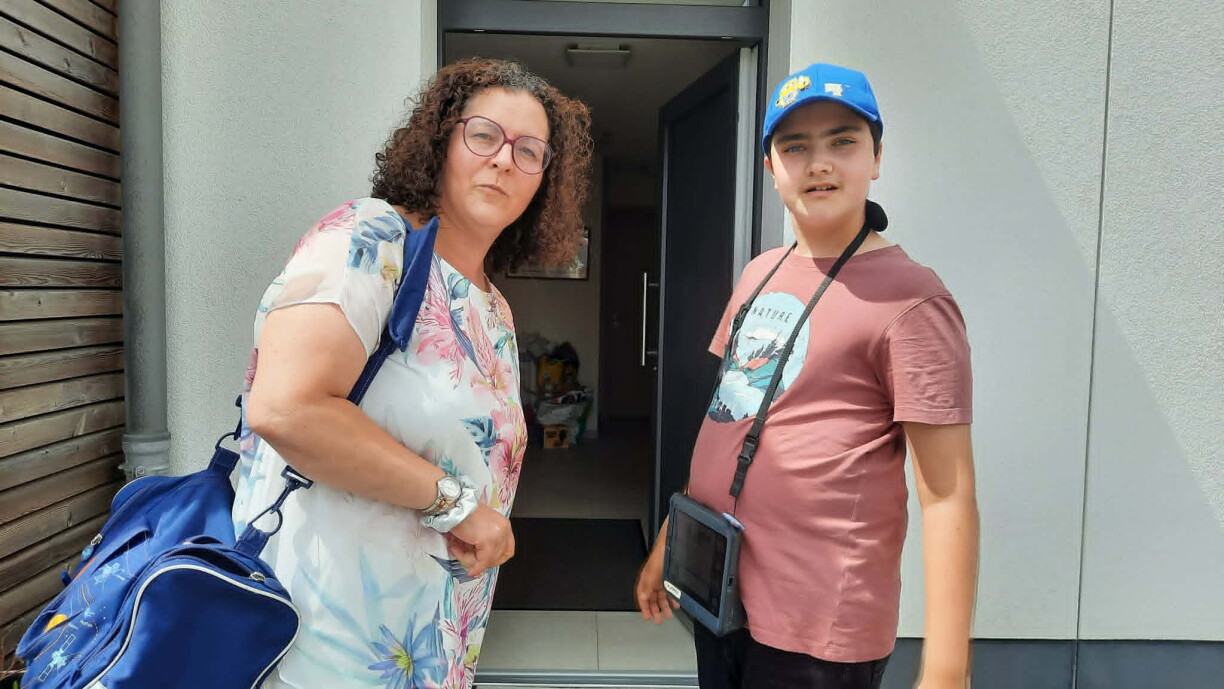
"You're going to see a UFO", Livia Nonorgues says with a smile, enjoying a break in the sun on her terrace in Soleuvre. In a few minutes, her son Clément will be dropped off by minibus in front of the house, on his way back from the Centre for Intellectual Development, a specialised psycho-pedagogical centre in Belval that cares for young people with intellectual developmental disorders. Clément, 13, is what those who know him call a CASK child. He has an ultra-rare genetic disorder, with only a few hundred cases diagnosed worldwide.
CASK is a neurodevelopmental disorder caused by a mutation of the CASK gene, located on the X chromosome. The condition can lead to severe developmental delays, brain malformations, intellectual disability, motor, visual or auditory impairments and, in some cases, severe epilepsy.
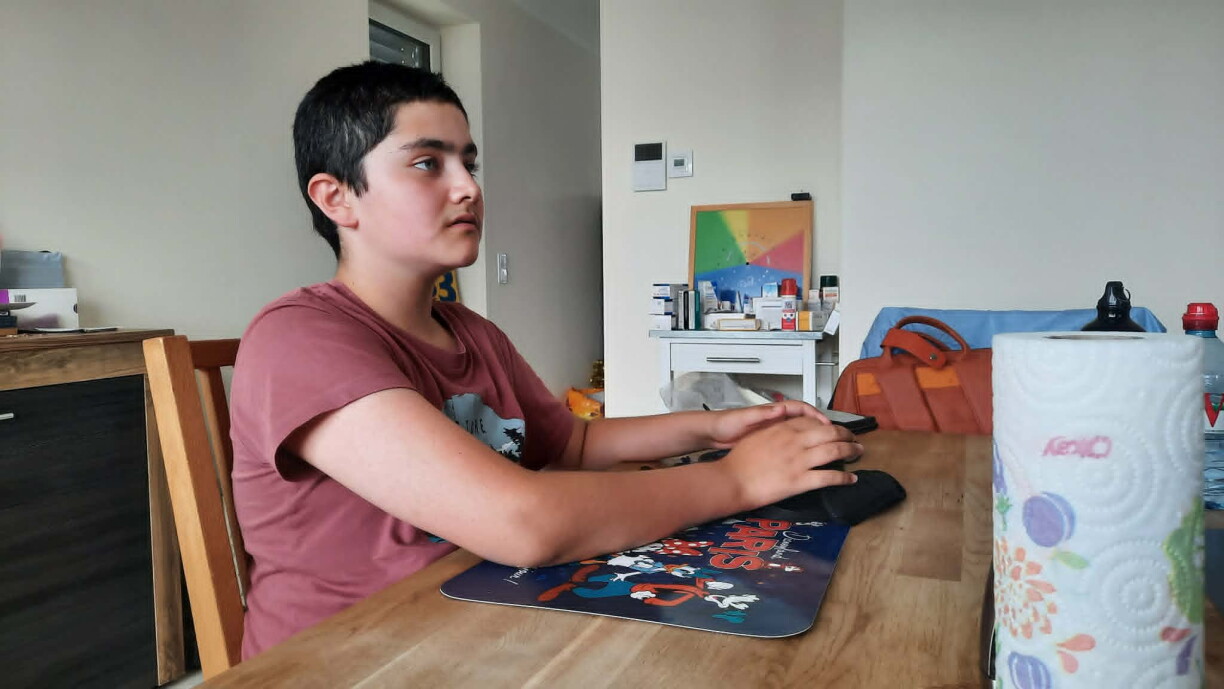
Livia, 49, says she and her husband had noticed something was different, by the way her only son would stare at the walls from his changing table when he was still a baby. At three, he received a diagnosis of autism, with doctors at various hospitals talking about a global developmental delay, a phrase she felt meant little in practice. She found herself facing the diagnosis without any real solution for Clément.
A fighter by nature, Livia says she sometimes feels exhausted but has never given up. She knows that her husband Philippe and her father Jeannot are by her side. Genetic tests carried out in 2022 finally pinpointed CASK as the true cause of Clément's difficulties, starting with his verbal communication.
Back home, Clément heads straight to the kitchen. With the heat, his mother offers him a glass of water. He nods and gives a thumbs-up, but when she reaches for a glass, he lets out a series of uncontrolled cries, barely containing his frustration, to show his disapproval. "Oh, this isn't the right glass", Livia notes calmly. "This is the one", she corrects herself, filling it.
She recalls that Clément first said "Mama" when he was eight. She had been longing to hear it, she admits, though now there are days when she wishes he would not say it quite so often, only half joking. When Clément has a fixed idea, he can repeat a question on a loop, and to those unfamiliar with his way of speaking, he can be very hard to follow.
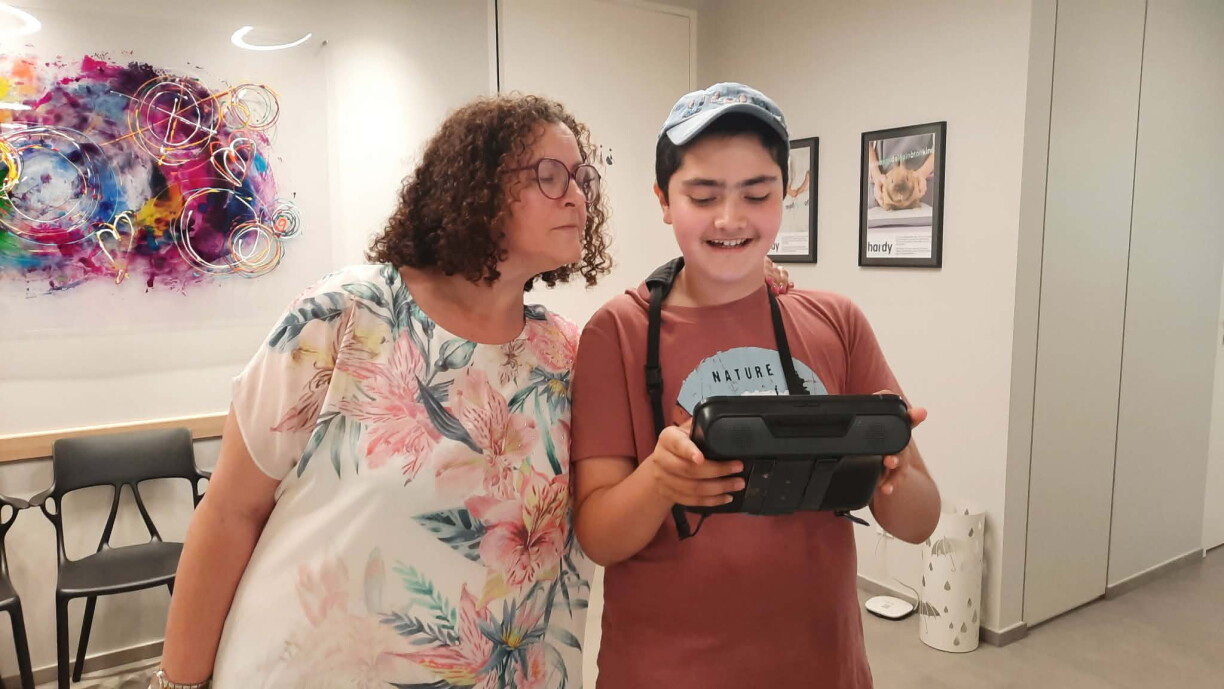
He has verbal apraxia, Livia explains, a neurological disorder that affects the motor programming of speech. The brain struggles to send the right messages to the muscles of the mouth, meaning Clément knows what he wants to say but cannot coordinate the movements to articulate properly. A communication tablet worn around his neck lets him express himself in many moments, with a voice reading aloud the icons he taps or sentences he forms. His writing is steadily improving.
Clément doesn't speak, doesn't yet know how to fold a napkin, and sometimes shouts or breaks things. Yet he greets a visitor with striking tact, even a stranger in his kitchen, taking his time and soaking up everything happening around him. Then, gently, he takes your forearm and gives you a kiss. His gaze wanders, but for him, he has just created a connection. That connection, built and nurtured through patient listening and routine, works wonders.
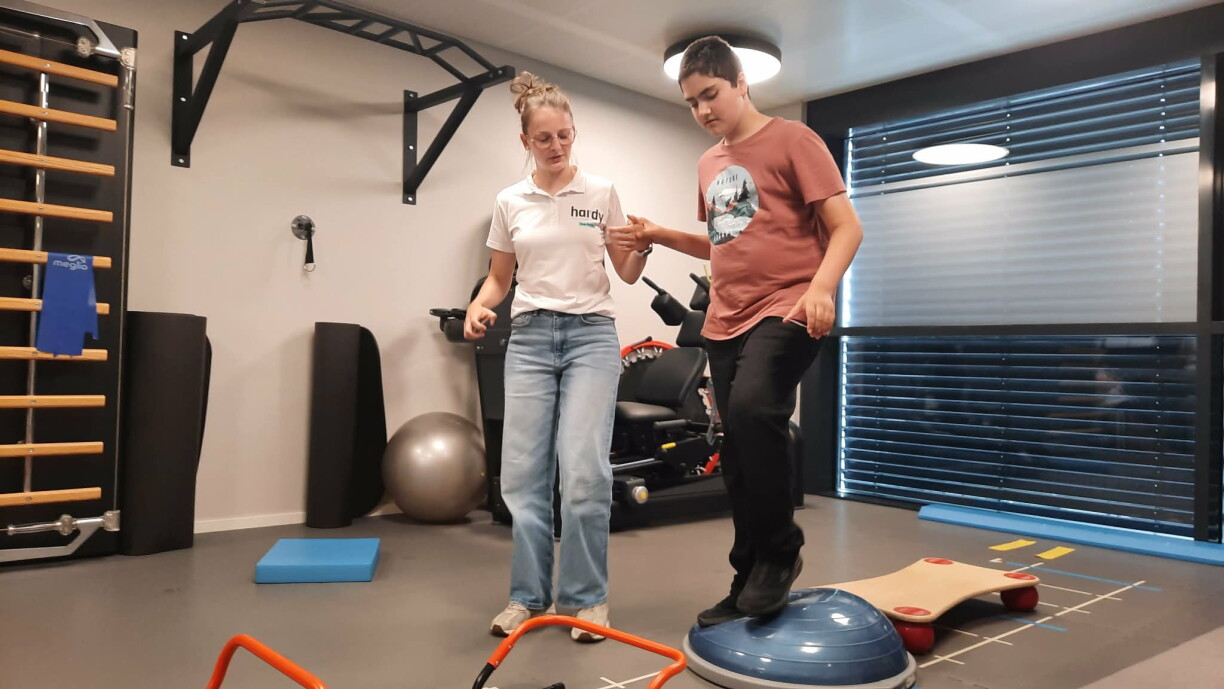
So it goes when the teenager bounces into the office of the physiotherapists who have been treating him for years. As his mother says, he is a UFO, and on his planet certain people loom large, like Appoline, who knows how to speak to him. Whether the waiting room is full of patients or not, Clément only has eyes for her. He slips behind the counter, gently takes her by her front leg, gives her a kiss and strokes her affectionately. He comes to the clinic twice a week to work on his coordination, fine motor skills, and balance, and to try to straighten the foot that keeps turning outwards.
He is a different kind of patient, but they adapt to him, Appoline explains, noting that if he gets frustrated during the exercises he closes up. She has built up a whole repertoire of small tricks to help him progress and gently push himself further. Holding his foot, she says: "We receive so much love from Clément", calling it wonderful.
Through his parents' perseverance, the support of organisations such as the Autism Foundation Luxembourg in his early years, educators and healthcare professionals, and Clément's own determination, the teenager has made huge strides. He has started dressing himself, his mother notes, and he is now very understanding. Her struggle as a mother, however, remains a daily one.
The first hurdle, Livia says, is getting a child who is different accepted. It can be difficult in mainstream schools and extracurricular activities, or simply finding a club willing to take him on. On Saturdays, Clément plays inclusive basketball in Esch-sur-Alzette, the only place she has found for him to do sport, even though he needs it. He also loves to sing, and would not miss his Tuesday music lesson for anything. He plays the piano.
Watching him grow up and grappling with the daily challenges, his parents are concerned about his future, with Livia saying they want to be sure they have a solid support structure in place for him.
With no treatment currently available to alter the course of CASK syndrome and time pressing forward, the Nonorgues family, together with others, set up the non-profit CASK Luxembourg last summer. The idea is to find funding to push research forward, even knowing, as Livia readily acknowledges, that it will take years. In early April 2026, the association signed an agreement with OrganoTherapeutics, a Luxembourg-based company pioneering organoid-based disease models to develop new thérapies.
Since October, CASK Luxembourg has raised €30,000, but Livia, who chairs the association, says they would need €150,000 to begin the research. To support Clément and his parents, FC Étoile Sportive Clemency is holding a mini football tournament throughout 6 June on the Clemency pitch.





