A school system caught between violence, evolving technologies, and equal opportunities – this was the subject of a roundtable discussion broadcast by RTL Télé on Thursday evening.
When asked whether the Luxembourgish school system still adequately prepares students for the future, Education Minister Claude Meisch replied, "Yes and no." His answer came after three other guests had clearly answered no. These guests were MP Francine Closener of the Luxembourg Socialist Workers' Party (LSAP), who also serves as Vice-President of the Parliamentary Education Committee; Alain Massen, outgoing President of the National Parents' Representation; and Luca Nicolas Roettgers, a final-year student at Lycée Edward Steichen and President of the Luxembourg National Students' Conference (CNEL). Only Joëlle Damé, a primary school teacher in Pétange and President of the SEW/OGBL teachers' union, had answered the question in the affirmative. With that, the discussion was underway.
Massen pointed to a disconnect between school and society, describing the education system as "a massive system with many individual actors." In his view, it is a system governed by numerous regulations and involving many people who need to be convinced and who must have their say – "and who should have their say." However, by the time changes are implemented, time has naturally passed, while society evolves at an ever-increasing pace. "If we look at the last five, ten years, we're moving at a pace where you really don't know what's going to happen the next day", Massen said.
Luca Nicolas Roettgers criticised what he described as the education system's continued reliance on traditional teaching methods, characterised by teachers lecturing at the blackboard and learning centred on rote memorisation. He argued that this remains the dominant approach and is no longer sufficient for preparing students for life. Many students, he noted, cannot articulate what they have actually learned after taking an exam.
Meisch countered that rote memorisation is not inherently wrong, but it should not be the end goal. "Just learning to memorise and reproduce that cannot be the sole purpose. What a young person discovers for themselves is something that sticks", he said. The minister advocated for more diversified teaching methods and suggested that teachers might be viewed as coaches who guide young people on their learning journey.
Francine Closener offered a nuanced perspective on the criticism of the traditional education system, suggesting that the school itself is not solely to blame. The MP noted that society is placing ever-increasing demands on schools and, by extension, on teachers. She argued that a teacher today is no longer – or should no longer be – simply a purveyor of knowledge. "They should really also be a psychologist, an educator, a doctor and a nurse, and perhaps even a police officer", she said.
Closener criticised this accumulation of expectations, stating they are too heavy a burden for one person who is not trained for such roles. "That is very clear. That teacher wants to concentrate on what they can do. But they don't necessarily have the time needed", she added.
Later in the programme, the Minister described school as a reflection of wider society. "If the propensity for violence in society increases, among adults, then that is also the case among young people", he said.


In light of recent incidents in schools – including an incident in a school in the east of the country and an altercation on Wednesday at Lycée Michel Lucius, where one student injured another with a knife – the Education Minister addressed a pressing concern. "We are noticing that we have a need here, and that is in child and adolescent psychiatry", he said.
The mental health of young people emerged as a significant theme throughout the programme, with a general consensus that action is needed. "Mental health is declining", said Luca Nicolas Roettgers.
Joëlle Damé confirmed this observation. "We have certainly noticed in recent years that we have children who are not doing well", she said, adding: "Once you have built a basis of trust, the children come to you with many, many problems."
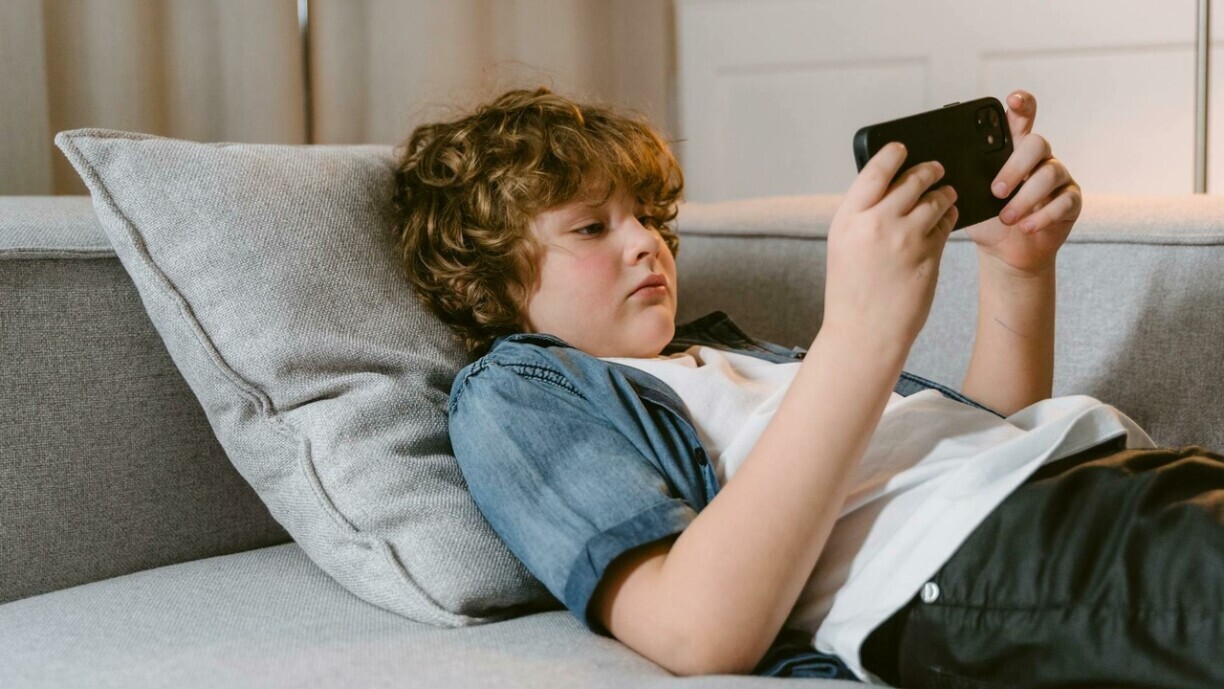
Social media emerged as another key point of contention during the discussion. The CNEL is sceptical about an outright ban, which it believes would not solve the underlying problem. Roettgers acknowledged that the addictive nature of social media is particularly pronounced among young people, but maintained that a simple ban for those under 16 is not the answer.
The minister responded energetically, drawing a comparison to youth protection measures concerning addictive substances. While Meisch said he agreed with many of Roettgers's positions, he struggled to follow the CNEL's reasoning. "If you say that social media is made to make young people addicted, to steal their time – because that's what it's about, they make money from the time of young people and everyone else, and you become dependent on it – and then say we shouldn't ban it, that would be a bit like saying, free access to tobacco and alcohol for under-16s, because then you learn to handle it better", he argued.
Meisch expressed conviction that the adult generation bears responsibility on this issue. He described much of the content on social media as something "that the world doesn't need and that young people certainly don't need", adding that it is "a very big concern" for him – one he shares with "a great many parents and a great many teachers."
"If Europe does not provide a solution, then this government will assume its responsibility."
MP Francine Closener advocated for a tiered approach – a ban at a young age, followed by stronger parental responsibility – and stressed that media literacy in schools should not be treated as a "side issue."
Alain Massen cautioned that the debate around social media is too often reduced to "ban or not." He voiced support for a more nuanced approach.
Towards the end of the programme, the discussion turned to one of the fundamental questions of education policy: Is the school system fulfilling its role of at least mitigating inequalities of opportunity?
Joëlle Damé answered without mincing words: "There is still a lot of room for improvement." She explained that poverty is a key driver of educational inequality, affecting one in four children – a figure that has risen significantly in recent years. Damé said teachers feel this reality in schools as well. In fact, she argued that not only is the education system failing to narrow the gap, but the divide is actually widening within schools themselves. "That means educational inequality starts at home, in society, and school must at least have the aspiration of being able to reduce it", Damé stressed.
The Minister drew a distinction between two types of inequality – social and linguistic – and defended reforms specifically designed to address them, including early support initiatives and a new approach to literacy.
Alain Massen emphasised the need for better collaboration among the various educational actors. Closer coordination, he suggested, could contribute to making the educational process more harmonious and sustainable.
One thing the televised discussion on Thursday evening made clear: to effectively prepare children for the future, schools must continue to adapt to the dynamic changes taking place in society.





