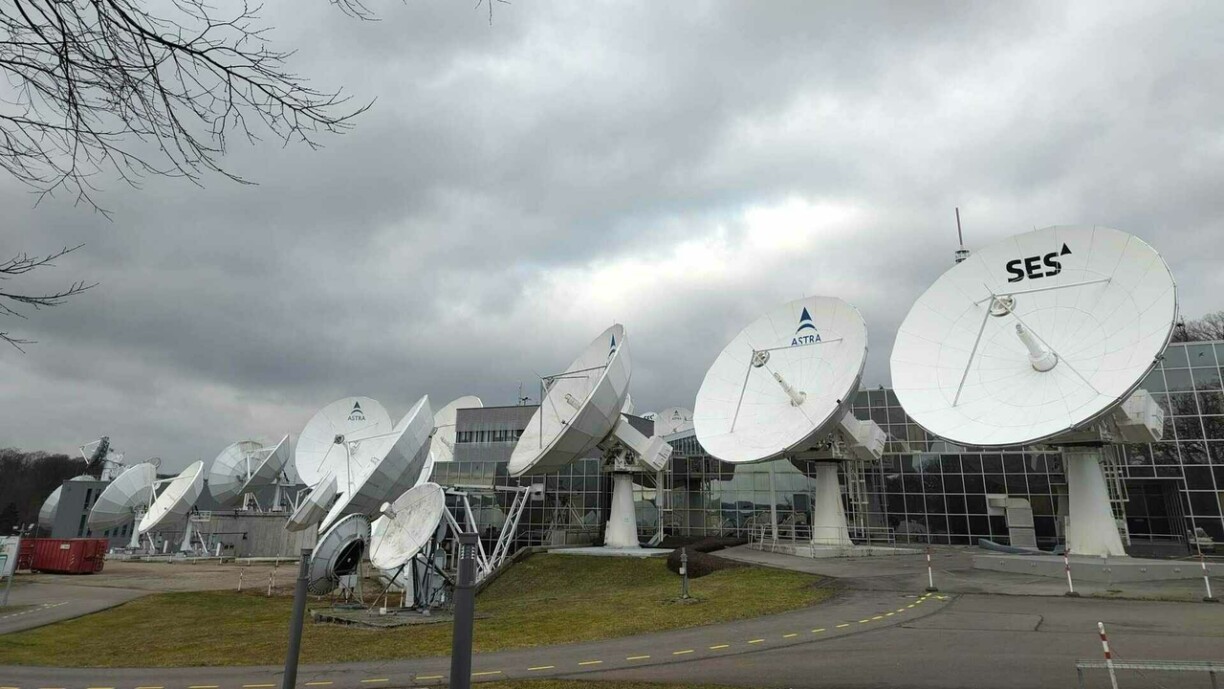
SES currently employs 2,000 staff members, including 600 in Luxembourg. Despite a redundancy plan for 68 employees signed in December 2024, SES will maintain its headquarters in Betzdorf. The CEO, however, declined to specify how the company's restructuring would impact staff here in the Grand Duchy.
"We need talent everywhere to remain competitive. And we cannot forget that Betzdorf is our headquarters and will always be important."
Al-Saleh underlined that there will always be a promising future for SES employees in Luxembourg and that approximately 600 jobs will remain in Betzdorf, regardless of how distributions might change in the future.
At the same time, SES has to cut costs to make room for investment funds, regardless of job relocation discussions, explains the CEO.
"Our costs are too high in several areas. We need money for our investments. One way to achieve this is to cut costs so that we can invest this money. This has nothing to do with the acquisition of Intelsat or India. As a company, we need to streamline."
Should the acquisition of the American operator Intelsat go through, several positions will become redundant. According to the CEO, this issue will arise more at the management level than among engineers and technical staff.
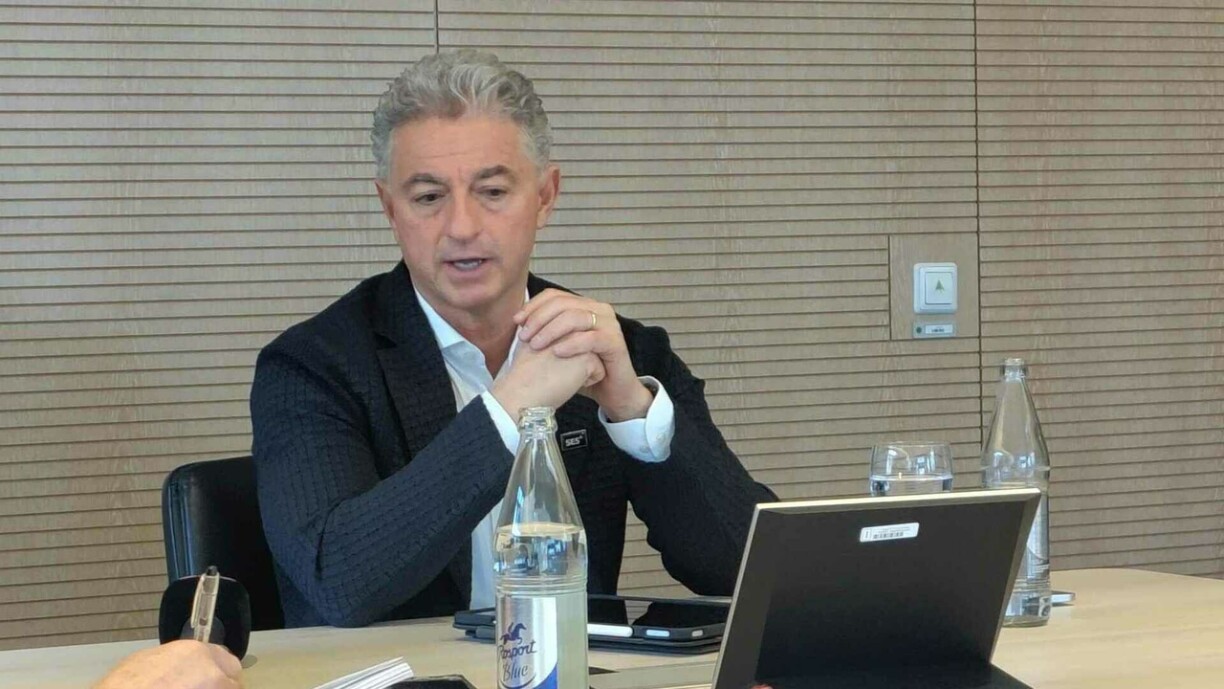
Several significant contracts were signed last year. One of the major projects SES is planning in the near future is the acquisition of the American operator Intelsat. After a failed attempt in 2023 due to disagreements over the business model, an agreement was announced in April. SES will acquire Intelsat for €2.8 billion.
In August, SES submitted the necessary documents to obtain approval from the U.S. communications regulatory agency, the Federal Communications Commission. Al-Saleh believes it is realistic to finalise the acquisition by June. If regulatory approval is not granted, it would pose a challenge but would not be an existential threat to SES.
SES has other options and has also won several important tenders:
One particularly significant contract for the next twelve years has put SES at the helm of "SpaceRISE," the consortium preparing and operating the "IRIS²" satellite constellation for the European Union. This constellation, which will be entirely under European control, will provide a large-scale, reliable, and secure communication network for both public and commercial clients.
SES will contribute 18 so-called "medium Earth orbit" satellites to the network. Ninety percent of the capacity of these satellites will be sold to commercial clients, while the remaining 10% will be reserved for governments. "IRIS²" is expected to be operational by early 2030.
Another project is the "MEO Global Services Agreement." This agreement allows NATO members to purchase capacity from SES's "mPower" satellites for observation missions. The project originates from a partnership between Luxembourg and the United States. Last year, the Luxembourg Chamber approved a budget of €190 million to finance the project.
"It is incredibly exciting to sign a major contract like MGS or IRIS². But the real work begins once the contract is signed. There is currently a lot of work being done by the teams."
These projects are crucial for changing the market narrative, which is currently focused on the success of Starlink, the satellite network by Elon Musk's SpaceX.
The CEO also hopes that a more positive discourse around SES could also help boost the company's stock price. The financial results to be presented in about two weeks will show growth, but stock prices are influenced by more than just figures.
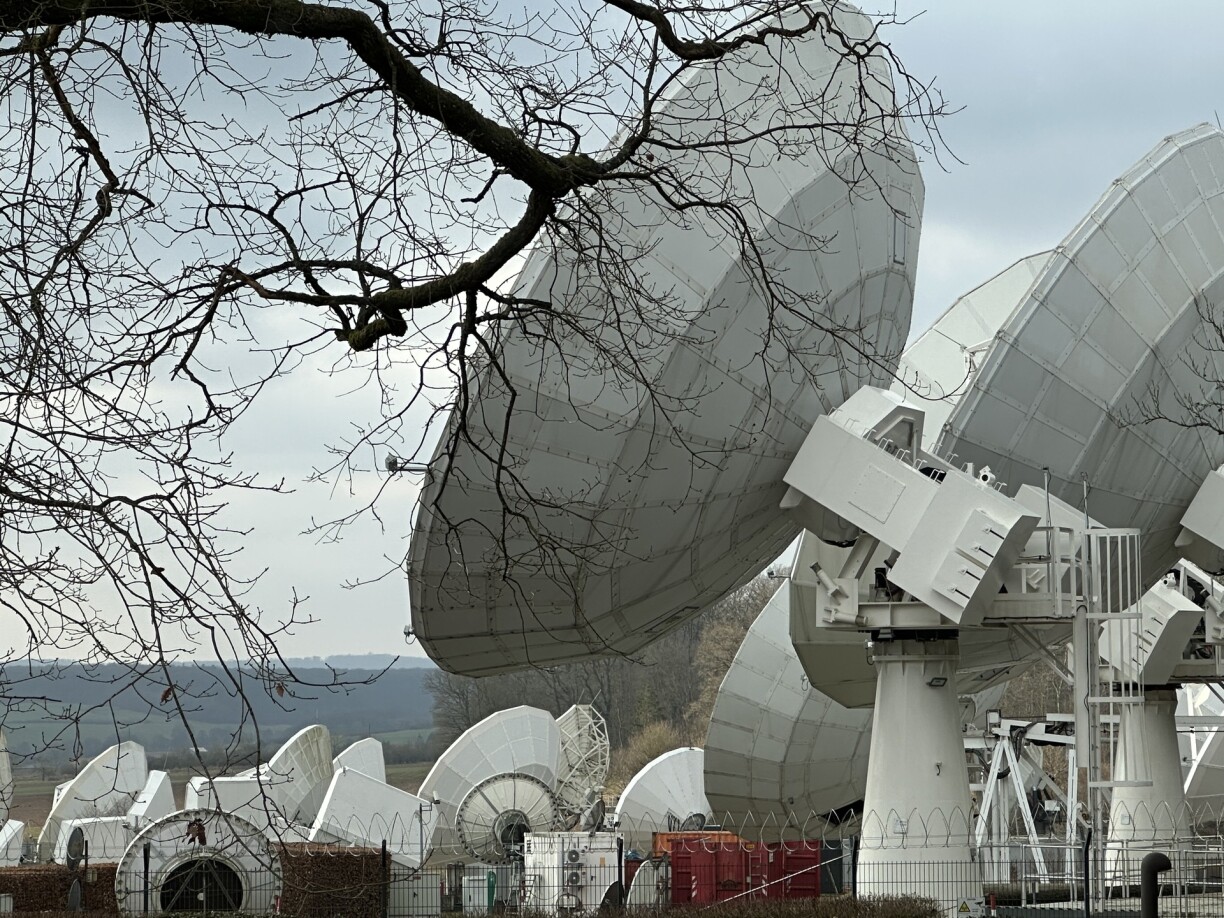
Beyond Luxembourg, one of SES’s key sites is in Washington, D.C. When asked about the extent to which the new U.S. administration—with Elon Musk as an adviser to President Donald Trump—could impact SES’s operations, Al-Saleh replied:
"Of course, it is not particularly comfortable to see our biggest competitor so close to the U.S. president, but the market is open, and there is transparency."
Al-Saleh believes that both the U.S. and European systems are robust enough to recognise and properly manage conflicts of interest. He also pointed out that Donald Trump is one of the biggest supporters of the space sector.
However, security is becoming an increasingly important sector for SES. "We are critical infrastructure. That makes us a target", said the CEO of the satellite operator.
Last summer, it was reported that an SES satellite had been targeted by Russian interference. "It is new in the sense that the media picked up on it, not because it actually is a new occurrence", Al-Saleh clarifies. He emphasised that it is something the company must prepare for in its daily operations.
Without satellites in space, modern life as we know it would not be possible: Internet connections, GPS, air traffic, television, and telecommunications all depend on services like those provided by SES.
The most important factor for security is cooperation between various stakeholders, including other satellite operators. There is constant information sharing about observed threats and potential countermeasures against external malicious interference. Making the next generation of satellites more resilient to such attacks will also be a key focus.





