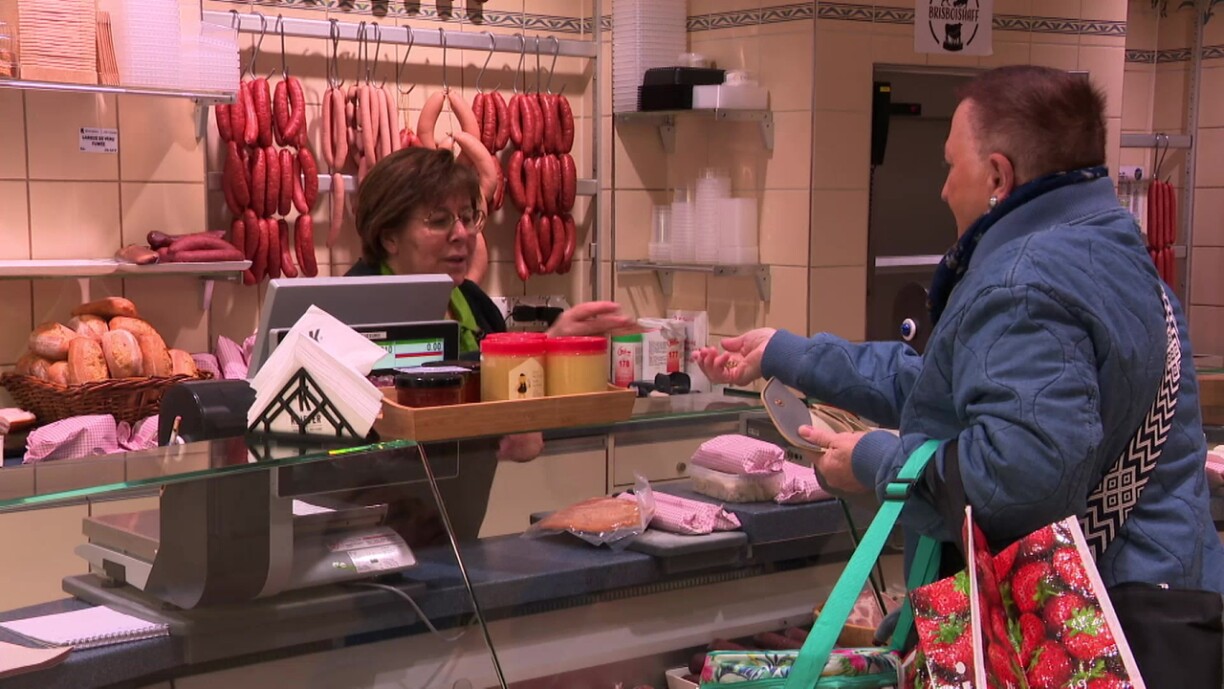
According to the recent ABBL/CSSF Retail Banking Study, prior to the pandemic, over half of customers still opted for cash payments when shopping, while only four in ten customers used credit or debit cards in 2019.
However, within a span of three years, this trend has completely reversed. Card transactions now account for 52%, surpassing cash transactions at 39%.
Nonetheless, experts at the Luxembourg Banker's Association (ABBL) believe that cash will not disappear entirely, as Luxembourg's residents have actually increased their cash reserves since the pandemic. Lockdowns are believed to have prompted individuals to recognise the importance of maintaining such reserves.
Despite the popularity of card payments, including contactless transactions, mobile payment solutions have yet to gain significant traction in Luxembourg. Nevertheless, the digitalisation of banking services continues unabated.
In 2022, only 5% of transfers were conducted at bank counters, down from 14% pre-pandemic. As online banking grows in importance, the number of physical branches has declined from 221 to 197, marking an 11% decrease.
Similar trends can be observed with ATMs, as their numbers dropped from 517 to 456 within a year. Unlike other countries where ATMs are closed for security concerns, declining demand is said to be the primary reason for this decrease in Luxembourg.
Luxembourg's retail banks oversaw approximately €95 billion in 2022, a moderate increase compared to previous years. Experts from ABBL attribute this modest growth to customers transitioning from saving involuntarily during the pandemic to resuming their spending habits.
When customers do save, however, they increasingly turn to fixed-term deposits. Throughout 2022, the volume of fixed-term deposits quadrupled.
Conversely, there has been a significant decline in demand for real estate loans. In the first quarter of 2023, the loan volume dropped from €2.9 billion to €1.9 billion, representing a decline of nearly 40%.
Full report by RTL Télé (in Luxembourgish):





