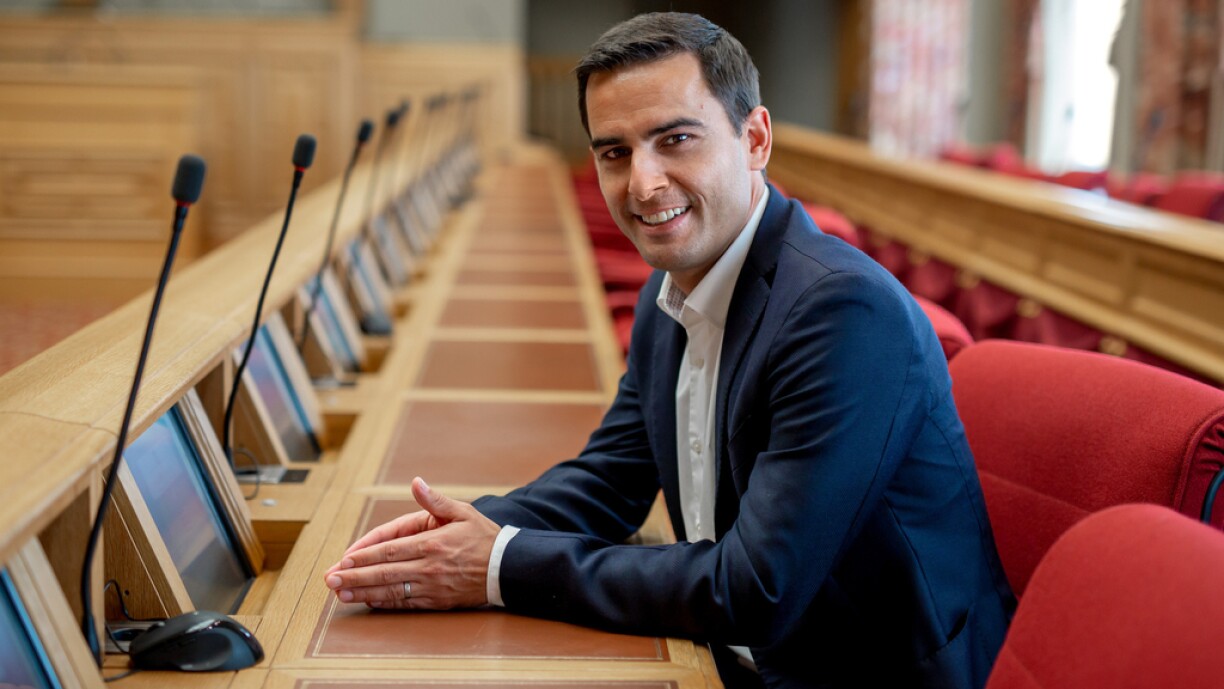
Family Minister Max Hahn defended the government's policy of asking recognised refugees to leave accommodation provided by the National Reception Office (ONA) after a year, stressing that the centres are temporary, housing in Luxembourg is expensive, and families are supported but cannot remain indefinitely.
As reported on Tuesday, former asylum-seeker Blessing Sajowa received her residence permit in July 2023. Under normal circumstances, she would have been expected to leave accommodation provided by the National Reception Office (ONA) a year later. However, she said she has been unable to secure a flat. Last November, ONA formally informed her in writing that she would only be allowed to remain in her current accommodation until this Wednesday.
Minister of Family Affairs, Solidarity, Living Together, and Reception of Refugees Max Hahn declined to comment on individual cases, but stressed that ONA facilities are intended as temporary solutions. He explained that Luxembourg continues to receive new arrivals seeking protection and, when no beds are available, those who have been in reception structures for a long time must eventually make space for newcomers waiting at the door.
Recognised refugees, officially known as beneficiaries of international protection, are asked to leave ONA accommodation after a 12-month "grace period". Last year, 559 refugees received such a letter, including minors. According to Hahn, most people concerned manage to find a solution shortly afterwards. He said that in only eight cases, which involved individuals without children, was it necessary to proceed with an eviction following a court order.
Throughout the interview, Hahn repeatedly highlighted the support and guidance offered to refugees in Luxembourg. While emphasising what he described as his ministry's flexibility, he made clear that this flexibility cannot be indefinite.
Asked whether he would ultimately allow a family with children to be evicted, he replied that refugees are informed from day one that reception centres are not permanent housing. Hahn explained that they are supported through the process and that they sign agreements acknowledging that their stay is limited to one additional year. He added that particular sensitivity is shown in cases involving vulnerable people and especially children.
Marianne Donven, an advocate for refugee rights, criticised Hahn on Tuesday's report, accusing him of hiding behind high housing costs instead of ensuring families have somewhere to live. Hahn rejected that accusation firmly. He insisted that he understands his responsibilities and that his role is precisely to support vulnerable people. At the same time, he underlined that housing in Luxembourg is expensive for everyone: nationals, foreign residents, and refugees alike.
"Living in Luxembourg is expensive, and I'm being completely frank about that" he said. For that reason, he regularly urges refugees to learn the languages of the country, pursue further training, and enter the labour market as quickly as possible, arguing that this is the only way they can succeed in Luxembourg: "I think I'm being completely frank here, that's exactly what my role as Family Minister requires of me."
Hahn stated further that Luxembourg is not an Eldorado where money falls from the sky, and concluded that he hopes refugees will avoid developing, or being given, unrealistic expectations about life in the country.





