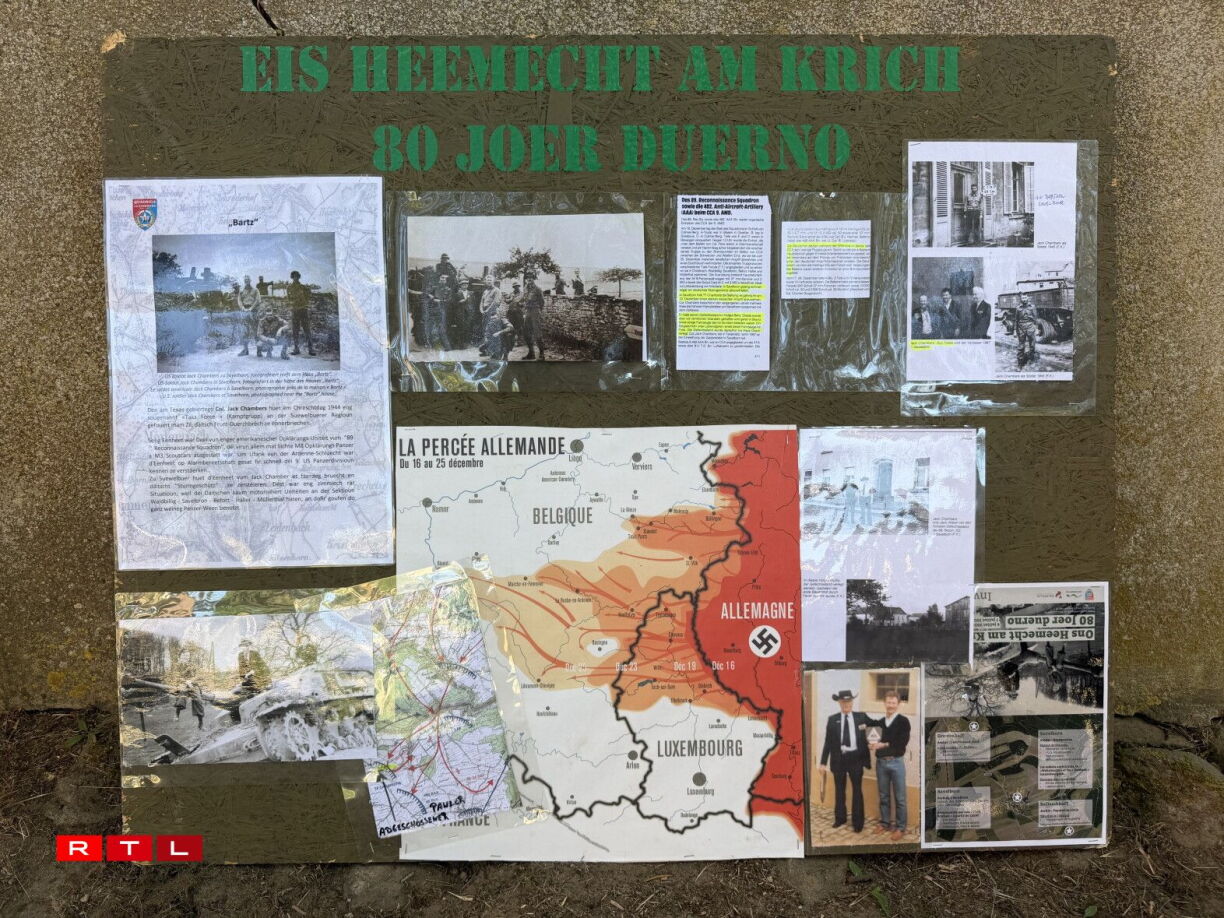
A special project entitled "Our Homeland at War – 1940–1945" was organised to help young people engage with Luxembourg's wartime history in a meaningful way and to deliberately avoid any glorification of conflict.
The initiative took place on several authentic sites, including a historic farmstead in Savelborn, as well as in Kelleschhaff and Grevenhaff.
There, pupils travelled between the locations in old military vehicles and were invited to step into the world of the 1940s, thus experiencing first-hand aspects of daily life during the Second World War.
The workshops covered the routine of soldiers, the realities faced by civilians, and the stories of the so-called Réfractaires, Luxembourgers who resisted compulsory conscription into the German Wehrmacht.
The organisers, including Christian Wagener, president of Quadriga association, emphasised the importance of making history tangible and relevant for the next generation.
For him, the main aim is to keep these memories alive and help young people understand the fears experienced by those who lived through war.
"Today's pupils are tomorrow's adults. If we confront them with the realities of the Second World War in a thoughtful and respectful manner, they will understand that peace and freedom should not be taken for granted", he said.
The team behind the project uses authentic artefacts, historical locations, and carefully reconstructed scenes to foster understanding. According to Wagener, the goal is not to glorify war, but to show young people how deeply conflict can affect everyday lives.
"This is living history against forgetting", and it has nothing to do with glorifying war, with weapons, with marching, or with playing soldiers. "It is, quite simply, living history as a way to remember", he said.
For many of the pupils, this approach made the history of the Second World War far more engaging and concrete than simply reading about it in books.





