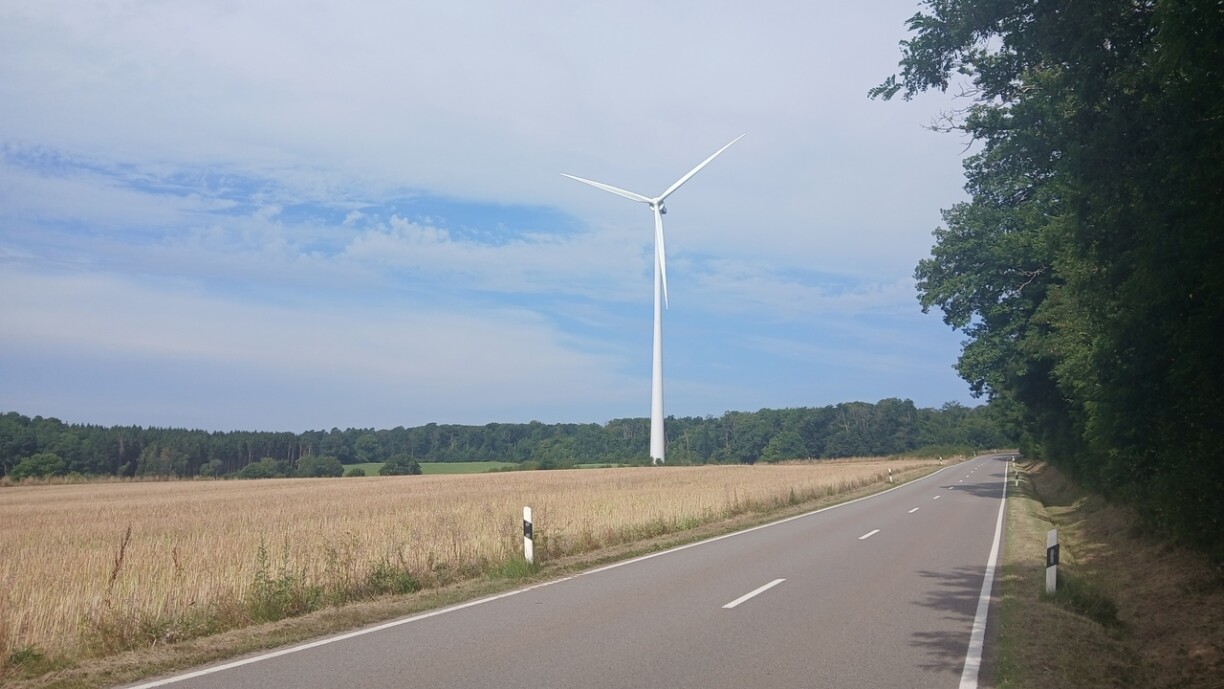
Plans for a new wind turbine near Erpeldange-sur-Sûre have drawn criticism from local councillors and residents, prompting a response from project developer Soler.
The controversy centres on allegations that neighbouring municipalities Ettelbruck and Diekirch intentionally sited the turbine close to Erpeldange's border – a claim strongly denied by Soler director Paul Zeimet. "In our decades of operation, we've never selected a location simply to maximise proximity to municipal boundaries", he stated, explaining that site selection follows strict technical criteria including grid accessibility and topography.
Luxembourg law mandates a minimum 300m distance between turbines and residential areas, though Soler voluntarily adheres to a 750m buffer. Zeimet highlighted that the country's noise regulations – limiting nighttime emissions to 37dB(A) at development plan boundaries – are significantly stricter than those in neighbouring Germany or Belgium. This, he noted, explains Luxembourg's comparatively sparse wind turbine distribution near villages.
The debate also touches on international standards. Unlike Bavaria's "10H rule" (requiring ten times the turbine's height as clearance), Luxembourg's approach accommodates single-turbine installations rather than large wind farms. Soler further emphasised that current research shows no scientific link between wind turbine infrasound and adverse health effects.
Addressing concerns about shadow flicker, Zeimet stated the turbine could be deactivated during problematic periods if needed, though company calculations suggest minimal impact on the Burden area.
The Erpeldange council recently criticised Nordenergie's expansion plans to new sites in Diekirch (Friedhof and Ingeldorf) – locations not previously considered for development. Soler attributes this to evolving turbine technology and changing environmental factors. Protected species migration patterns and new infrastructure, such as forest paths, can make previously unsuitable sites viable, Zeimet explained. He also cited updated regulations from the government's energy roundtable permitting turbines nearer to industrial zones and roads.
Regarding claims of inadequate regional planning, Zeimet noted Erpeldange had been invited to join the Nordenergie project in 2018. He acknowledged communication lapses during the pandemic but emphasised shared responsibility among all stakeholders.
Meanwhile, the wind turbine dispute has entered the judicial arena, with the citizens' initiative filing three separate lawsuits. While one case has already been dismissed, a second ruling is anticipated in September, with the final decision not expected before spring 2026.
Parallel to these legal proceedings, Erpeldange residents will weigh in directly through a referendum scheduled for late 2025, determining whether merger discussions with neighbouring Nordstad municipalities should continue.
Soler maintains that the Burden controversy represents an outlier, noting broad public acceptance of wind energy across Luxembourg.





