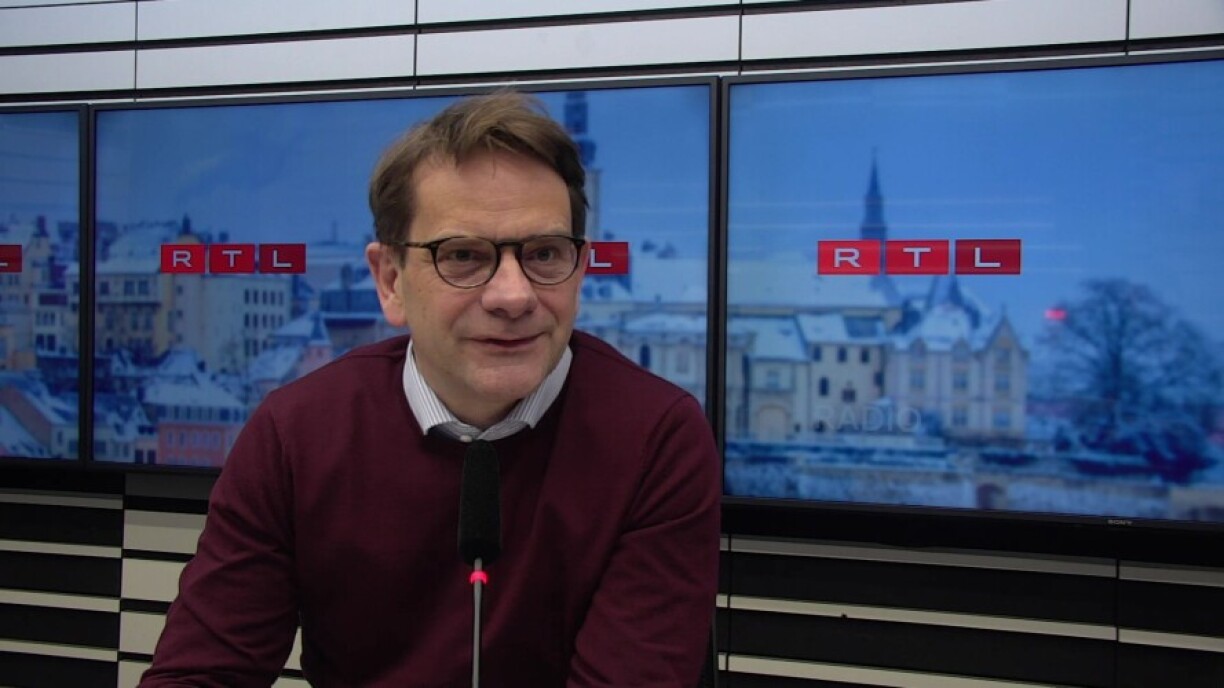
CSV faction leader Laurent Zeimet states in an RTL interview that PM Luc Frieden is the primary candidate to lead the party into the next parliamentary elections in 2028, while supporting the Prime Minister's intention to simultaneously remain party president.
Zeimet noted that while the CSV under former Prime Minister Jean-Claude Juncker was often seen as centred on a single figure, the current focus on Luc Frieden does not mean the party lacks other capable leaders. "It was never true that only the Prime Minister or the party president represent the CSV," he said, adding that many party members could perform the role well, but it is currently held by a highly capable individual.
Regarding Luc Frieden's drop from the top 10 in the polls, Zeimet pointed out that, in other countries, heads of government are not always the most popular politicians. He added that Frieden’s lower score was unsurprising given the criticism he faced before the summer, noting, "if he had emerged from this backlash with a 20% increase, we would all have said 'congratulations, what a big achievement.'"
Criticism of government projects, such as Sunday work and the perceived weakening of trade unions’ role in negotiating collective labour agreements, has also come from within the CSV, notably from former faction leader Marc Spautz. The politician, who represents the social wing of the CSV and enjoyed the public support of Laurent Zeimet, took over the role of Minister for Labour following Georges Mischo’s departure.
Does being in government now "tame" Marc Spautz? Laurent Zeimet laughs: "I wish everyone trying to tame Marc Spautz the best of luck."
Zeimet does not see the recent government reshuffle or his nomination as the new CSV faction leader as a "revenge from the social wing," as claimed by the weekly newspaper Land. He aligns with "people’s expectations of a CSV that stands for stability," and says the party must "live up to this legitimate expectation."
Contrary to Luc Frieden and Gilles Roth from the Ministry of Finance, who refuse to acknowledge the existence of 'party wings', the new faction leader maintains that some CSV politicians lean more liberal while others remain firmly on the Christian-socialist side. Zeimet even jokingly compared his new role to being a "diva manager".
He stressed that much depends on "prior discussions", after which decision-making has to follow on Thursday morning. All faction members have their individual talents, some with "strong personalities", which he sees as an asset. According to Zeimet, everyone must find their place: "It cannot be that some are working while others are merely bystanders."
Laurent Zeimet has also decided to step down from his role as mayor of Bettembourg. It was not a decision he took lightly, although his gut feeling told him that meeting the expectations of both positions would be extremely challenging.
He confirmed that his party colleague and municipal councillor Jean-Marie Jans intends to take over the post, and he is confident that Jans will also secure the backing of the black–blue–green majority.
After 15 years as mayor, Laurent Zeimet leaves behind a municipality that has experienced slower population growth than other municipalities of similar size, as well as one with the second-highest debt per inhabitant in the country*. The CSV politician explained that the municipality invested heavily in land, infrastructure, schools and childcare facilities in recent years in order to prepare for future growth. As a result, several new neighbourhoods are now expected to be developed.
(*During the interview, RTL initially stated that Bettembourg was the most indebted municipality; however, this distinction actually belongs to Echternach, with Bettembourg ranking second.)
Laurent Zeimet will retain his role as the CSV’s spokesperson for foreign policy in his new position as faction leader. Asked about the government’s delicate balancing act between, on the one hand, dealing with the United States despite its strategy of creating tensions in Europe, its interest in Greenland and its intervention in Venezuela, and, on the other hand, strengthening trade relations with Washington, Zeimet pointed to the war in Ukraine, on which Europe’s freedom ultimately depends.
Laurent Zeimet stressed that "Americans are our allies, and we depend on the Americans". At the same time, the European Union aims to "better prepare itself for the future, even if this will take time". For now, Europe "unfortunately" does not yet have the strength it needs, and Zeimet expressed hope that the EU will avoid internal divisions.
He acknowledged that the current US administration is not one that "generates great enthusiasm", but noted that it operates within a limited time-frame. Moreover, there are differing views within the US government itself. With the midterm elections taking place at the end of the year – during which parts of Congress, including the House of Representatives and the Senate, will be renewed – Donald Trump’s room for manoeuvre could ultimately be reduced.





