Greenland, an autonomous territory within the Kingdom of Denmark with a population of 57,000 people, has been the center of international attention ever since President Donald Trump has voiced his desire to incorporate it into the US. President Trump has justified annexation on the grounds of national and international security, pointing to the need to repel Chinese and Russian influence in the region.
Greenland's autonomy is a recent development. Norsemen settled the island in the 10th century, coexisting with the Inuit population that had a historical presence in Greenland. The island was formally colonised by the Kingdom of Denmark in the 18th century. By the mid-twentieth century, Greenland gained a Provincial Council, with full autonomy in 1979, as a territory within the Kingdom of Denmark. Self-government for domestic affairs is currently still Danish responsibility for the foreign and defence policies of the island. However, recent developments point to an increase in autonomy.
In 2009, the Greenland Self-Government Act came into force, which consolidated the right of self-determination of the Greenlandic people. It paved the way for the possibility of full independence from Denmark. In 2024, the Greenlandic government published its own security strategy for the island, called Greenland in the world – Nothing about us without us.
Political scientist Manuel Fröhlich of the University of Trier believes President Trump's discourse goes against fundamental principles of the international world order. Furthermore, Fröhlich clarifies that national security is only one of three potential reasons for US interest in Greenland.
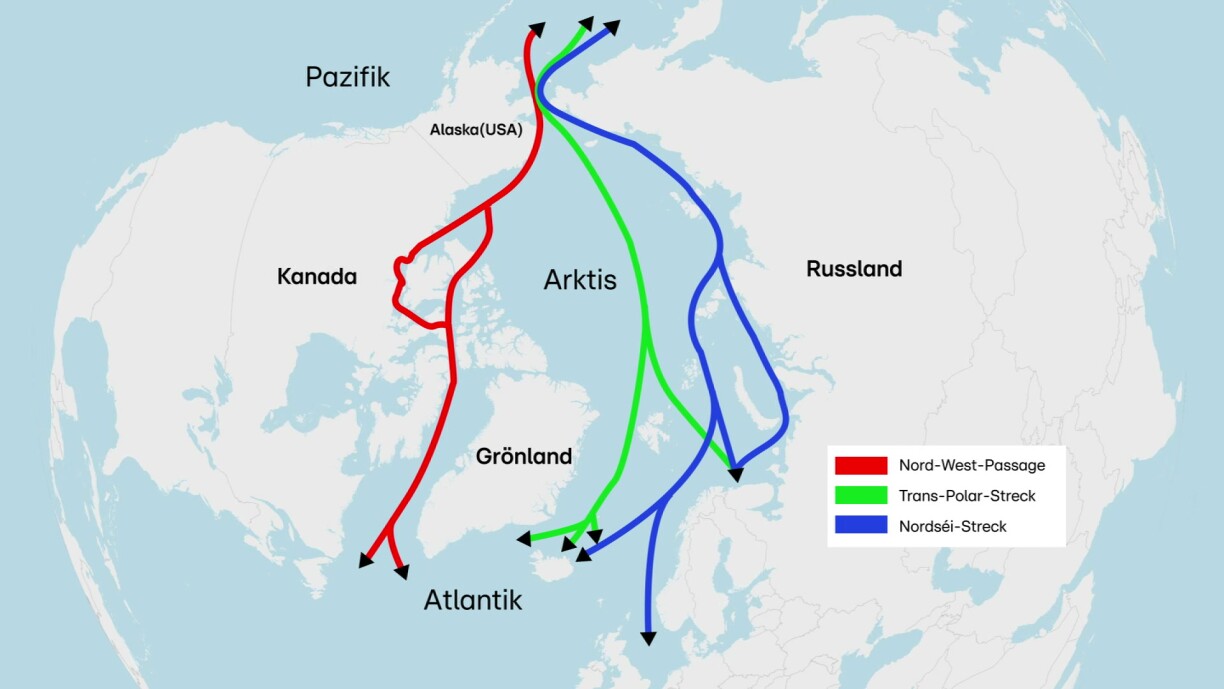
Fröhlich states that international shipping lanes around Greenland are an additional point of interest, with their importance only increasing with time. It is estimated that new shipping routes around the North Pole will be made possible by climate change by 2030.
Economic and technological considerations regarding the abundance of rare earth minerals in the island are coupled with geopolitical considerations, as the US has a military presence in Greenland through the Pituffik Space Base. According to Fröhlich, it is in the interest of the US to expand their military presence in Greenland.
Fröhlich ponders on the possibility of Trump's behaviour being a "message" to Russia and China, but considers this would be rather ambivalent, as Trump's claims of repelling Chinese and Russian influence in the region undermine significantly the principles of territorial integrity and sovereignty as stipulated by the international order. Fröhlich establishes parallels with Russia's claims and territorial aggression. These developments further erode the validity of international law, he states.
Fröhlich compares Trump's behaviour towards Greenland to that of a real-estate agent, which can be seen again with Trump's approach to the Gaza Strip as a potential "Riviera of the Middle East." Fröhlich further explains that Vice President JD Vance's statements following his visit to Greenland, point to Trump's personal interest in territorial expansion. In a way, Fröhlich believes that this approach may seek to "Make America Great Again" through new territorial gains.
A US annexation of Greenland through military force would not only have dire consequences for the current international order, but it would spell the end of NATO as an alliance, states Fröhlich. As an alliance founded by the US to cooperate on military threats, the invasion of the territory of an alliance member by its founders would make NATO implode.
Importantly, the Charter of the United Nations prohibits even announcing an intention of force in international politics – a stipulation that has been recently violated frequently.